



22,00 € – 983,00 €Price range: 22,00 € through 983,00 €
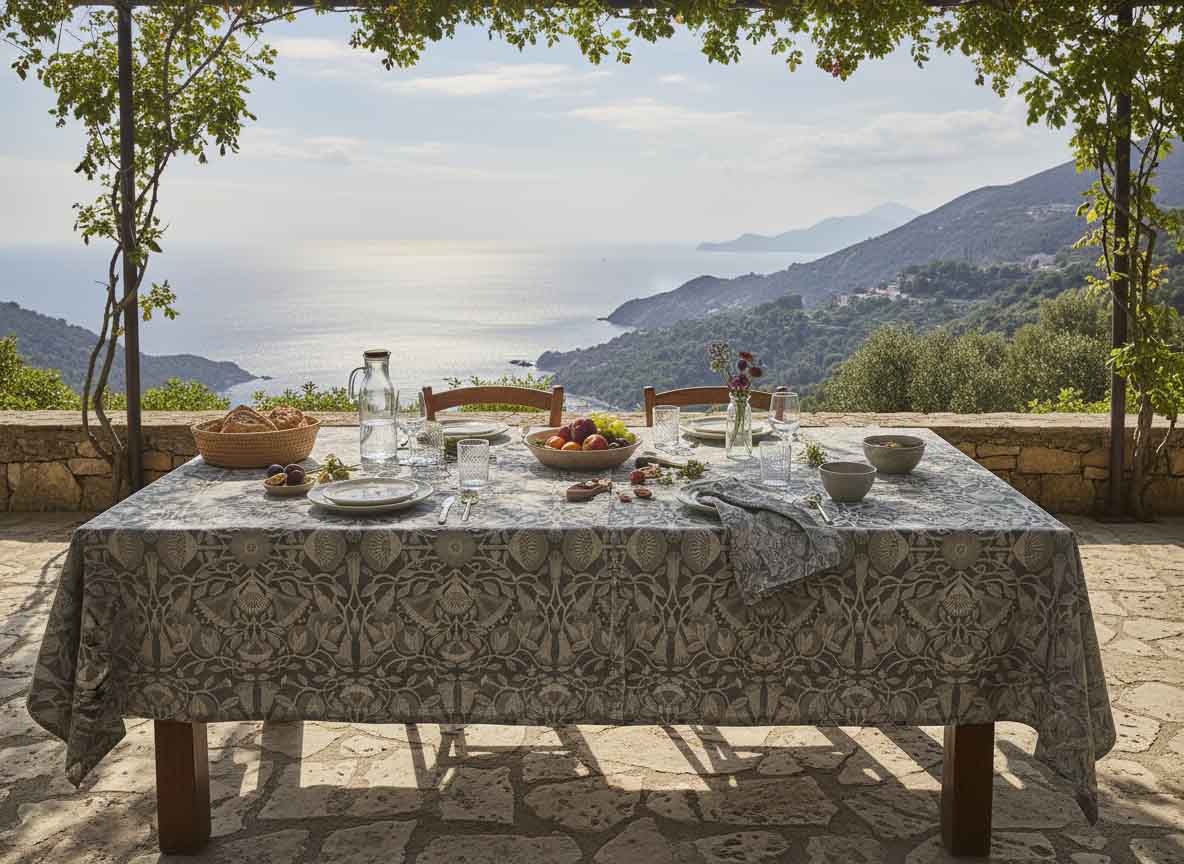
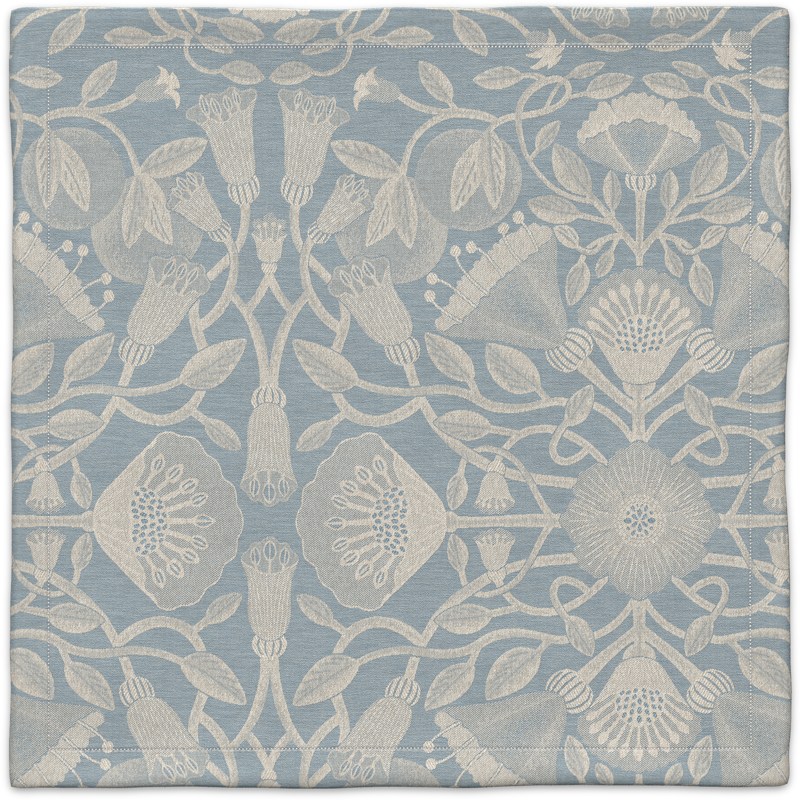
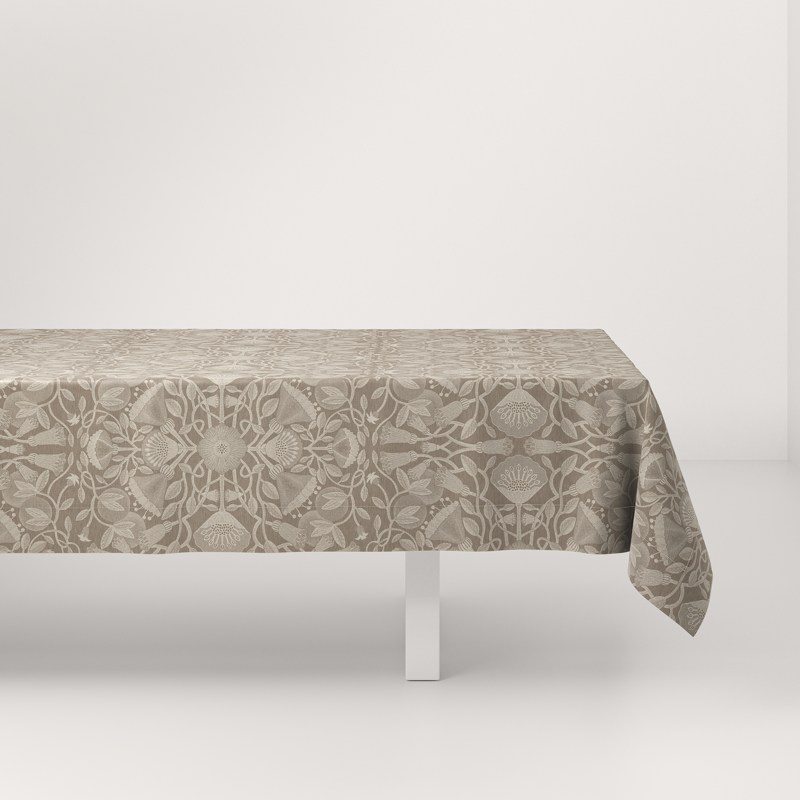
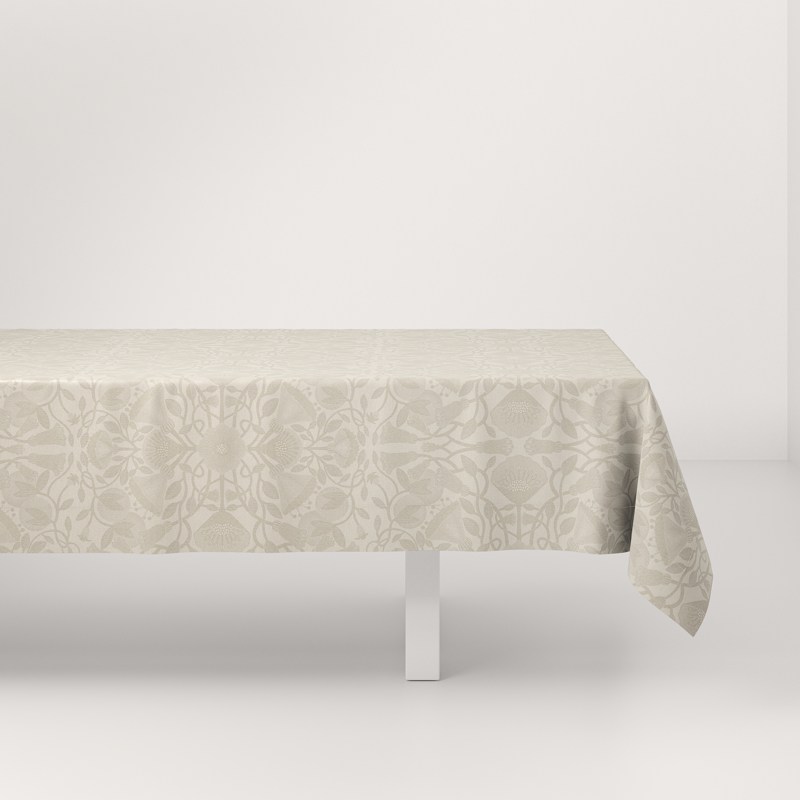
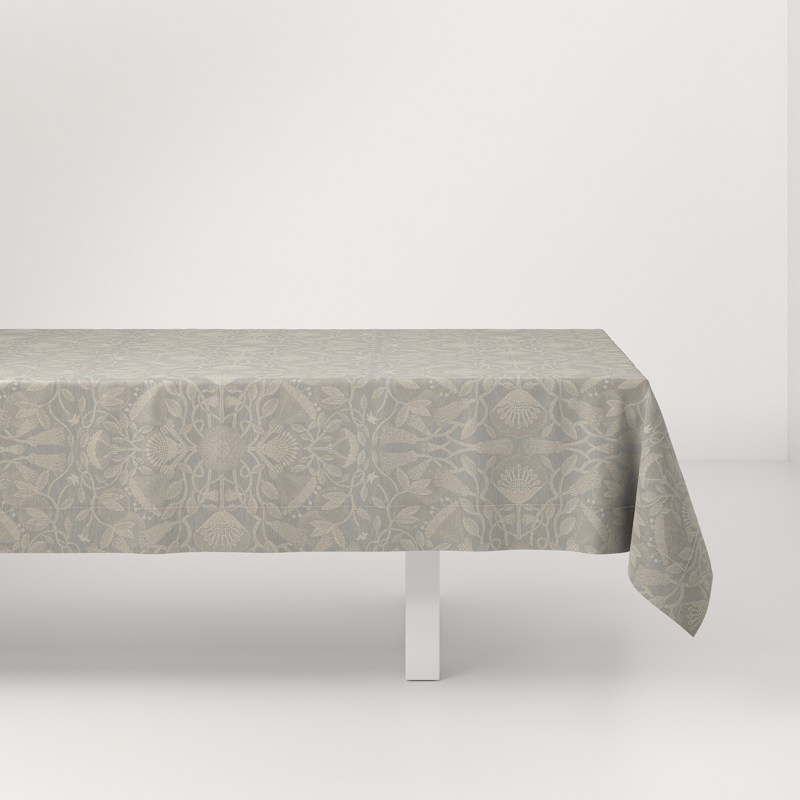
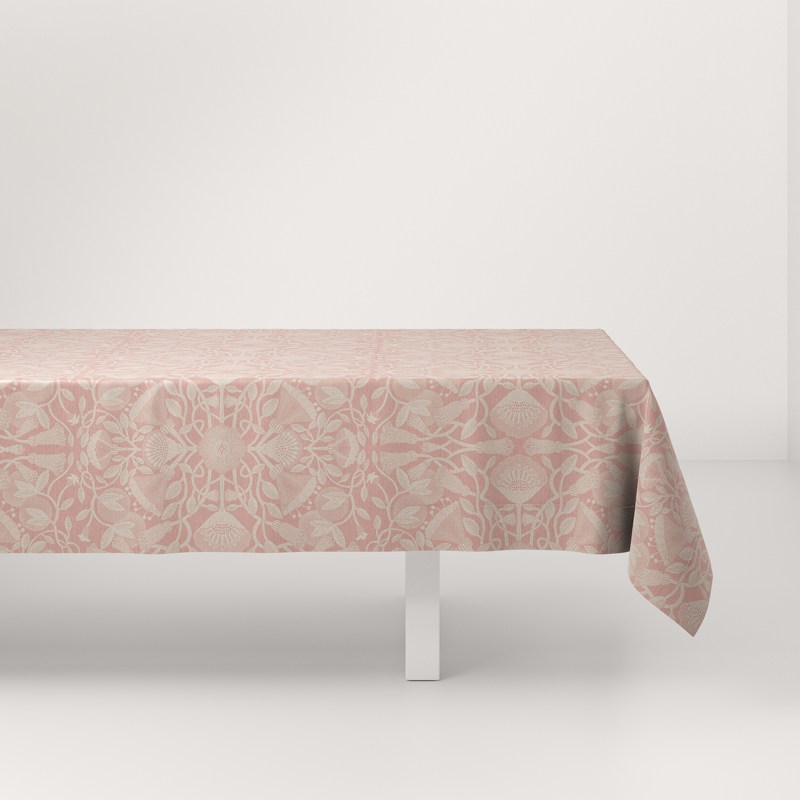
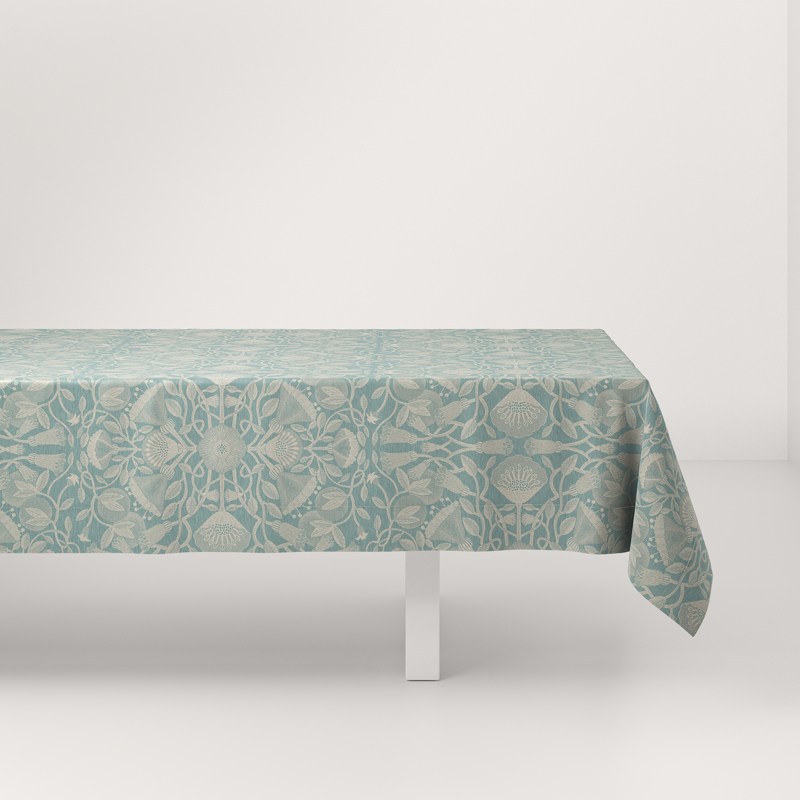
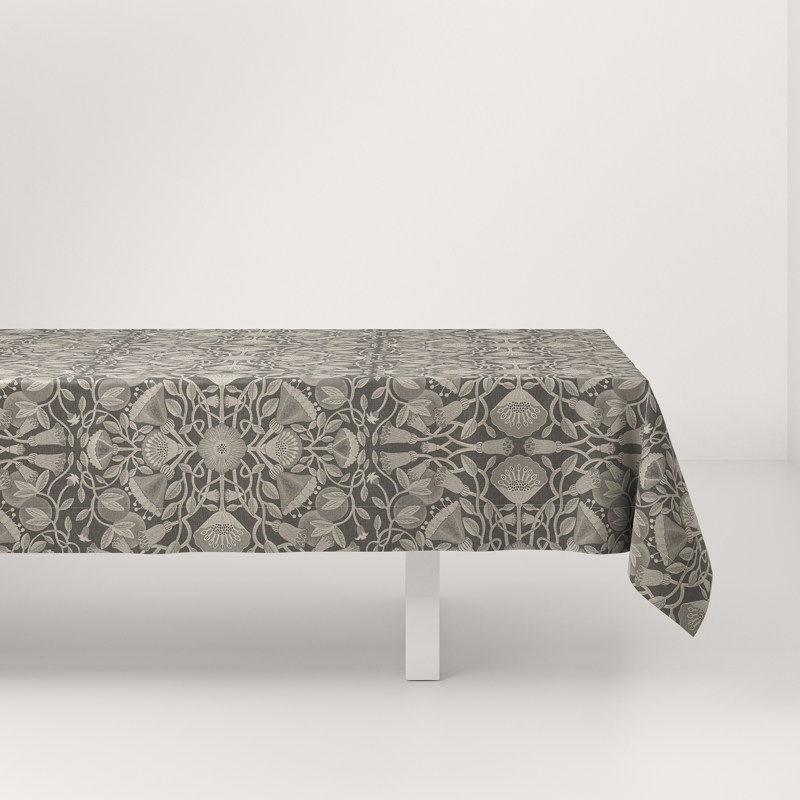
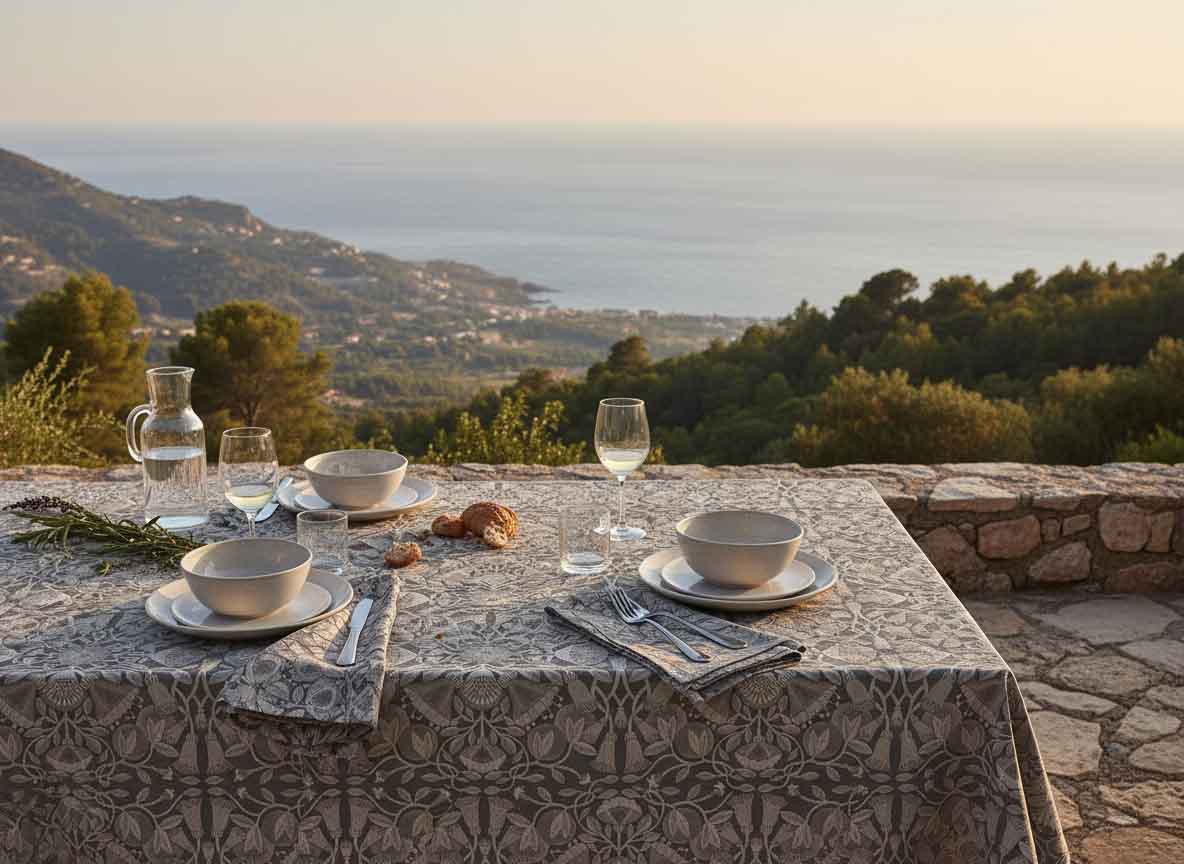
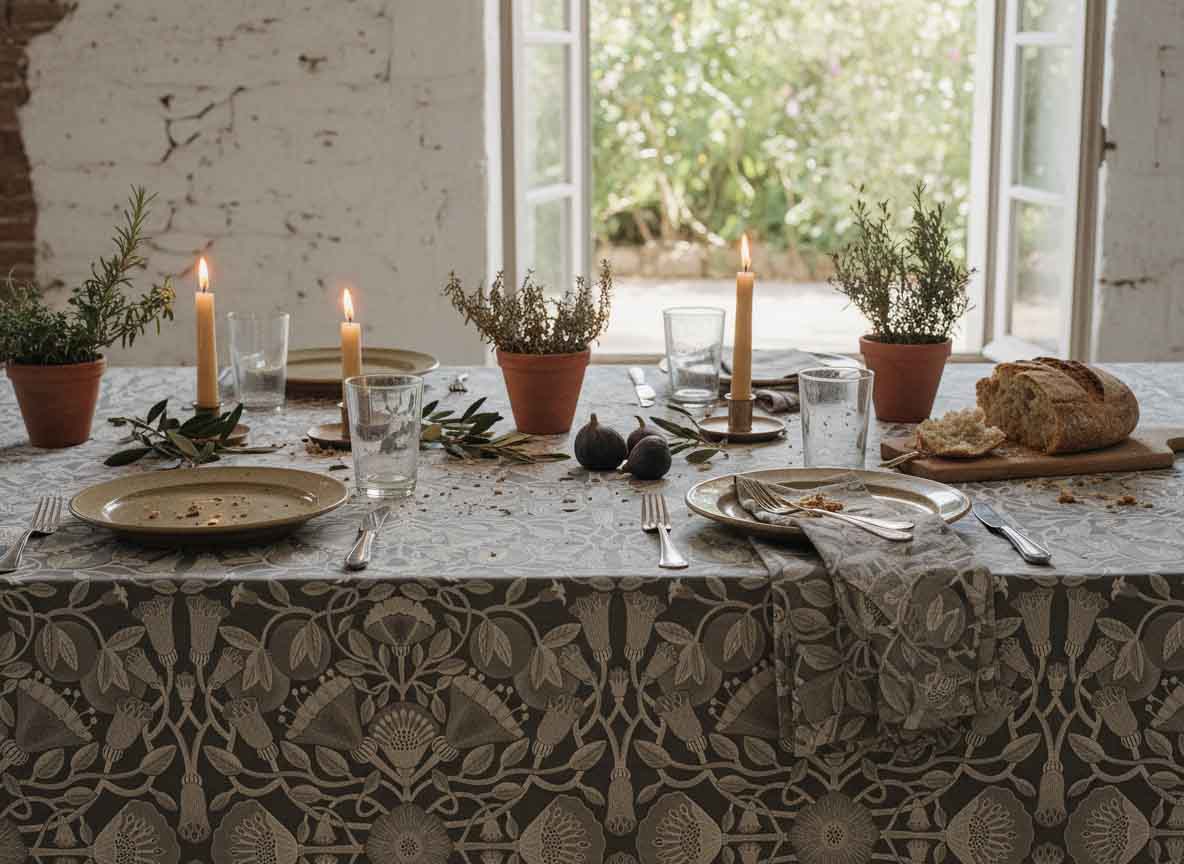
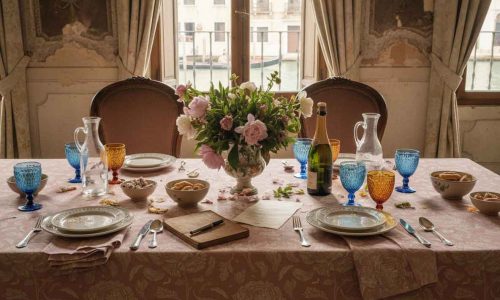
Arcadia pure linen from Leitner Leinen combines pastoral harmony with the cultivated calm of pure linen. The artfully woven jacquard design translates organic leaf and tendril structures into a fine relief that is reminiscent of the interplay of light and shadow in dense foliage and lends the fabric the quiet serenity that characterizes Arcadia. Made from 100% European organic linen in a subtle jacquard weave, Arcadia combines natural temperature regulation, high breathability, anti-static properties and a patina that gains character over time. Available in natural, carefully coordinated shades and woven in a CO₂-neutral way in Austria, Arcadia stands for sustainable quality, textile tradition and table linen that harmoniously combines Arcadian tranquillity and timeless elegance.



Crafted by people who have learned their trade over generations.
Material, production, people – genuine sustainability. Fabrics traceable to the Atlantic coast.
Linen bedding can be washed at low temperatures and becomes softer with each wash.
Linen bedding keeps you pleasantly cool in summer and cozy warm in winter. Bedding for all seasons.
Arcadia – the Arcadian landscape, the place of longing for a lost harmony, the pastoral allegory of a timeless paradise. With this design, Leitner Leinen translates a design principle from European cultural history into textile form. Arcadia, the mythical region in the center of the Peloponnese, became a cipher for a life in harmony with nature in ancient times. A place without the impositions of civilization, populated by shepherds, nymphs and the god Pan. What began as a geographical reality was transformed into a literary topos by Virgil’s bucolic poetry in the first century BC: Arcadia as a counter-image to the city, as a space of unbridled natural beauty and unspoiled existence. The Renaissance took up this idea and elevated Arcadia to the ideal space of art.
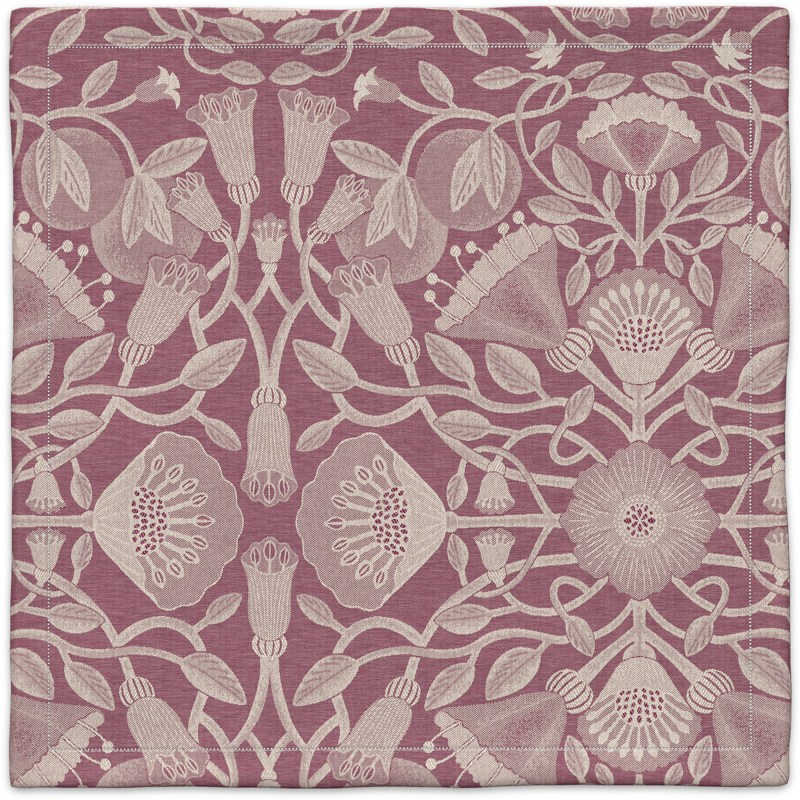
In paintings of the 17th and 18th centuries – from Poussin to Watteau – the Arcadian landscape became the setting for pastoral scenes in which nature appears inviting rather than threatening: orderly but not tamed, lush but not wild, harmonious in its abundance. The Arcadian aesthetic is not a depiction of a real landscape, but a projection – a longing for a place where culture and nature do not contradict but complement each other. The Arcadia jacquard weave takes up the floral tendrils and flower ornaments that symbolize the idea of paradisiacal fertility in European art. Nothing wild grows here, no thistles, no thorns – only those cultivated plants that have marked beauty and civilization since antiquity. The floral tendrils meander across the surface, without beginning or end, a continuous flow of organic forms. The flowers are stylized, but not abstract – recognizable as vegetation, but freed from botanical precision. What Arcadian painting brought to canvas – the hope of a place beyond historical ruptures – is not illustratively reproduced here, but translated into linen as a structural principle. Whoever brings Arcadia to the table does not bring decorative botany to the table, but a cultural design principle: the pastoral idyll as form, timeless harmony as aesthetics.
Linen for the table is a material with a long tradition in the temperate climate zones of Europe. The linen fiber, obtained from Western European flax cultivation, is characterized by its smooth, closed surface, which initially repels liquids. This protection makes it possible to react to spills before a stain forms. At the same time, linen is highly absorbent as soon as the fiber is soaked – a property that makes napkins functional. The natural smoothness creates the cool, firm feel that gives tablecloths their characteristic drape. Linen is naturally antistatic and bacteriostatic – properties that make it particularly suitable for contact with food. The fiber does not weaken with use, but becomes more supple. Linen develops patina instead of wear. Tablecloths made from European organic linen become softer over time without losing their structural strength. The GOTS certificate guarantees that no chemical bleaching agents or synthetic pesticides are used from cultivation to finishing.
Since 1853 the Leitner Manufaktur in Ulrichsberg, Austria, has been weaving linen according to the principles that can only be maintained through continuity in craftsmanship. Arcadia is created using a precise jacquard linen weave – a process in which the pattern is not printed on, but worked directly into the fabric structure. Every tendril, every flower, every ornament is an integral part of the fabric itself. The Jacquard technique, developed by Joseph-Marie Jacquard in the early 19th century, enables complex patterns to be created by individually controlling each warp thread. The result is a relief-like fabric in which patterned and unpatterned areas are not only visually but also haptically distinct from one another. The floral richness of the Arcadia design – the intertwined tendrils, the organic shapes of the flowers and leaves, the density of the composition – demands the kind of weaving precision that can only be achieved through mechanical precision and craftsmanship. Leitner Manufaktur works with mechanical looms whose precision lies in the fact that they do not smooth out the natural irregularity of the linen fibers, but rather absorb it. This results in fabrics with a liveliness that cannot be achieved by mechanical uniformity – a textile counterpart to Arcadian painting, in which idealized naturalness rather than technical perfection was the design principle.
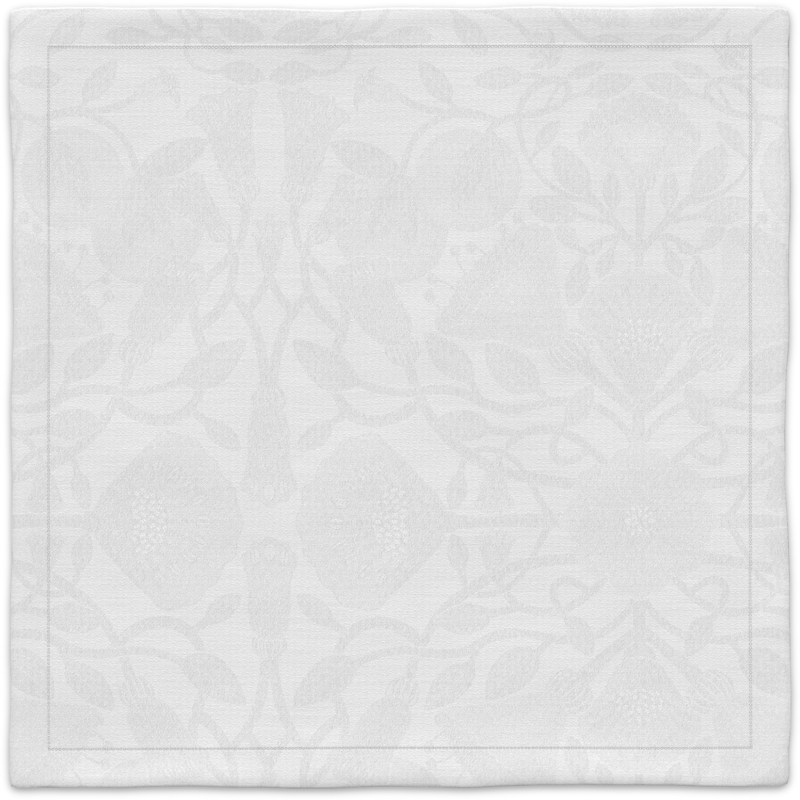
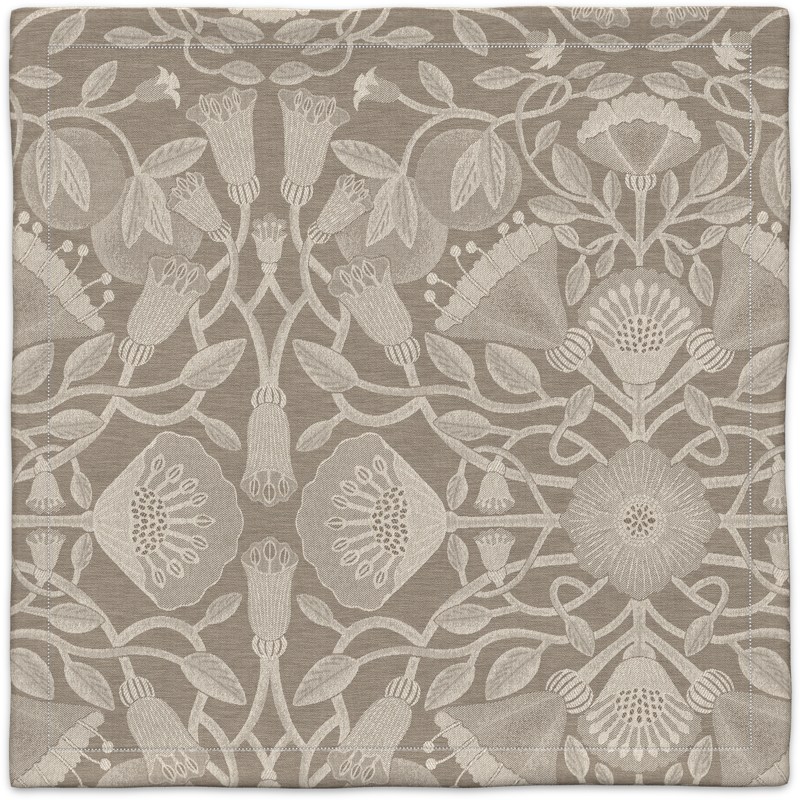
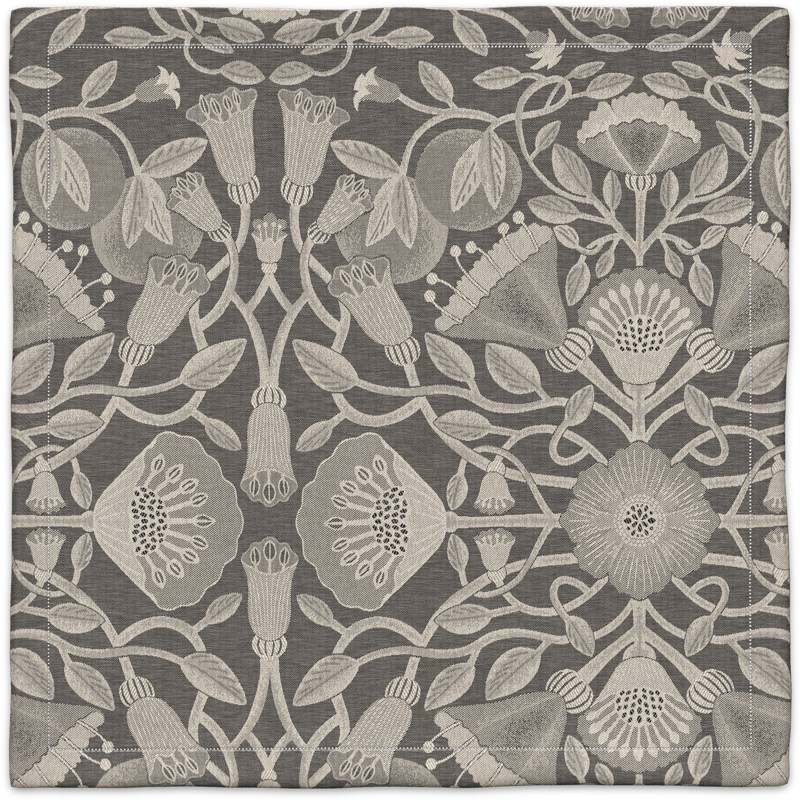
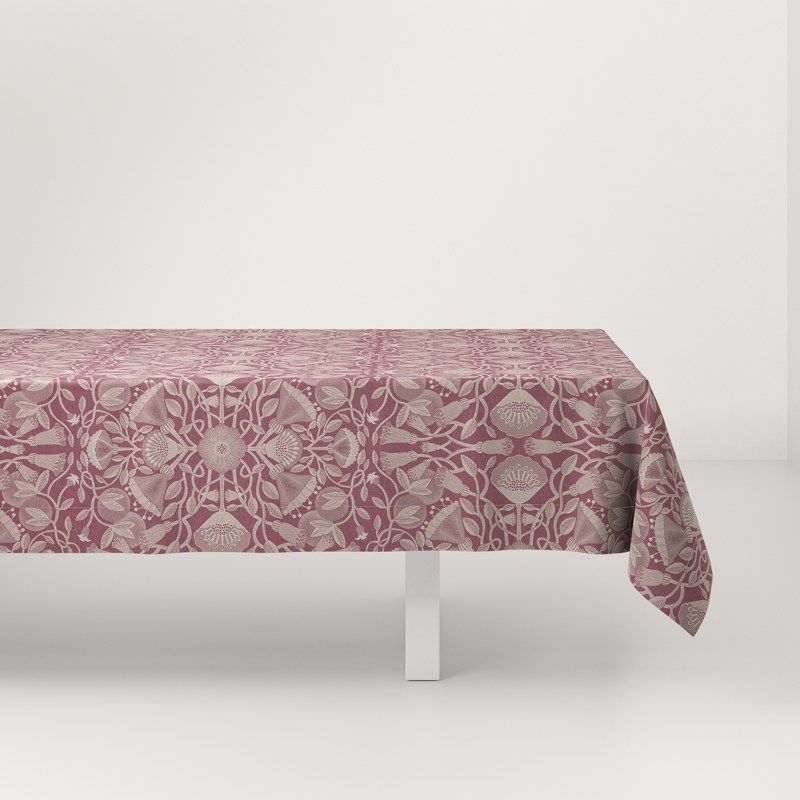
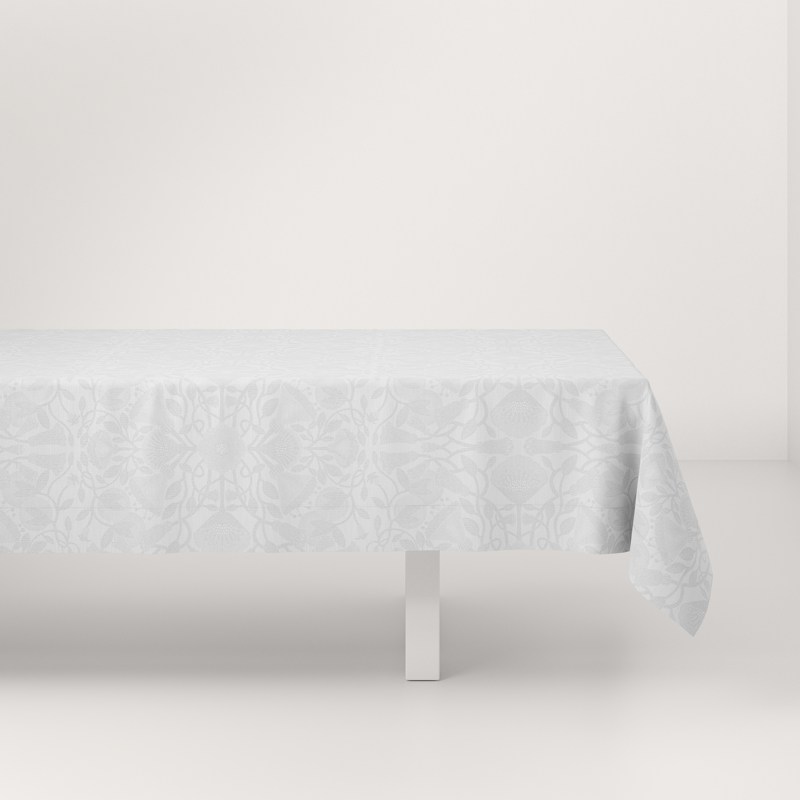
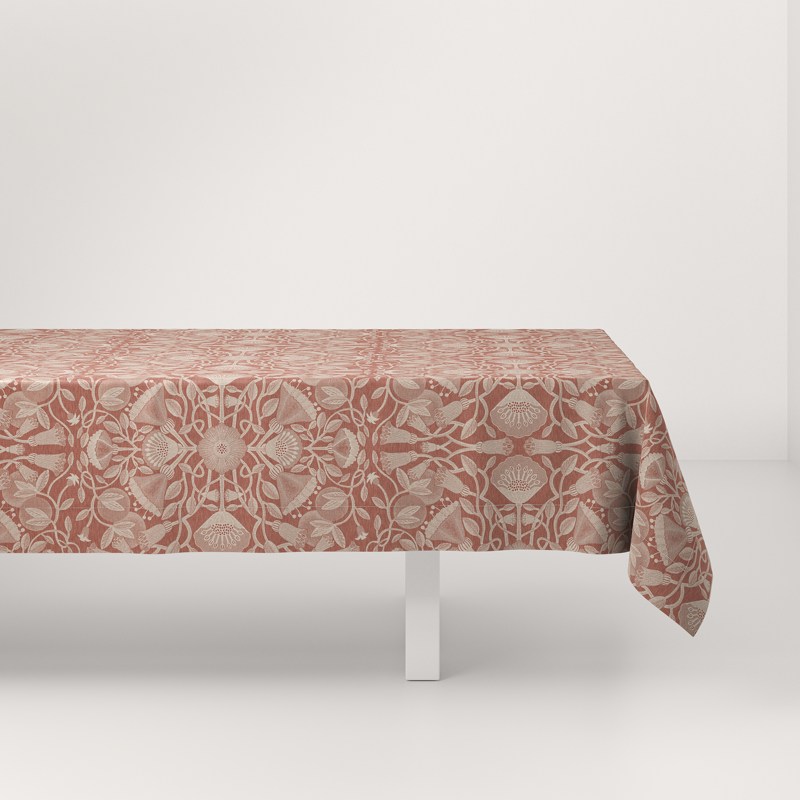
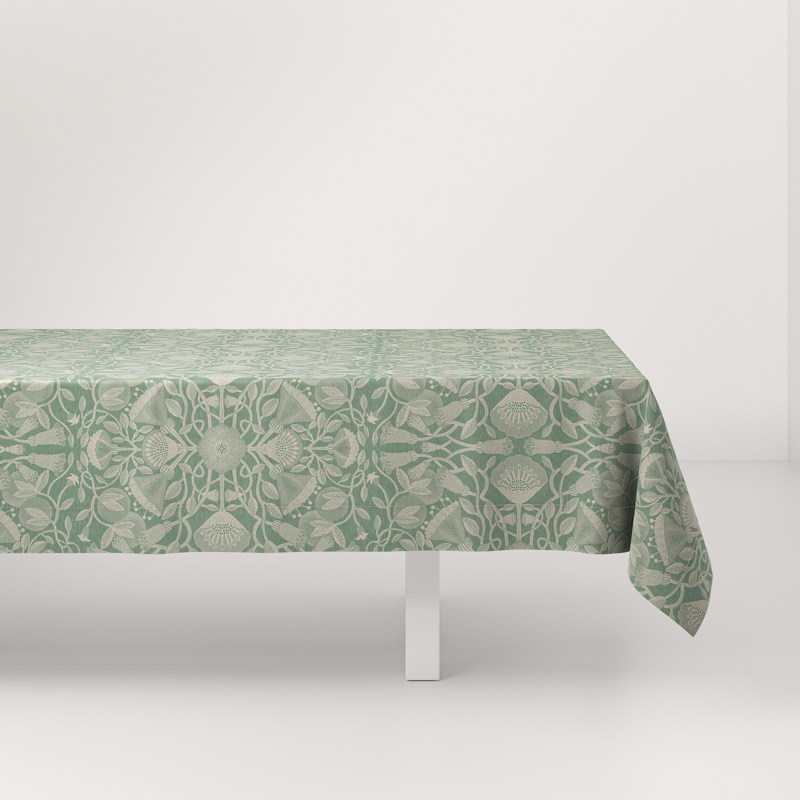
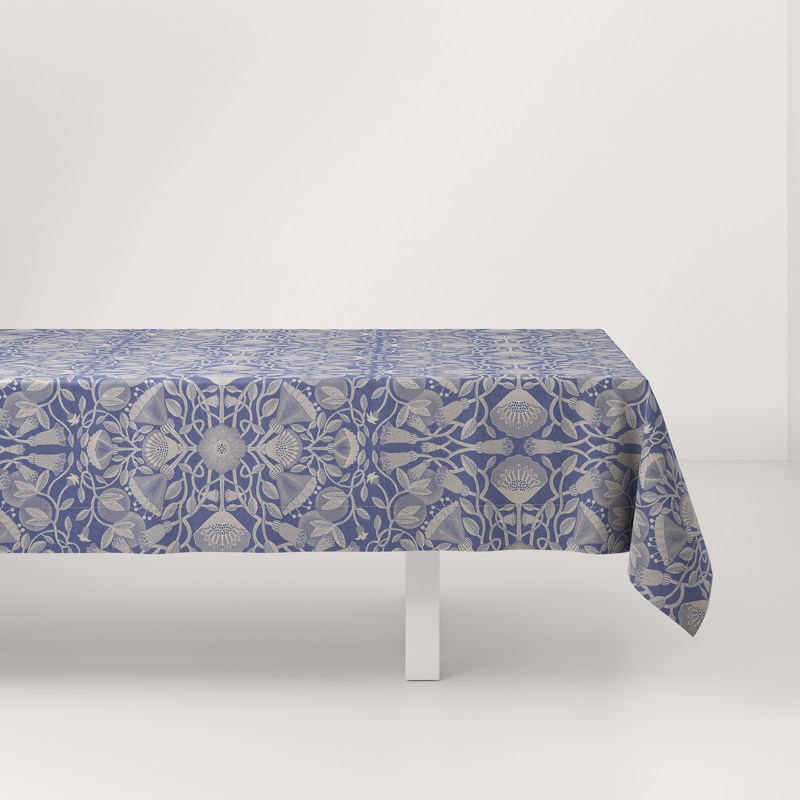
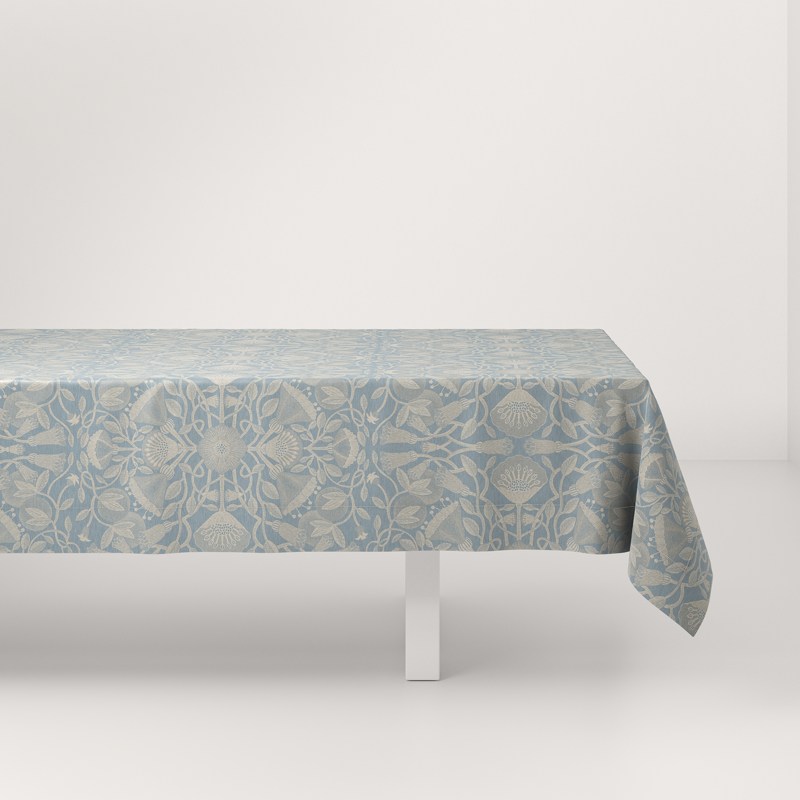
Arcadia is available as a tablecloth and napkin in various sizes. The fabric is made of 100 percent European pure linen in a precise jacquard linen weave. The color palette comprises eleven shades and ranges from pure white to delicate pastel tones and earthy nuances. Sakura comes in soft pink, while rust red conveys a warm, earthy intensity. Blue Fog brings misty blue-grey, Arctic Blue a cool, clear blue. Opal shimmers with a turquoise sheen, aquamarine in a fresh aquatic blue. Jade delivers a rich green, linen presents itself in a natural beige. Terra shows earthy terracotta, Stone a warm stone gray. Each color scheme has been designed to highlight the floral tendrils and flower ornaments of the design – the intertwined plant shapes, the organic lines. The colors support the legibility of the individual elements and allow the relief of the jacquard weave to stand out clearly. Arcadia is a tablecloth for occasions where the table should not be characterized by geometric abstraction but by floral abundance – the pastoral idyll as a timeless principle, Arcadian harmony as a textile manifestation.
✓ 100% European pure linen
✓ Precise jacquard linen weave with Arcadian vine pattern
✓ Available as a tablecloth and napkin in various sizes
✓ 11 colors: White, Sakura, Rust Red, Blue Fog, Arctic Blue, Opal, Aquamarine, Jade, Linen, Terra, Stone
✓ GOTS-certified
✓ Woven in the Leitner Manufaktur, Ulrichsberg (Austria)
Linen table linen can withstand temperatures up to 60 degrees, white qualities up to 95 degrees. Washing temperatures between 40 and 60 degrees are gentle on the fibers. Do not use detergents with optical brighteners – they bleach out the color pigments. Do not overfill the machine: linen needs freedom of movement. Spin at 800 to a maximum of 1,000 revolutions and remove the laundry slightly damp. Iron on the highest setting as long as there is still residual moisture. Linen loves heat and moisture – this is the only way to completely smooth out the fibers. Avoid the tumble dryer. Treat stains from red wine or coffee immediately with cold water – the smooth linen fibers release stains more easily when they react quickly.
| Leitner Tischtücher Cat. 4 | 150 x 150, 150 x 250, 150 x 320, 170 x 170, 175 x 250, 180 x 180, 180 x 320, 180 x 340, 180 x 360, without tablecloth |
|---|---|
| Leitner Servietten Cat. 4 | 20 x 20 (6 pieces), 47 x 47 (6 pieces), 55 x 55 (6 pieces), without napkins |
| Produktfarbe | Anthracite, Arctic Blue, Blue Fog, Cyclamen, Delft Blue, Jade, Natur, Rust red, Sakura, Stone, Terra, White |
| Farbe |
Willkommen zurück!
Jetzt registrieren
Erhalte exklusive Rabatte und Neuigkeiten
Welcome back!
Register now
Receive exclusive discounts and news




Reviews
There are no reviews yet.