Categories
Silk is the result of a transformation. Before it becomes fabric, it is architecture: a cocoon, spun by a caterpillar that metamorphoses within it into a moth. This cocoon consists of a single thread that can be up to 900 metres long. A thread in which a creature secured its survival – and which has accompanied human culture for at least 5,000 years.
The history of silk begins at the Yellow River. Chinese legend tells of the Empress Leizu, who dropped a cocoon into her tea and, in fishing it out, discovered the endless thread. What is historically established is that silk production began in China in the third millennium before our era – and that the knowledge of its manufacture was guarded as a state secret for over 2,000 years. Anyone who smuggled silkworm eggs out of the country risked their life. The Silk Road, that network of trade routes between Chang’an and the Mediterranean, owes its name to this precious fabric. Silk was a means of payment, a diplomatic gift, a status symbol. It clothed emperors and cardinals, was found in tombs and preserved in church treasuries.
What makes silk so special lies in its molecular structure. The silk thread consists of fibroin, a protein whose composition is remarkably similar to that of human skin. Both consist of amino acids, both are capable of absorbing moisture and releasing it again. This structural kinship explains why silk feels so natural against the skin – not like a foreign body, but like a second layer. For people with sensitive skin or atopic dermatitis, this property can be a blessing.
The climatic properties of silk follow the same logic. The silk thread is hollow and can absorb up to a third of its weight in moisture without feeling wet. On warm nights, it transports perspiration away from the skin and cools. On cold nights, the trapped air insulates and warms. This dual ability makes silk the ideal material for bed linen – it adapts rather than dominates.
There is also a property that is seldom mentioned: silk is extraordinarily strong in tension. Weight for weight, it surpasses steel. Materials science has long taken an interest in this natural material, whose properties synthetic fibres have to this day been unable to fully replicate. What the silkworm spins in just a few days remains a challenge for technology.
The lustre of silk arises from the prismatic structure of the fibre. It refracts light much like a crystal, producing that characteristic shimmer which shifts with the angle of view. Unlike the sheen of synthetic fabrics, it never appears intrusive – it lives with the light rather than merely reflecting it.
Silk demands attention. The fibroin is sensitive to heat and alkaline substances. Hand washing with a mild silk shampoo at low temperatures, no wringing, no direct sunlight when drying. This care is the price for a material that, with proper treatment, lasts for decades and grows softer with time rather than wearing out.
The production of silk remains elaborate. Approximately 5,000 cocoons are needed for a single kilogramme of raw silk, each one unwound individually. The silkworm – actually the larva of the mulberry silk moth – consumes up to 40,000 times its own body weight in mulberry leaves before pupating. These figures explain why silk retains its value. It is not expensive because it is rare, but because its creation demands time, care and artisanal skill.
Anyone who chooses silk bed linen chooses a material that is older than most civilisations. A material whose properties were not invented, but discovered – in a cocoon that was actually intended for something else entirely.
Silk articles should be washed separately, turned inside out where possible, on a delicate cycle without additional loading, at 30 degrees using recommended silk detergents such as Tenestar. Silk and silk blends are not suitable for tumble dryers or rotary irons. When drying outdoors, do not expose silk articles to direct sunlight. Silk laundry may be ironed slightly damp at a maximum of 110 degrees.
Please never spray silk with perfume or deodorant
Please do not wash silk with bleach
Please do not dampen silk with water when ironing
Do not rub out individual stains with water; instead, wash the entire piece
Please iron silk from the reverse side
Please do not wring silk
Silk products can be cleaned by hand washing without damaging the silk. It is best to use a mild soap or a special silk shampoo such as Tenestar. Soak the silk in lukewarm water for approximately 3–5 minutes.
Dark silk or printed silk should only be washed briefly in a cold hand bath; please do not soak. It is recommended to move the fabric only gently back and forth during this time.
Remove the silk from the water after a maximum of 5 minutes. Rinse the silk with cold water together with a teaspoon of white wine vinegar to remove any soap residue. Then roll the silk in a dry towel to draw the remaining liquid from the fabric. For dark or printed silk, you should use the towel in several layers. Afterwards, please lay the silk flat and gently straighten the corners.
As a general rule, silk should be ironed slightly damp and turned inside out. Do not iron silk too hot. Silk is an organic fabric, a protein compound similar to our hair. Too much heat only causes harm.
The Manufactory: Seidenweber
The history of the Plauener Silk Weaving Mill begins on 30 May 1928, when Wilhelm Wilke founds the “Spinnhütte Seidenspinnerei und Weberei GmbH”. The location in Saxony’s Vogtland is no coincidence: the region has been one of the centres of German textile production for centuries. As early as the 1930s, the works specialises in silk fabrics – initially for technical applications, later for home textiles.
The post-war period brings expropriation and nationalisation. As VEB Mitteldeutsche Spinnhütte, later VEB Greika, the works continues to produce under changing names. The looms keep running, the knowledge endures. After reunification, the buyback is achieved in 1990 by Greika Thüringen GmbH. In 1996, the sites are consolidated, and in 2013 the Seidenweber brand is created.
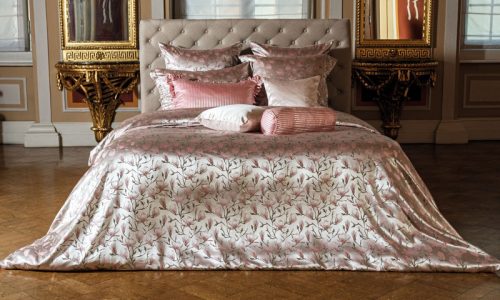
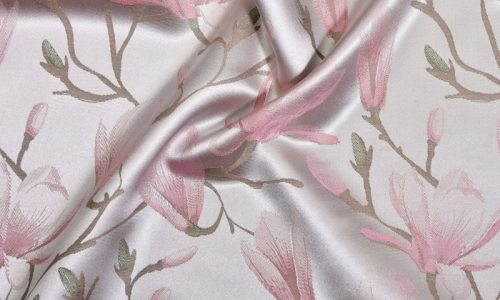
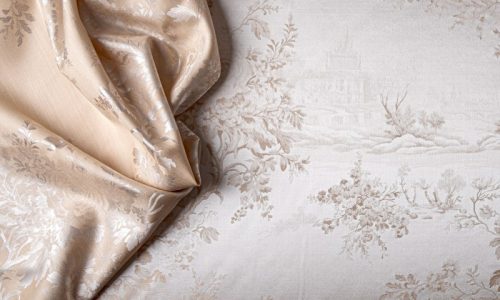
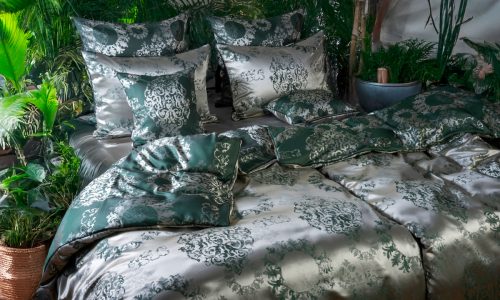
What distinguishes the Plauen manufactory is its fully integrated production. From raw yarn to the finished, made-up bed linen, everything takes place under one roof. The jacquard looms enable patterns of a complexity that is scarcely mastered anywhere else – floral ornaments, paisley designs, geometric structures, all woven, not printed. The difference reveals itself in the feel: woven patterns have depth, printed ones sit on the surface.
Europe has lost most of its silk weaving mills. In Plauen, weaving continues. The manufactory is one of the few remaining enterprises on the continent that processes silk to this standard of quality. Almost a century of experience flows into every piece – knowledge that cannot be accelerated, only passed on.
Willkommen zurück!
Jetzt registrieren
Manche Dinge zeigen wir zuerst denen, die sie zu schätzen wissen.
Vorrang bei neuen Kollektionen. Vorbestellung limitierter Editionen. Einblicke in die Arbeit unserer Manufakturen
Welcome back!
Register now
Receive exclusive discounts and news