






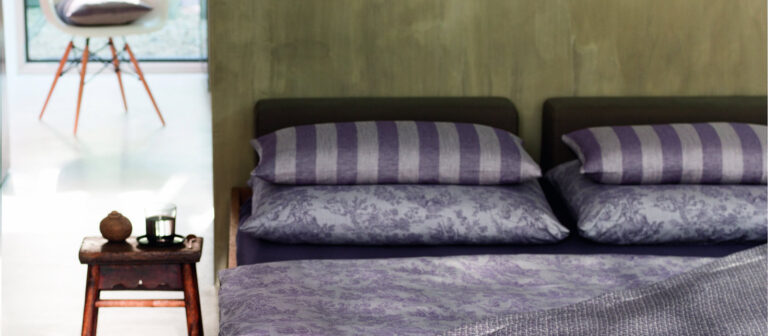
Furnishing a holiday home is a different task from furnishing a home. It’s not about compromises. It’s about intentions.
There is a moment that every holiday home owner knows. You unlock the door after months away, and the room seems to breathe in you. What you smell, what you feel when you pull back the duvets and run your hand over the fabric — that determines whether you have truly arrived or merely turned up.
In your main home, you settle in. In a holiday home, you look forward to something: to summer, to guests, to the best version of how you want to live when the hustle and bustle of everyday life fades away. The choice of textiles is no trivial matter. It is what makes the difference between a room that is merely habitable and one that invites you to live in it.
Why linen, of all things — and why there, of all places?
A holiday home places different demands on textiles than a city flat. It stands empty for weeks or months. It is used intensively over a short period. It is washed frequently — sometimes weekly, between guests. It is often located in a warm climate, without air conditioning. And after the winter break, it shouldn’t smell as though someone had forgotten to open the windows.
Linen meets every one of these requirements — not through promises, but through the laws of physics.
Durability under heavy use: Holiday home bed linen is subjected to tougher conditions than at home. A constant stream of guests, weekly 60-degree washes, sun cream on the pillowcases, sand in the folds. Under these conditions, cotton deteriorates — it becomes thinner, greyer and loses its thread density. Linen improves under the same conditions: it becomes softer, more supple, with the sheen that connoisseurs describe as ‘well-worn’. The fabric’s character develops more quickly in a holiday home than elsewhere, because it is washed more frequently. After two summers, a linen sheet has the patina that takes two years to achieve at home.
Climate control without technology: holiday homes in Tuscany, on the Greek islands, by the Baltic Sea — summer heat, stone floors that radiate coolness at night, no air conditioning. The CETELOR study by the University of Lorraine confirms what Mediterranean residents have known for centuries: linen cools because it actively wicks moisture away. Evaporative cooling, not technology. For a holiday home in the south, this isn’t just a recommendation — it’s the logical choice.
It will get through the winter break. Linen absorbs fewer odours than cotton. It is naturally less hospitable to mould spores and dust mites because it wicks away moisture rather than trapping it. After six months in a closed wardrobe, linen bed linen smells of — nothing. Just air it out, and it’s ready to use.
No ironing required. For landlords who have four hours between bookings, this isn’t a matter of convenience. It’s a practical consideration. Linen is hung up while still damp, dries quickly, and the natural creases aren’t a sign of neglect — they’re the lived-in look that the best holiday home reviews describe as ‘amazing linen bedding’.
The bill that landlords should be aware of
A linen sheet costing 180 euros, which lasts five seasons and is washed every week at 60 degrees, costs 36 euros per season. A cotton sheet costing 40 euros, which is grey and thin after one season, costs 40 euros per season — and offers a diminishing experience. Investing in linen is not an expense. It is an investment that becomes cheaper with every wash.
For holiday homes in the premium segment — Airbnb Plus, boutique platforms, and private rentals starting at €1,500 per week — linen bed linen is not a luxury, but a key part of positioning. Guest reviews determine whether the property gets the next booking. And the bed linen is the first thing guests touch before they hand back the key and write their review.
How to decorate a holiday home in linen
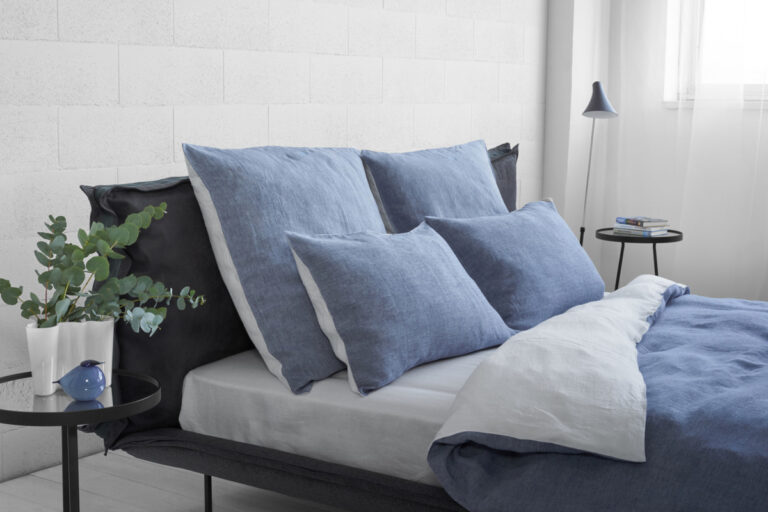
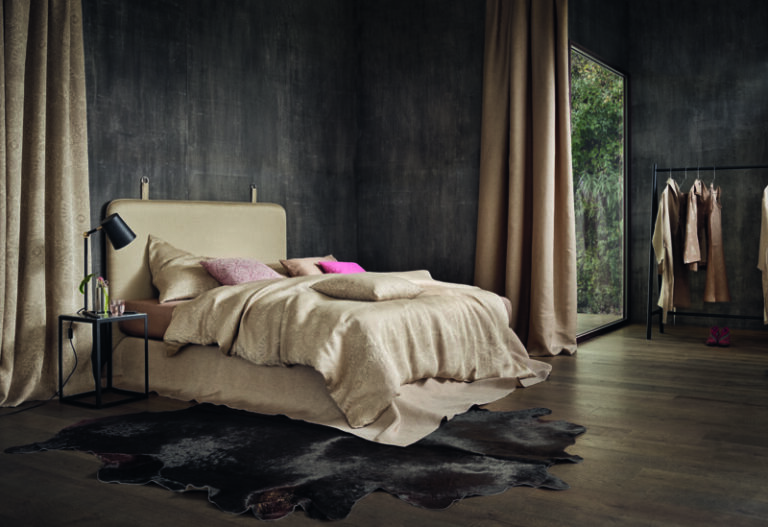
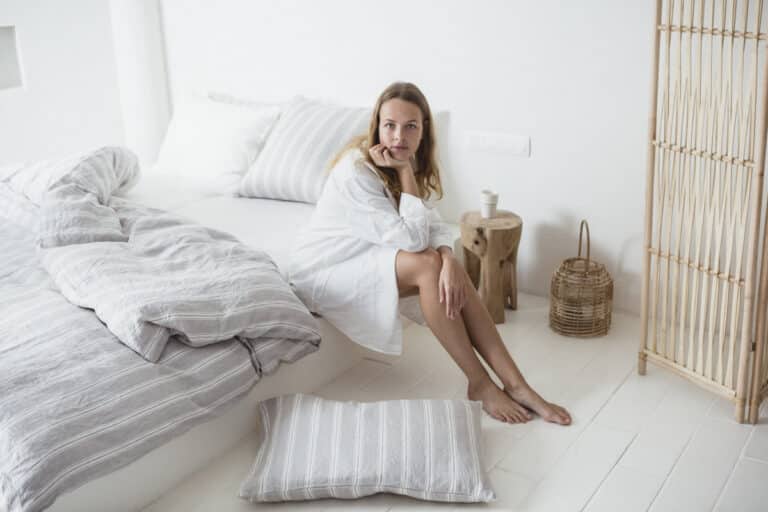
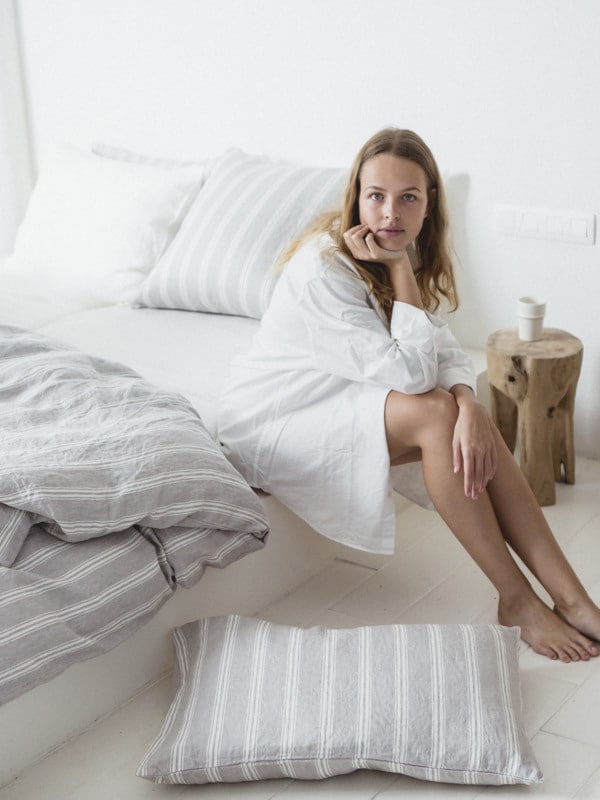
The bed: Two sets per bed. A lightweight linen sheet as a base, a pair of pure linen duvet covers. For warm locations: 150 to 180 g/m², the cool feel that makes all the difference at a room temperature of 30 degrees. For year-round homes: 180 to 220 g/m², the quality that still works well even in autumn. Colour choice: natural colours, muted tones, stripes — anything that complements sand, stone and wood rather than competing with them.
The pillow: often overlooked. Yet it is where the guest’s face rests. A dense linen pillowcase feels cooler than cotton, absorbs fewer odours and withstands the frequent washing required by a rental business.
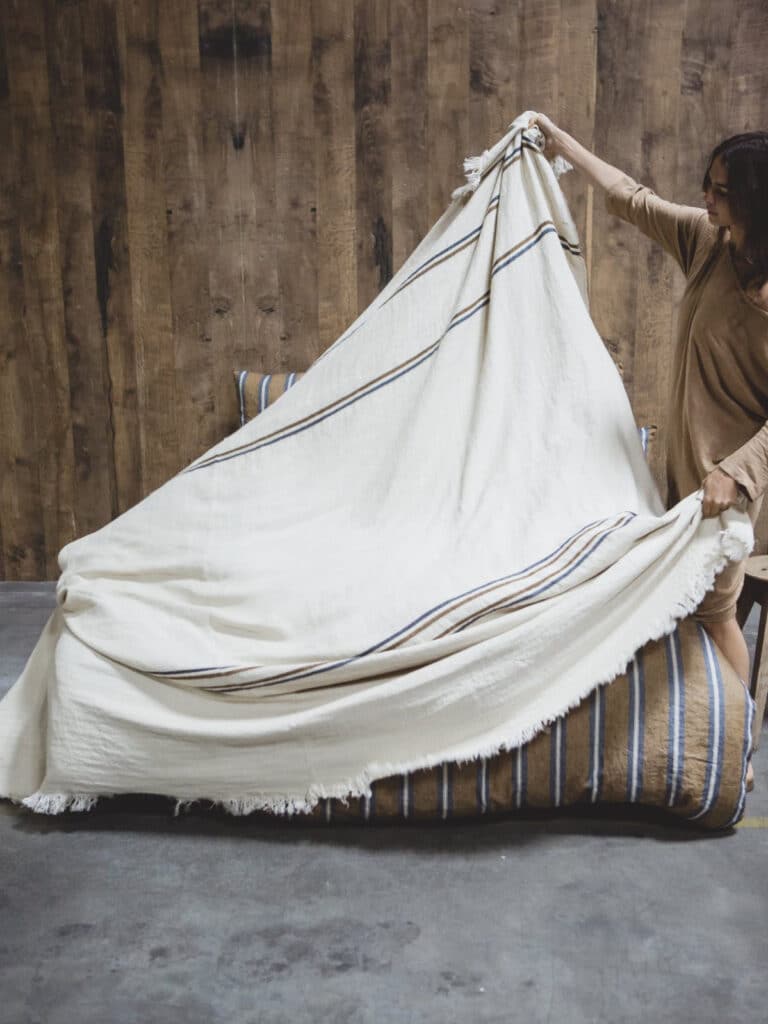
The bedspread: the piece of furniture that defines the room. A linen bedspread draped over a made bed transforms a bedroom into a living space — during the day you can lie on it to read, and in the evening it is thrown back. Heavier than bed linen: 220 to 280 g/m², with a lovely drape and weight.
Towels: Linen towels dry faster than cotton terry towels — a real advantage in windowless bathrooms and holiday homes where humidity is high. The texture is different: not plush, but textured and invigorating. Anyone used to terry towels will need a couple of days to get used to them. After that, they won’t want to go back.
The table: dinner on the terrace, a bottle of rosé, the sunset. A linen tablecloth transforms a garden table into a dining setting. And it withstands the red wine stain, the splash of olive oil, the rain that came too quickly — linen absorbs liquid quickly, can be pre-treated and washes clean at 60 degrees. Pure linen damask gives the table a depth that no printed fabric can match.
Three manufacturers, three distinct styles
Libeco — bring the Belgian coast into your holiday home. The Guest House collection isn’t named that way by chance: wide-striped fabrics that evoke bistros and the Atlantic, a colour palette that no other manufacturer offers in such a wide range. Libeco linen creases on purpose, drapes casually, and becomes more beautiful with every season. For owners who see their holiday home as an expression of their style. For landlords who know that character is captured in photographs and that character is what gets booked. Masters of Linen, GOTS, carbon neutral since 2014. Over ninety per cent of the yarn comes from European spinning mills.
Geniksa — Baltic straightforwardness at a fair price. The shortest supply chain in the range: 200 kilometres from the Lithuanian fields to the finished product. Stonewashed, instantly soft, minimal shrinkage — practical for rental businesses as no pre-wash is required. Muted colours, Nordic clarity, no need for loud designs. For holiday homes that need to work without looking functional. And at a price point that allows you to buy three sets instead of two.
Schlitzer Linen — the laid table. Whilst the article has so far focused on the bed, Schlitzer now turns its attention to the table. German-made damask, entirely manufactured in Germany, in a classic modernist style: muted colours, understated patterns, a fabric that truly makes the table a table. The Sworn Hands seal, one of the oldest marks of quality in the German textile industry. For the dinner that lasts longer than planned — and for the tablecloth that is washed afterwards and laid out again the following evening.
What not to do
A holiday home is not a showroom. If you buy eight different colours because you want each bed to be ‘unique’, you won’t create a sense of atmosphere, but rather a sense of chaos. The rule is simple: one colour family, two or three shades, used consistently from the bed linen to the towels. Natural linen, warm grey, sage, sand — whatever suits the house, not whatever happens to be in the catalogue.
And: no synthetics. Not in bed, not at the table, not in the bathroom. A holiday home with polyester bed linen promises something it cannot deliver. A holiday home with linen promises nothing — and delivers everything.
What remains when summer ends
There is one characteristic of linen that you won’t find in any material database, but which every holiday home owner will confirm: linen has a memory. Not metaphorically — physically. Fabric that has spent five summers on a terrace in Provence feels different from new linen. Softer, more supple, with a sheen that doesn’t look polished, but rather matured. The creases follow the pattern of use: the shape of the cushion, the curve of the shoulder, the weight of the books that lay upon it.
Anyone who furnishes their holiday home with linen isn’t just providing bed linen. They are laying the foundation for a layer of material memories that grows richer with every passing season. That might sound a bit melodramatic. It’s physics — pectin solution, fibre softening, hysteresis. But it feels like something else: like a place that has been waiting for you.
What thread count is suitable for holiday home bed linen?
For locations with warm summers: 150 to 180 g/m² — lightweight, cooling, with a noticeable cooling effect. For year-round homes or temperate climates: 180 to 220 g/m². Heavier fabrics weighing over 220 g/m² are too warm for holiday homes in warm regions.
How many sets do I need per bed?
At least two, ideally three. If you change them weekly, one set is on the bed, one is in the wash, and a third is in the wardrobe as a spare. If you’re letting out a property, you’ll need the third set to ensure a seamless transition between bookings.
Will Leinen survive the winter break indoors?
Yes. Linen absorbs fewer odours than cotton and does not provide a favourable environment for mould spores, as it wicks away moisture rather than trapping it. Store it in a dry, loose-fitting bag in the wardrobe, ideally in a cotton bag. Once you’ve opened it, give it a good air – that’s all it takes.
Is linen easier to look after than cotton in a holiday home?
In practice, yes. Linen dries faster, doesn’t need ironing and can withstand the frequent 60-degree washes required by a rental business. Under the same conditions, cotton becomes thinner and duller. Linen, on the other hand, becomes softer and more beautiful.
How do I combine linen covers to create a harmonious atmosphere?
Choose a colour scheme and stick to two or three shades, from the bed linen and towels right through to the tablecloth. Natural tones, warm grey, sand and sage work well in most holiday homes. Stripes and plain fabrics go well together — the rule is: one pattern, the rest plain.
Is it worth buying bed linen for the holiday homes I rent out?
Yes, in the premium segment. A linen sheet costing 180 euros that lasts for five seasons works out at 36 euros a year. It improves with every wash, rather than deteriorating. In the reviews on rental platforms, bed linen is one of the most frequently mentioned indicators of quality — and linen is the fabric that receives the most positive reviews.