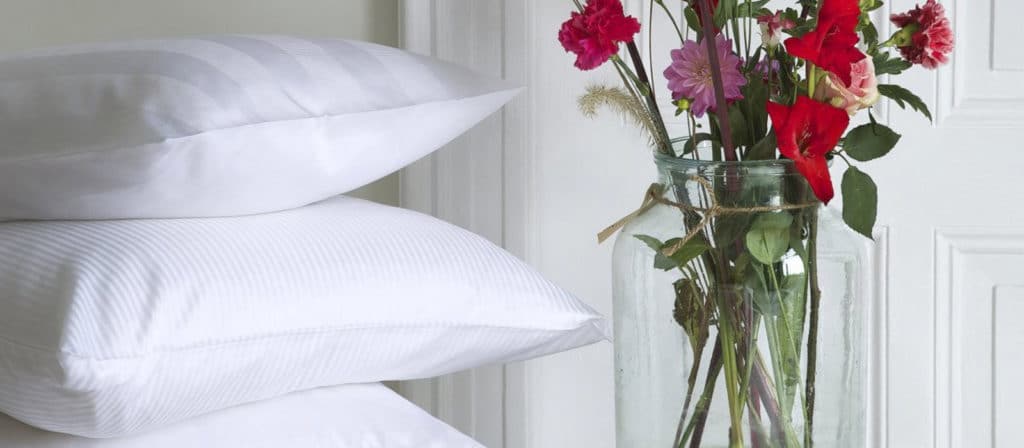
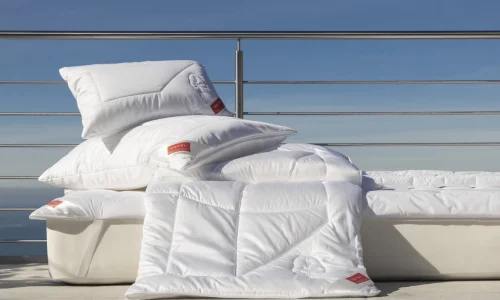
This bed linen from the Hoffmann linen weaving mill is as good as the trousseau your grandmother received.
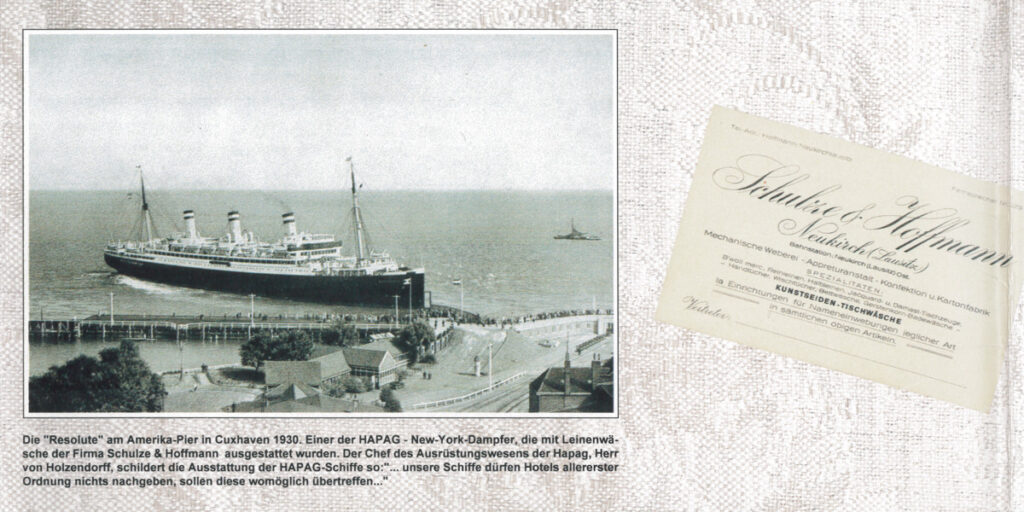
The linen bedding from the Hoffmann linen weaving mill is made from 100% pure linen. Linen bedding from Hoffmann has a climate-regulating effect, absorbs moisture and wicks it away in a controlled manner, repels dirt and feels wonderful. It is heavy-duty quality and made to last forever. The Hoffmann linen weaving mill has been based in the traditional region of the border triangle between Czechia, Austria, and Germany since 1905. The quality of its fine fabrics has been appreciated throughout Germany and beyond for many years. They adorned the tables in mansions and on luxurious passenger steamers. Today, the Hoffmann linen weaving mill is one of the last remaining weaving mills in Germany that cultivates old craft traditions and offers the highest quality.
Around 800 years ago, Upper Lusatia was a densely wooded area in what is now the border triangle of Germany, Poland, and Czechia. At that time, Ortenburg Castle in Bautzen was the seat of power of the Milzeners, a West Slavic tribe. The noble family of Kittlitz lived in the castle and presumably called in Frankish settlers to clear the surrounding forests, granting them the cleared land to cultivate in return. This is how Neukirch/Lausitz, located about 15 kilometers from Bautzen, came into being as a forest settlement whose inhabitants increasingly cleared and cultivated the surrounding land.
Life was hard for the settlers, as the cleared land was unsuitable for growing crops in the hilly and stony landscape. So, from the 13th century onwards, they began cultivating flax, a low-maintenance crop that was not greatly affected by the unfavorable soil conditions. For the local people, flax provided linseed, from which oil was extracted, and flax fiber, which was used to make linen fabrics. Within a relatively short time, every farmstead had a hand loom on which the women of the house wove fabrics for their own use and beyond.
A final report by the Saxony State Institute for Agriculture from 1998 confirmed the advantages of flax cultivation in this region after a six-year study, including the following quote:
“Relatively shallow weathered soils, on which other market crops do not thrive sufficiently, can offer good growing conditions for flax if rainfall distribution is favorable. The eastern and central Ore Mountains, Upper Lusatia, and Vogtland are the classic flax-growing regions.”
For over 700 years, the greater Neukirch/Lausitz area has been a center for flax and linen production and processing. Until well into the 20th century, flax farmers in the region supplied the raw material, flax, to the now mature linen industry.
The year 1905, the founding of the Schulze & Hoffmann mechanical weaving mill
In 1904, Carl Friedrich Richter, a weaving mill owner from Oberneukirch, had a building complex consisting of a main building, factory hall, and drying tower constructed at Zittauer Straße 23. The purpose of the building was to bleach finished linen fabrics. However, he overestimated demand and was unable to run the business successfully. At the same time, Messrs. Schulze and Hoffmann were looking for premises to set up a weaving mill. In 1905, the three agreed on the purchase of the property at Zittauer Straße 23, and the Schulze & Hoffmann weaving mill opened in the same year.
From the outset, merchant Martin Hoffmann and manufacturer Karl-Gustav-Schulze specialized in high-quality damask and embroidery on linen. To this end, they equipped the factory with the latest Jacquard looms, which made it possible to produce elaborate patterns such as those found in damask. At the same time, women were commissioned to embroider tablecloths, handkerchiefs, and bed linen, both in the factory and at home. The two clever entrepreneurs recognized a gap in the market at the time. In the first decade of the 20th century, cheap cotton had already largely replaced linen. However, this left a niche in the luxury segment, especially in the upscale hotel and restaurant industry, where linen was irreplaceable due to the demanding clientele.
World War I and the Weimar Republic
In the years and decades following its founding, the weaving mill built up an illustrious customer base with its portfolio of exclusive linen goods, which extended as far as England. In England in particular, customers were clamoring for bedding and damask from Lusatia. Although the British were already growing a lot of flax and producing linen fabrics themselves at that time, the fabrics from Germany impressed with their quality. Even the First World War could hardly limit their success. But then came October 24, 1929. It was Black Friday, which caused the US economy to collapse. Believing that this would help the US economy recover, then-US President Herbert Hoover enacted a new customs law in June 1930. This law primarily included very high tariffs on imported goods in order to protect domestic companies from cheaper goods from abroad. However, this forced European countries in particular to do exactly the same. As a result, such high tariffs were imposed on the products of the Schulze & Hoffmann weaving factory that exporting to England was no longer profitable. In the end, everyone was a loser, but especially Germany, whose inhabitants were driven into the arms of the NSDAP and ultimately into World War II by the resulting poor economic situation.
With the loss of his English clientele, Karl-Gustav-Schulze withdrew from the company in the early 1930s and it was renamed Hoffmann & Co.
Nazi rule and the DDR
Little is known about the Hoffmann linen weaving mill during the Nazi regime. After the end of the war in 1945, the company was now located in the eastern zone of the four victorious powers, i.e. on Russian territory, and initially business simply continued as usual. Hotels and even shipyards continued to be supplied with bed linen and household textiles of the same high quality as before the war. Upper Lusatia, as a flax-growing region, was of little importance to the victors of the war, which is why, apart from Dresden, hardly any bombs fell in the region.
When the GDR was founded, Hoffmann & Co was not nationalized like many other companies, but production was forcibly converted to workwear and children’s trousers. At the beginning of the 1960s, the company was then tasked with producing bed linen. In 1972, nationalization finally came in the form of an initially independent VEB, which was then integrated into the state-owned Wäsche Union in 1975. Flax cultivation in the region declined steadily, leaving Hoffmann & Co. without raw materials. At first, the company made do by manufacturing half-linen products, but then it was only cotton. The employees mainly used this to make dish towels. In 1990, when the GDR dissolved, Hoffmann & Co produced 20,000 dish towels per day, which were delivered to retail chains in West Germany.
Der Neuanfang im Jahr 1994
Der große Besen der „Neuen Heimat“ sah 1991 eigentlich vor, den Betrieb auf immer und ewig zu schließen. Doch diesem Plan kam die Enkelin von Martin Hoffmann, Christine Rentsch, zusammen mit ihrem Ehemann Gottfried Rentsch zuvor. Sie stellten im Jahr 1991 einen Antrag auf Reprivatisierung des Unternehmens. Ihr Glück dabei war, dass die im Jahr 1972 verstaatlichten Betriebe noch nicht aus dem Handelsregister gelöscht waren. So kam es, dass Hoffmann & Co im Jahr 1994 wieder in die Hände der Familie gelangte. Zusammen mit 30 Mitarbeitern begann der Neuanfang, zunächst bescheiden in der Form, dass für die deutsche Bundespost Münzsäcke und Postsäcke gefertigt wurden.
But the original purpose of the company, the manufacture of pure linen bedding and the application of hand-embroidery, also began again in Neukirch/Lausitz. In the very same buildings where the company was founded in 1905. Christine and Gottfried Rentsch, both in their 50s at the time of reprivatization in 1994, retired in 2006 and sold the company to textile expert Sieghard Albert and industrial engineer Reinhard Ruta.
The Hoffmann linen weaving mill in the 21st century
Today, Hoffmann’s linen weaving mill uses electronically controlled automatic looms, but also traditional shuttle looms. The portfolio now includes linen bedding and other home textiles that comply with the Oeko-Tex standard. One focus here is on custom-made bed linen and, of course, personalized embroidery. The latest addition to the company’s activities is the manufacture of technical fabrics for industrial purposes, such as in composite technology. Translated with DeepL.com (free version)
One downside for the Hoffmann linen weaving mill is that fiber flax is practically no longer cultivated in Germany. Not even in Upper Lusatia, which for centuries was one of the most important flax-growing regions in Europe. Unfortunately, neither the EU nor the federal or state governments support the cultivation of fiber flax.
Damask, the magic word for linen magic
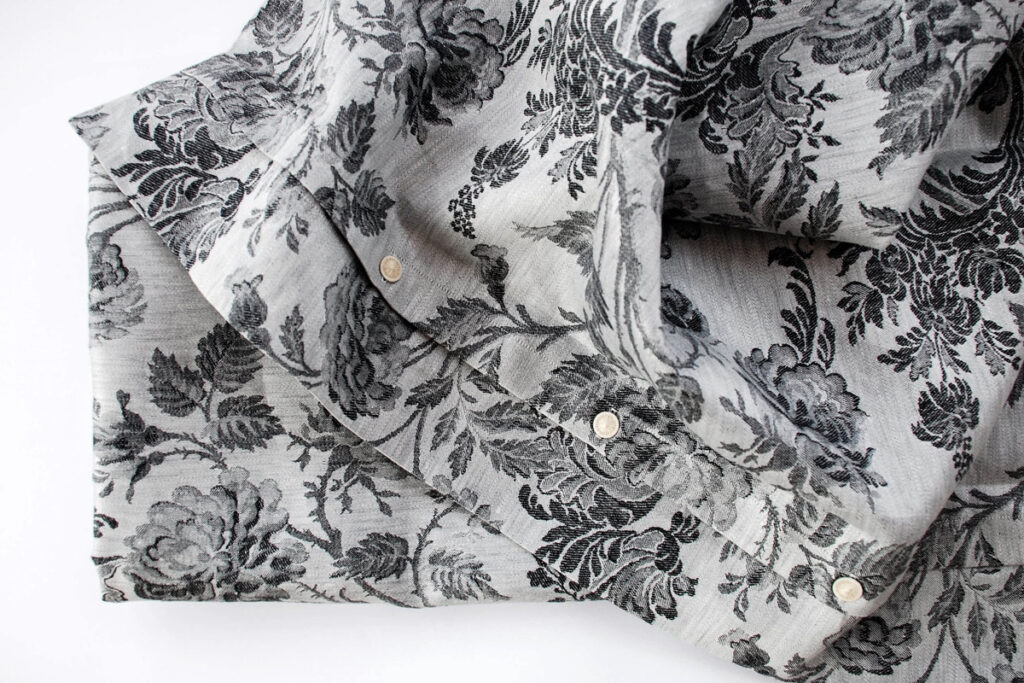
For lovers of exclusive bed linen, the Hoffmann linen weaving mill is ‘the’ manufacturer that stands for beautiful damask bed linen like no other. More than 115 years ago, linen damask bed linen from Hoffmann was already in high demand throughout Europe. Today, Jacquard looms are once again used for production, just as they were back then. Experienced weavers conjure up oriental ornamentation in the fabric, something that very few linen weavers in Germany are still capable of doing. The great art of damask fabric production lies in using just one colour of yarn to give the fabric a structure that makes the woven patterns appear differently depending on how the light falls. If you run your fingertips lightly over damask linen, you will feel the delicate transitions of the floral patterns.
A good example of this is the Chrysanthemum Anthracite Pure Linen Damask from Hoffmann. The Chrysanthemum is a design that was created in the early days of the manufacturer and remains timelessly beautiful. It is quite conceivable that members of the English aristocracy were already sleeping in Chrysanthemum damask bed linen from Neukirch during the reign of Edward VII, Queen Elizabeth’s predecessor.
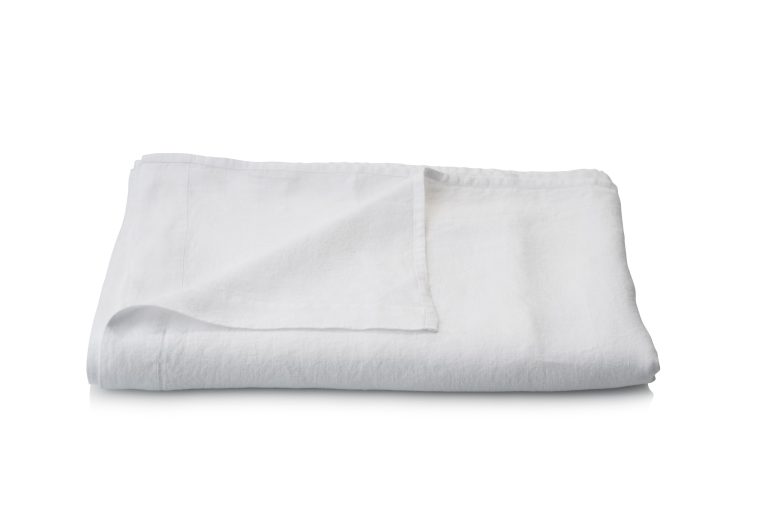
The classic items in the Hoffmann range also include pure linen bed sheets and heavyweight bed linen. These are made from strong linen yarns, giving the fabric a weight of 205 g/m. The thread count is Nm 26. Young women used to fill their trousseau chests with bed linen of this kind, knowing that it would last a lifetime. When antique linen is offered for sale in classified ads today, it is almost certain that Hoffmann linen will be among the items on offer. The new Hoffmann linen of the 21st century is in no way inferior to its predecessors in terms of quality and value.
The first wave began in the 1970s, when the economic miracle hit people’s pockets with a vengeance in the form of high wages, flying was not yet taken for granted, and Spain and Italy were distant destinations. The average German with a practical mindset would hook up a camping trailer
This bed linen from the Hoffmann linen weaving mill is as good as the trousseau your grandmother received. The linen bedding from the Hoffmann linen weaving mill is made from 100% pure linen. Linen bedding from Hoffmann has a climate-regulating effect, absorbs moisture and wicks it away in a controlled
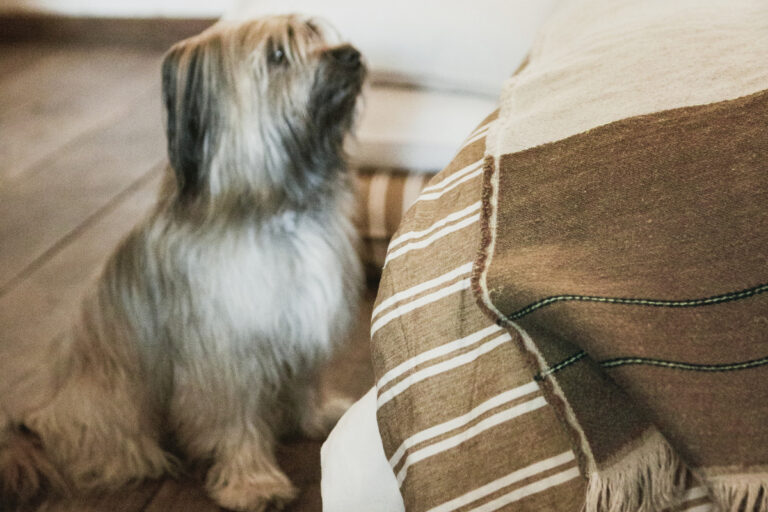
Why should you treat your dog to a linen dog bed? Isn’t that a bit too much of a good thing? The fact that man’s most loyal companions appreciate a comfortable place to lie down is evident from the fact that our four-legged friends are only too happy to take