







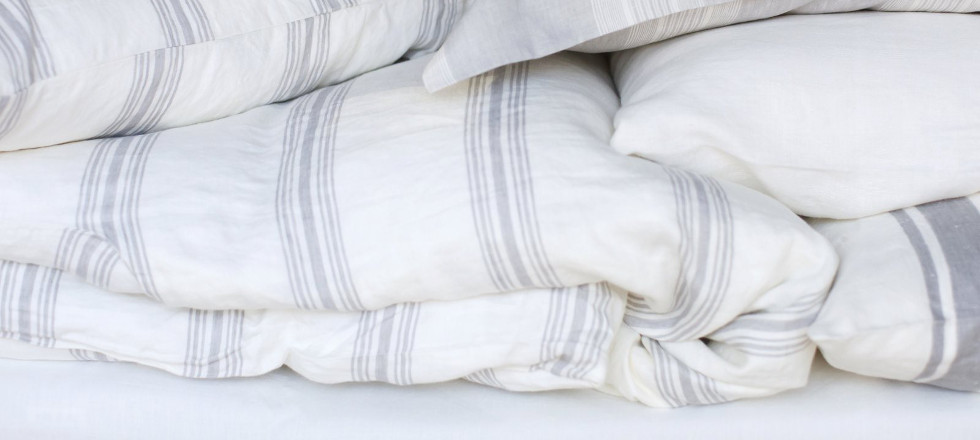

Who isn’t familiar with this in sweltering summers like these? Sweating at night is really not pleasant. These are the requirements for bedding in hot summers: it should be airy, light, and loose on the skin, it should cool rather than warm, and it should enable restful sleep in warm temperatures. Nothing is better suited to fulfilling these requirements than linen bedding! Linen feels wonderfully cool. Even in high temperatures, linen fabric does not make anyone sweat. Linen bedding feels pleasant against the skin and also exudes a timeless and classic elegance.
Linen fabric conducts body temperature faster than cotton, which is precisely why it is perceived as so pleasantly refreshing and cooling in summer. If you sweat a lot in high temperatures, linen bedding can help you avoid sweating at night. This is because linen absorbs moisture and immediately releases it into the outside air. Linen also has great advantages in terms of material quality: it is durable, bacteria-resistant, and can even be washed at high temperatures.
Linen fabric is produced using sustainable and environmentally friendly cultivation methods. The source plant is flax. This ancient crop requires little water and no or hardly any chemical fertilizers. Pesticides are rarely used.
Pure nature against night sweats
A look at textile trends shows that linen has a firm place in the ups and downs of fashion and is currently experiencing something of a revival. The main reason for this is the stability and strength of the fabric, combined with its pleasantly soft feel.
The qualities of linen result from the biological properties of flax fiber. It has hardly any air pockets. It has low insulation properties and is highly adaptable to high temperatures. The strength of the fiber makes linen fabric particularly robust. It is highly durable and, unlike cotton, does not form knots or lint on the fabric surface. Linen also has dirt-repellent properties. Dirt stains can be easily washed out even at low water temperatures.
High-quality linen is more expensive to purchase than cotton items, for example. However, the fabric’s durability and consistent quality justify the difference in price and ensure that linen items can become personal favorites in your wardrobe, retaining their quality even after many years of use.
Linen fabric has a wide range of uses, from the clothing industry to household and interior design. Napkins and fine tablecloths, curtains, upholstery fabrics, and bed linen are all made from linen fabric. Some experts even believe that linen bedding can have a therapeutic effect in relation to sleep disorders. Leading manufacturers of high-quality linen bedding in Europe include Leitner Leinen, Libeco, and Schlitzer Leinen.