

What is linen and what isn't
Materials, properties, definitions, construction
What distinguishes flax from cotton, why linen improves with age, and how pure linen, half-linen and so-called ‘linen-look’ fabrics really differ. Also: comparisons with hemp, Tencel and ramie — and the essentials on weave types, fabric weights and stonewashed finishes. Twelve answers to the basics.
- Basics
What is linen – and how does it differ from other fabrics?
Linen is a fabric made from the fibres of flax (Linum usitatissimum), one of the world’s oldest cultivated plants. The fibre is not found in the seed, but in the plant’s stem — as a so-called bast fibre, which serves as the flax plant’s supporting skeleton. This origin explains almost everything that distinguishes linen from other natural fibres.
Unlike cotton, flax fibres are longer, stiffer and even stronger when wet than when dry — a property that is unique among natural fibres. Cotton loses its strength when it gets damp. Linen, on the other hand, gains strength. Depending on the yarn, its tear resistance is 20 to 30 per cent higher than that of cotton. Its moisture absorption capacity is twice as high — up to 20 per cent of its own weight — and moisture is actively transported outwards rather than remaining in the fabric. Linen keeps you cool because it breathes.
What fundamentally sets linen apart from synthetic fibres such as polyester is that it breathes, it develops character over time, and it eventually breaks down naturally. Polyester does none of these three things.
What is the difference between pure linen and half-linen?
Pure linen is made from 100 per cent flax. It is the fabric that embodies all these special qualities: temperature regulation, durability, shape retention, and longevity spanning decades.
Half-linen is a legally defined blended fabric: the warp threads – the vertical yarns – are made of cotton, whilst the weft threads are made of flax. According to the EU Textile Labelling Regulation, the linen content must be over 40 per cent. Half-linen feels softer, creases less and is more affordable. It is an excellent material — for table linen, tea towels and for those new to linen.
What half-linen does not offer: the full material character of pure linen. The cotton component follows its own, declining ageing curve. Durability is reduced; under ideal conditions, 30 years becomes 10 to 15. For bed linen that is intended to develop character over decades, pure linen is the right choice.
pure linen
Half linen
- Features
Why does linen get better with age — rather than worse?
This is linen’s most unusual characteristic, and it stems from a simple chemical process. The flax fibre is naturally coated with a fine layer of pectin, which makes the fresh fabric stiff. This layer dissolves a little with every wash – not destroyed, but transformed. What remains is a fibre that moves more freely, drapes better against the body and reflects light differently: warmer, silkier, with the sheen that connoisseurs describe as ‘well-worn’.
Cotton follows the opposite pattern: it is at its softest on the first day, after which it loses its softness with every wash. Linen starts out stiff and improves over months and years. The change becomes noticeable after three to five washes. After a year of regular use, the fabric has developed a character that no industrial process can replicate.
In materials science, this effect is known as hysteresis — the permanent change in a material caused by repeated stress. We call it ‘material memory’: linen retains the way it has been used.
Does linen crease more than other fabrics — and is that a problem?
Linen creases. This is physically inevitable and is due to the low elasticity of the bast fibre: when the fabric is folded or pressed, the fibres do not return fully to their original position. This applies to all pure linen – regardless of price or origin. Anyone who claims that their linen does not crease is either selling a blended fabric or a chemically treated product.
The difference lies in the quality of the creasing. High-quality linen made from long, even fibres creases neatly: the creases follow the weave of the fabric and have a natural drape – what English-speaking interior designers describe as the ‘lived-in look’. Linen made from short or irregular fibres creases in a haphazard manner.
And: When it comes to bed linen, creasing is simply irrelevant. The moment you lie down on it, any creases disappear. If you choose linen, you’re also choosing the creased pattern – as a sign of authenticity, not a flaw.
What natural properties does linen have that other fabrics do not?
Three properties are unique among natural fibres.
Firstly, wet tear strength. When wet, linen becomes around 20 per cent stronger than when dry. All other fibres — cotton, silk, wool — lose strength when wet. Not linen.
Secondly, the tactile quality. No other fabric improves with use quite as consistently as linen. Cotton wears out, polyester remains unchanged, and silk loses its lustre. Linen becomes softer and more supple, developing a patina that no industrial process can replicate.
Thirdly, active moisture transport. Linen absorbs moisture and actively wicks it away from the skin rather than trapping it. This creates a cooling effect that does not depend on the ambient temperature, but comes from the body itself.

Is linen suitable for all seasons — or just for summer?
One of the most persistent misconceptions about linen. The idea that linen is a summer fabric stems from the world of linen clothing — the light, airy summer shirt. This does not apply to bed linen.
The scientific explanation lies in the hollow structure of flax fibres. The fibres are tubular in shape; the air trapped inside acts as insulation in winter, much like down feathers. At the same time, linen wicks away excess body heat so quickly in summer that you don’t overheat. The material responds to your needs — not to the outside temperature.
Linen bed linen with a weight of 180 to 250 grams per square metre is suitable for all twelve months of the year. Those who sleep in winter will find that linen is warm without being heavy. Those who sleep in summer will notice how cool it feels to the touch – and that the fabric doesn’t become clammy, no matter how warm the night.


- Comparison of materials
What is the difference between linen, hemp and ramie?
All three are bast fibres — plant fibres that are obtained not from the seeds but from the stems. And all three are occasionally confused, and sometimes deliberately interchanged.
Hemp is distantly related to flax, but feels coarser to the touch and has a more rustic appearance. It does not become silky over time, but remains rough. For bed linen, which comes into direct contact with the skin, linen is superior. Hemp is best suited to technical applications, the construction industry, and yarns for textiles that are subject to heavy wear and tear.
Ramie — derived from the Chinese nettle — resembles linen in terms of lustre and strength, but is more brittle and less abrasion-resistant. It plays hardly any role in Europe; it occasionally appears in blended fabrics in the lower price range.
It’s all about the feel: genuine linen feels cool and has a slight texture, with a characteristic rustling sound when it’s new. If you’re unsure, check the label – ‘100% linen’ or ‘100% flax’ is the only reliable indication.
What does ‘linen look’ mean — and why isn’t it linen?
‘Linen-look’ refers to polyester fabrics that imitate the surface texture of real linen: the slight irregularity, the visible weave, and the matt texture. The material looks like linen — but it isn’t.
Polyester isn’t breathable, doesn’t wick away moisture, doesn’t develop a patina and doesn’t improve with age. It simply doesn’t age at all. In summer, it traps heat rather than dissipating it. It isn’t biodegradable — a linen-look bed sheet that’s thrown away will lie in a landfill for centuries.
Distinguishing features: Faux linen has a smooth, even texture — too even. Genuine linen has fine, irregular knots in the weave, which are a natural feature of the fibre. It feels cool to the touch, even at room temperature. And it smells different: fresh, slightly herbaceous, not neutral or synthetic.


Linen vs. Tencel/Lyocell — which is really better?
Tencel is the brand name used by Lenzing for Lyocell — a fibre derived from wood pulp and produced in a closed-loop solvent system. It is soft, drapes beautifully, is biodegradable and is heavily marketed as a sustainable alternative. Comparisons with linen are often made — and deserve an honest answer.
Where Tencel excels: softness from day one. Tencel is naturally very supple — softer than fresh linen, with no need to break it in. For those who find linen too rough, this is a real advantage. Tencel is also slightly easier to care for and less prone to creasing.
Where linen has the edge: durability. Lyocell fibres are significantly shorter than flax fibres and have lower tensile strength — Tencel bed linen typically lasts five to ten years, whereas high-quality pure linen lasts three to five times as long. Linen’s thermoregulation is also superior. The ‘memory’ of the material — the ‘break-in’ phenomenon — does not exist with Tencel: it does not improve, it remains the same.
The real question is: are you looking for something soft for now — or something good that will last? Tencel and linen offer different answers to this question.
Are you looking for something soft for now — or something good for the long term?
- Design and finishing
What does g/m² mean for linen — and what weight do I need for what?
The weight per square metre, measured in grams, is the most objective and reliable specification a linen fabric can provide. It says more than terms like ‘light’ or ‘heavy’ — and it allows for direct comparisons between products.
90–130 g/m² — very lightweight fabrics, almost transparent. Suitable for curtains, net curtains and table runners. Not suitable for bed linen, as it would not last long enough.
150–180 g/m² — lightweight bed linen and summer fabrics. Comfortable for warm nights, creating a cool sleeping environment. The minimum weight for bed linen used on a daily basis.
180–220 g/m² — the classic weight range for all-season linen bed linen. Substantial enough to ensure durability, yet not too heavy for summer. Most ranges from reputable manufacturers fall within this weight range.
220–280 g/m² — a heavyweight bed linen fabric, typically used for hotel-grade products and very high-quality collections. Recommended for cool bedrooms.
280 g/m² and above — table linen and upholstery fabrics. Textured and stiffer, less suitable for items in direct contact with the skin.
Rule of thumb: If you’re looking for bed linen for the summer, go for 150–180 g/m². If you want something that will last thirty years, opt for 200–250 g/m².
What is the difference between plain, twill and damask weaves in linen?
The fabric is created by interlacing warp and weft threads — and the way in which they are interlaced is known as the weave. This determines the feel, sheen, strength and drape of the finished fabric.
Plain weave is the most basic and simplest weave: each thread crosses over every other thread in turn — a pattern like a chessboard, but on a thread-by-thread basis. The result is a strong, even fabric. Linen bed linen in plain weave is hard-wearing, has a characteristic crinkle and becomes increasingly soft to the touch over time.
In twill weave, each thread skips several threads before crossing over — this creates the characteristic diagonal ribbing familiar from denim. Linen twill is softer, drapes better, has a subtle sheen and creases less easily.
Damask weaving is the most labour-intensive process: patterns are woven directly into the fabric using different weft threads, without the use of printing or dyeing. A linen damask reveals its pattern only in the light — it shimmers where the surface of the threads reflects light differently.
Choosing a binding isn’t a question of better or worse. It’s a question of the type of ski you’re looking for.
What is stonewashed linen — and what changes during the process?
Stonewashed refers to a finishing process in which the finished fabric is softened mechanically — originally by washing with pumice, but nowadays mainly through enzyme treatment and tumbling. The result is a linen that is soft from day one, has a slightly crinkled appearance, and possesses a texture that would otherwise only develop after months of regular use.
What stonewashing actually does: it mechanically removes the pectin layer from the fibres, speeding up the breaking-in process. The linen feels comfortable straight away, with no need for a break-in period. For people who find new linen too stiff, this is a real advantage when starting out.
What stonewashing does not do: it does not replace the material memory that develops when a fabric comes into contact with a particular body and a particular sleeping habit over the years. Stonewashing gives all pieces in a series the same artificial starting point. The genuine memory is unique to each individual.
Stonewashed linen isn’t inferior linen. It’s simply different — it achieves softness more quickly and has a different relationship with time.
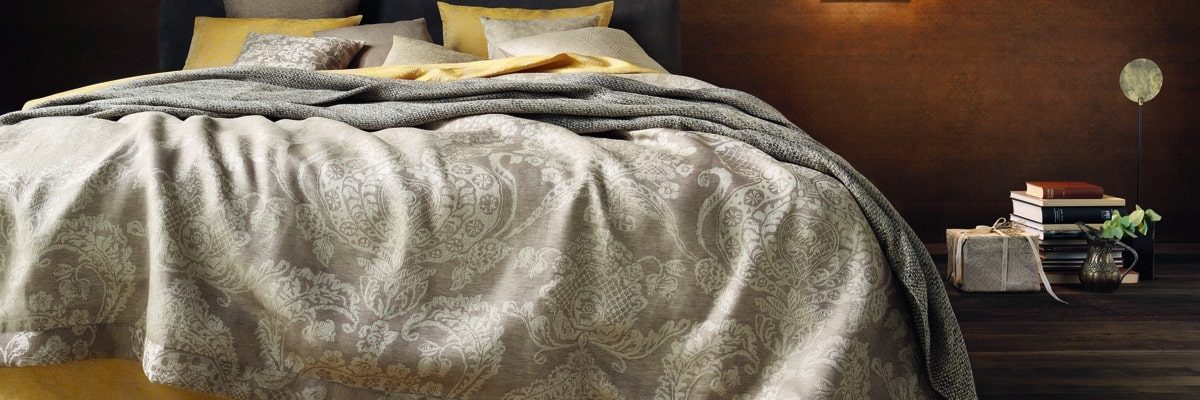
- All linen textiles at The Linen Lounge are woven from 100% European flax — in plain, twill or damask weaves, depending on the manufacturer and collection. View the bedding collection →
Related Topics
Care & Durability
Washing, drying, ironing, and actual lifespan
Origin & Quality
From the flax field, through the scutching process, to the finished fabric
Sustainability
Fiber Properties, Material Comparisons, and Design
