That’s what many people say, and so: we are living in the age of the motorhome, or to put it in more current, albeit not very popular, terms, we are in the second wave of the motorhome.
The first wave began in the 1970s, when the economic miracle hit people’s pockets with a vengeance in the form of high wages, flying was not yet taken for granted, and Spain and Italy were distant destinations. The average German with a practical mindset would hook up a camping trailer to the back of their car or go straight for the self-driving accommodation option: the motorhome. During this period, the legend of the Dutchman also emerged, who allegedly had to tow a caravan behind him in order to conquer Europe. Presumably, German caravan and motorhome-driving holiday nomads were looking for a scapegoat for congested highways when the white wave surged southward over the Brenner Pass at a laborious 80 km/h in the height of summer.
Then flying became increasingly attractive and motorhomes became a thing for enthusiasts for a while, until in the second decade of the new millennium, the environmental impact of flying weighed so heavily on everyone’s conscience that motorhomes regained their former glory.
Rolling Home – Sweet Home
Motorhomes are back in fashion, but according to a survey, not for the purpose of cross-border understanding within Europe, but mainly for holidays within Germany. People from Hamburg travel to the Bavarian Alpine foothills, those from Stuttgart to the Mecklenburg Lake District, and Berliners simply can’t decide because everything is so beautifully colorful. Vacationing with a motorhome takes a bit of convincing, because it’s not cheaper for vacationers. The maintenance costs are not insignificant, and wild camping has long since disappeared in Germany. The daily rental fee at a campground where the oversized vehicle can be parked competes with the package prices of all-inclusive hotels in faraway countries close to the equator.
So what makes living in a motorhome so special? It’s the fascination of taking a piece of home with you and being able to look out from familiar surroundings onto a slightly less familiar environment. It’s also that wonderful feeling of slipping into bed in the evening with your own linen bedding and not having to sleep in hotel bedding that has been through countless washes and accommodated countless people, which can cause nightmares just to imagine. Motorhome travellers also have the option of adapting their bedding to suit their travels.
Different places, same sleep
Even though a motorhome is a mobile home, you can’t take your home climate with you. But what can help against fluctuating humidity, dry mountain air or the salty North Sea breeze at night if, for example, the traveller is only used to the climate in Cologne city centre? Bed linen that regulates the body’s own microclimate. Such bed linen does exist, and no, it does not come from the laboratories of chemical giants, but from a cultivated plant that humans have been using for tens of thousands of years: common flax.
Bed linen made of linen or half-linen has the wonderful property of naturally regulating moisture and temperature during sleep. But linen bed linen is also a delight to the eye. It is not only for the travelling community of motorhome owners that bed linen manufacturers Libeco and Geniksa offer bed linen sets that are ideal for your own bed on wheels.
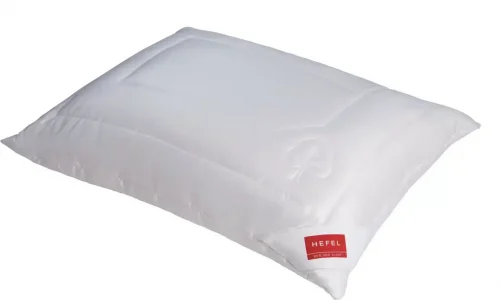
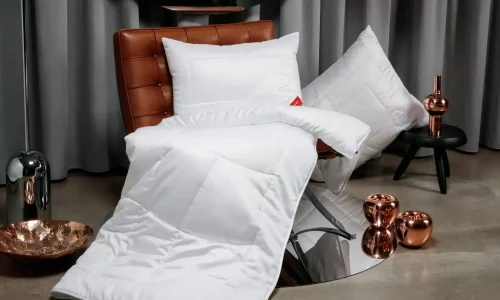
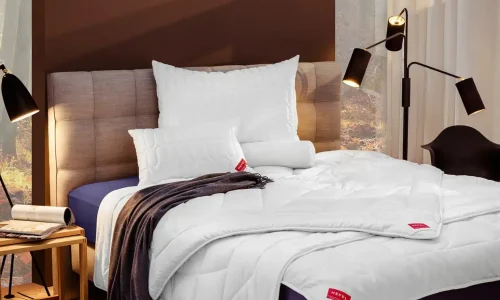
So, before you set off to conquer the world in your motorhome during the coming holiday weeks, it’s worth taking a look at specialists in linen bedding such as Libeco, Geniksa, the Hoffmann linen weaving mill, and duvets and pillows from Hefel.
Is sleeping in velvet and silk particularly delightful? Our legends and stories suggest as much. According to legend, a Chinese emperor long ago imposed the death penalty on anyone who attempted to take silkworm cocoons out of the country. This legend is now around 5,000 years old, yet it seems
The Leitner Leinen deer features the silhouette of an animal—a deer preparing to leap. The deer is a traditional motif. This symbolic animal embodies a connection to home and a love of dense, natural forests. From the 19th century onwards, deer paintings became fashionable as decorations for the parlor. The
The question sounds simple. The standard answer — once a week, say dermatologists and hygiene guides — comes from a world where bed linen means cotton. Different rules apply to linen. Not because hygiene is any less important, but because the material behaves differently. What happens in bed at night