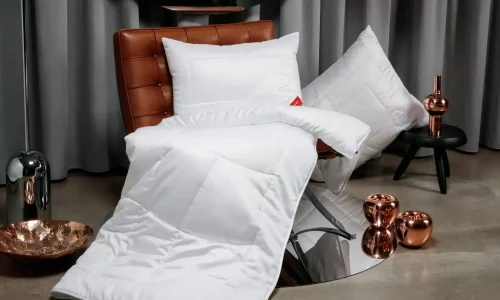
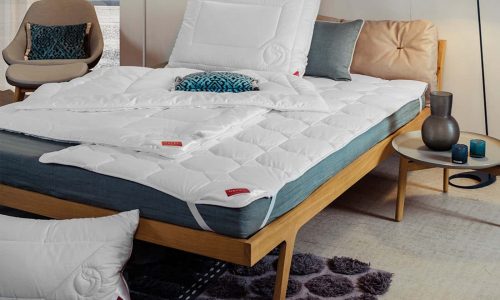
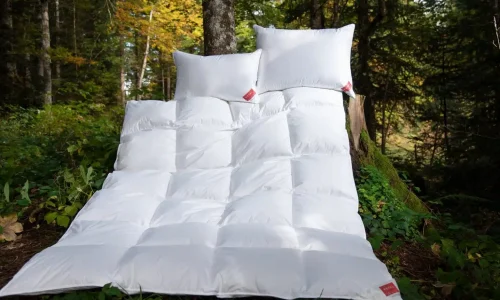
Have you ever slept under a silk duvet? If not, it can instantly provide a new, previously unknown sleeping experience. Under a silk duvet, it becomes palpable in an entirely new way that sleep is a vital component of quality of life. A silk duvet creates a unique experience of weightlessness. The skin and body enjoy the gentle touch of a silk duvet.
The pleasant sensation of silk on the skin is well known. Under a silk duvet, this experience is elevated to pure well-being. The duvet contours to the body like a second skin, enveloping it lightly and gently. Whether the environment is cold or warm, a silk duvet always balances the temperature, ensuring a soothing climate underneath. Sweating or feeling chilled is almost impossible under a silk duvet. Incidentally, the most renowned and finest manufacturer of silk duvets in Germany is Plauener Seidenweberei.
A few years ago, specialist author Volkmar Schwabe described his enthusiasm in a similar way in Paracelsus Magazine after sleeping under a silk duvet for the first time. Schwabe took this as an opportunity to study silk more closely. What interested him most was how silk affects health. However, not all silk is created equal. Schwabe focused his attention on the highest quality and most exquisite variety of this natural product: mulberry silk. It is spun by the larvae of the silkworm Bombyx mori. This precious textile product is called mulberry silk because the silkworms feed on the leaves of the mulberry tree. The mulberry silk fiber has a shimmering luster, is perfectly uniform, possesses high strength, insulates against both heat and cold, and can absorb up to 30% of its weight in moisture. With all these properties, mulberry silk is excellently suited for use in bedding or duvets. What did the researcher discover about the health effects of silk?
Health and silk
The silkworm produces its silk thread from the protein fibrin. It is assisted by symbiotic bacteria in the caterpillar’s intestinal wall. These form proteolytic enzymes called serrapeptase or serrapeptidase. These enzymes play an important role in wound healing. They are used in medical treatments for inflammation, rheumatism, allergies, infections, or thrombosis. These healing active ingredients are also known in traditional Chinese medicine, where silkworms continue to hold an important place to this day.
According to the British Journal of Dermatology (2004), silk bedding has a positive effect on skin conditions such as acne, neurodermatitis, erythema, and inflammation. This is where the composition of the silk fiber comes into play. Its protein building blocks form a structure similar to human skin. The touch of silk has a healing effect on skin irritations and also alleviates discomfort from eczema, dry skin, and fungal infections. Excessive sweating can be reduced by wearing silk, and even children with bronchitis are said to experience fewer symptoms under silk duvets.
Professor Dirk Höfer provides a scientific explanation. He works at the Hohenstein International Textile Research Center in Bönnigheim, Baden-Württemberg. The extraordinary fiber length of high-quality mulberry silk contains very few protruding fiber ends. Skin irritation caused by fiber ends is therefore almost impossible with natural silk. The Textile Research Center examines German bedding and sleep culture according to scientific standards and rarely awards top marks—whether for sleep comfort or climate performance of textiles. However, the Bönnigheim Institute awarded mulberry silk duvets a grade of 1.0 with the distinction “excellent sleep recommendation” for individuals suffering from allergies and skin diseases (test number HL 10.4.6613).
Scientifically proven findings are also reflected in experience-based medical methods. A comprehensive field study by the Institute of Medicine Human Research in Guilin, China, confirmed the effect of silk on human skin. The research director, Prof. Dr. med. Pen Yu Ho Fang, summarizes the result in one clear sentence: “Silk is good for the skin.” Yet, it is not only physical well-being that is enhanced by the touch of silk. The light, precious, and fine fabric also has additional effects on the human psyche. Especially in cases of depressive heaviness, silk can provide emotional support and a brightening effect. In the book “Gentle Healing Practice with Homemade Medicines,” Dr. Jürg Reinhardt describes the antidepressant effect of silk using a light analogy. The silkworm absorbs sunlight and transforms it into a silk thread. Silk is therefore comparable to a fabric made of light and works well against depression.
House dust mites and silk bedding
“Skin eater”—that is the literal translation of the Latin name for house dust mites, Dermatophagoides. This specifically describes the livelihood of these allergy-triggering mites: they feed on shed skin flakes. Humans lose about 1.5 g of skin flakes daily. These are first digested by the mold Aspergillus, after which the mites feast on them. Since mites depend on the aforementioned mold for food, they always carry it on their own bodies and distribute it into the environment through movement. This creates a climate of mold and mites around the fallen human skin flakes. However, this combination is not the only cause of allergies. Rather, mite excrement is highly allergenic. It accumulates into fine dust particles. These are approximately 35 μm in size, spread through the air, and are inhaled. Once inside the human body, they can trigger the well-known house dust allergy.
Dermatophagoides find ideal living conditions at room temperatures around 25°C and a relative humidity of 70%. A down duvet is therefore an optimal habitat—and a down pillow is paradise for house dust mites. Abundant food from skin flakes, pleasant warmth, and even more moisture emanate from a sleeper’s head. Human breath alone transports 250 to 400 ml of water toward the pillow every night. Consequently, there are no down pillows without mites; on the contrary, down pillows can be home to 400,000 mites. Each individual mite produces about 20 fecal pellets per day. For those who wish to calculate further how many millions of fecal pellets can be produced per day, week, or month in a down pillow: statistically speaking, a teaspoon of bedroom dust contains 1,000 mites and 250,000 fecal pellets.
Silk duvets and silk pillows do not provide a livelihood for house dust mites. This is due to the particularly smooth surface structure of the silk fiber and its dust-repellent properties. Fungi also find it difficult to survive on a silk duvet. The difference in quality for allergy sufferers follows logically from these facts.
Climate and silk
The heat- and cold-insulating properties of mulberry silk result from the microfiber-like protein structure of the silk fiber. It can quickly absorb and store human body temperature, but also regulate it. This is because it releases excess heat through its long-filament capillary system. Cold zones, heat accumulation, or evaporative cooling do not occur with silk textiles such as silk duvets. This provides sustainable health protection. Evaporative cooling, combined with damp textile areas, is often the cause of colds, rheumatic complaints, or tension. Silk creates a unique textile climate.
Moisture and silk bedding
Silk is impressive in its ability to absorb moisture. Microfibers can only absorb 2.5% of their weight in water, down reaches 8.5%, and silk over 30%. However, the moisture permeability of a silk duvet is crucial for a consistently dry sleeping climate. Mulberry silk duvets not only absorb moisture quickly but also release it rapidly into the outside air—without causing evaporative cooling. Water vapor or dampness does not build up under a silk duvet. This is particularly important for health due to nocturnal sleep behavior. A duvet is unconsciously tossed aside during sleep if uncomfortable damp heat has developed underneath it. If a draft then reaches the damp parts of the body and cools them down, muscle tension or other musculoskeletal problems result. This is not an issue with a silk duvet. Anyone who has problems with sweating on the head and tries a silk pillow made of 100% mulberry silk will immediately feel the positive difference.
The climate- and moisture-balancing effects of silk bedding are helpful for women going through menopause. Frequent, short hot flashes and subsequent chills usually interrupt sleep multiple times. Nightly recovery is reduced, which affects irritability and mood during the day. Since mulberry silk bedding efficiently regulates body moisture and the thermal climate, it allows women during menopause to enjoy continuous and restorative sleep. This observation was made by Ursula Daffner from Salzburg, an interior designer and CEO of “RaumKultur.eu.” This everyday observation is also scientifically confirmed. Prof. Dr. Ingrid Gerhard is an environmental physician and provides information on the health effects of silk in the “Women’s Health Network.” According to Gerhard, biochemical studies show that amino acids from mulberry silk influence the central nervous system. They have a calming effect and deepen sleep. This phenomenon is known as the “sleep factor” and contributes to an improved quality of life. Interior designer Ursula Daffner adds to this aspect by noting the antibacterial effect of silk fabric in a silk duvet. The interior designer, who focuses on sleep culture, reports that an all-silk pillow helps her with migraines, toothaches, or sinus pain, among other things.
Building biology and silk
Some groups of people describe themselves as sensitive to electrosmog radiation and geopathic influences. In such cases, silk is said to have a shielding effect and can help those affected. Is this true? This question intrigued Ursula Daffner, and she commissioned a specialist company for measurement technology. She had mulberry silk bedding—mattress toppers, silk duvets, and pillows—tested. The focus was on the shielding effect against earth radiation, the so-called Hartmann grid, and geomagnetic influences from the Curry grid and water veins. The result: measurement differences are indeed detectable. For example, a silk shielding blanket reduces the intensity of Hartmann crossing rays from a scale value of 3 (strong) to an intensity with a scale value of 6–7 (harmless). Similar results were found in investigations of water veins and Curry crossings. Proponents of radiesthesia measure so-called subtle energy for life-strengthening processes using the Bovis unit. Accordingly, the silk bedding was able to increase the positive energy from 6,700 Bovis units to 7,500.
The non-profit research group for geobiology Dr. Hartmann e.V. confirms these measurement results from its own experience. When creating so-called biorhythmograms, the use of a silk duvet shows significant calming of skin resistance values regarding earth radiation and earth faults. Neutralized or undisturbed locations exhibit these lower resistance values. Günter Engelhardt intends to investigate whether long-term effects also result from the short-term effects of using a silk duvet.
Better known than the subtle effects of silk are its physical properties in the context of building biology. Silk does not burn. Therefore, it is well-suited for furnishings in care facilities or hotels. Its high self-cleaning power makes silk a hygienic furnishing fabric. This is particularly helpful for clinics and other rooms where sick people stay. The Marinus am Stein private clinic is located in Brannenburg am Inn and specializes in cancer patients. All clinic beds are deliberately equipped with mulberry silk duvets. This provides patients with the highest possible restorative sleep. The exceptional sleep quality under the silk duvet is specifically utilized as a health factor.
Finally, it should be mentioned that the health insurance company Barmenia also recommends the use of silk duvets to its members. These airy, light duvets not only have a positive effect on sleep but are also natural and manufactured without the use of chemicals.