







On the Start of Spring and the Return of Linen

It begins with a sound. Or, more precisely: with the end of a sound. Sometime in March, on a morning that seems no different from the ones before, you realize you haven’t closed the window. You didn’t forget—you left it open on purpose. For the night. That is the moment when spring truly begins. Not on the calendar date, not with the first crocus. But in this small decision: the room is allowed to breathe again.

The poet Eduard Mörike knew this, even if he described it differently. His spring sends a blue ribbon ahead, fluttering through the air, announcing its arrival before it is fully here. This promise—the unfulfilled, yet palpable—belongs to spring as much as shadow belongs to light. You can smell it outside the window before you see it.

And you can feel it in bed.

Linen is a fabric that has a long-standing association with spring.

This is down to its undeniable properties: linen absorbs moisture — up to a fifth of its own weight — and releases it quickly. It regulates temperature because its fibres are hollow and allow air to circulate. It feels cool against the skin without making you feel cold. And it is light in a sense that goes beyond mere weight: it doesn’t weigh down the body; it moves with it.

In winter, we turn to different fabrics. Flannel, satin, cotton fleece — all materials that keep us warm, that cling to us, that envelop us. That is their purpose, and they fulfil it well. But in spring, when the nights grow milder, when the body starts to produce heat again rather than conserve it, that enveloping sensation begins to feel restrictive. You sleep more restlessly. You wake up in the morning with a slight feeling of constriction that is hard to put into words.

The window opens. The linen comes out.

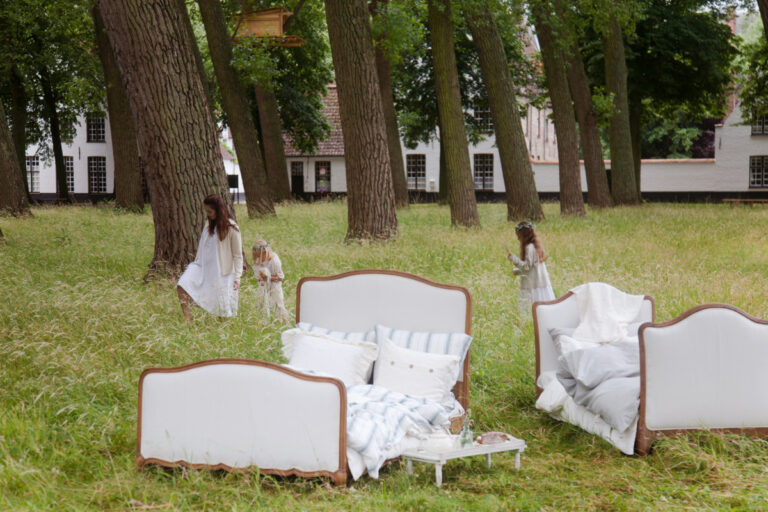
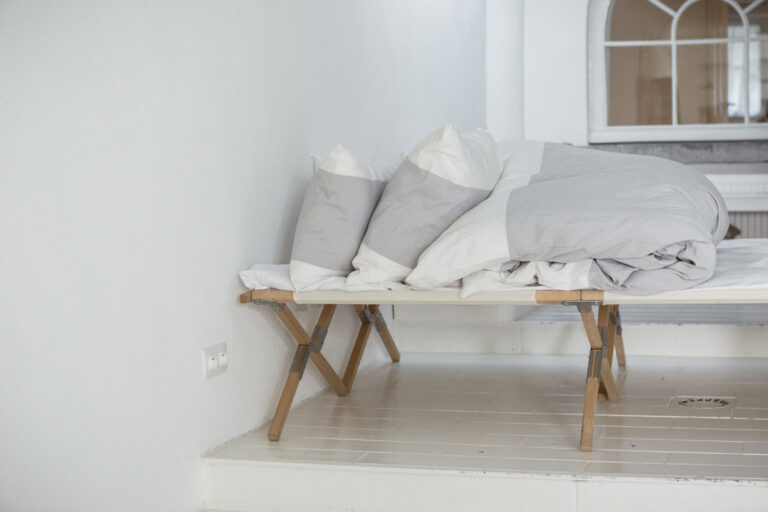
A few beds in the middle of a forest.

It is remarkable how many people are familiar with this moment — and how few consciously recognise it. Taking the linen bed linen out of the cupboard, giving the cooler, slightly rustling duvet cover a first shake, fluffing up the pillow. A small act that feels like a ritual, because that is exactly what it is: preparation for a different kind of sleep.

Linen doesn’t feel like other fabrics. On the first night, you’re aware of it—the texture, the slight coolness, the gentle resistance. But that fades. Linen has a quality that could be called a ‘material memory’: it becomes softer with every wash, more supple with every use. It carries time within it, without showing it. After a few years, a well-cared-for linen garment is different from what it was on the first day — more mature, more serene, more comfortable in every way.

That’s the opposite of wear and tear. It’s getting used to things — in both directions.

Spring brings changes to the rest of the house too. If you sleep with the window open, you start to move through your rooms differently. The air feels different, and with it, your desire for what you want to touch changes. Lighter fabrics on the windows. Cooler surfaces on the table. Morning coffee on the balcony instead of in the kitchen.

In this atmosphere, things become apparent that had previously gone unnoticed: that the fabric you’re sitting on is heavy and dark. That the tablecloth, made of a synthetic blend, feels different in April than it does in November. That linen at the table has the same qualities as it does in bed — it absorbs its surroundings without conforming to them. It looks good in the spring light because it doesn’t shine. Because it’s matt and authentic.

Natural fibres aren’t tied to any particular season, but they do have their seasonal moments. From April to October, linen is the fabric that best reflects the outdoors — what comes in through the open window.

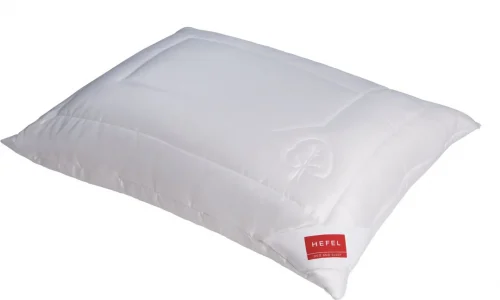
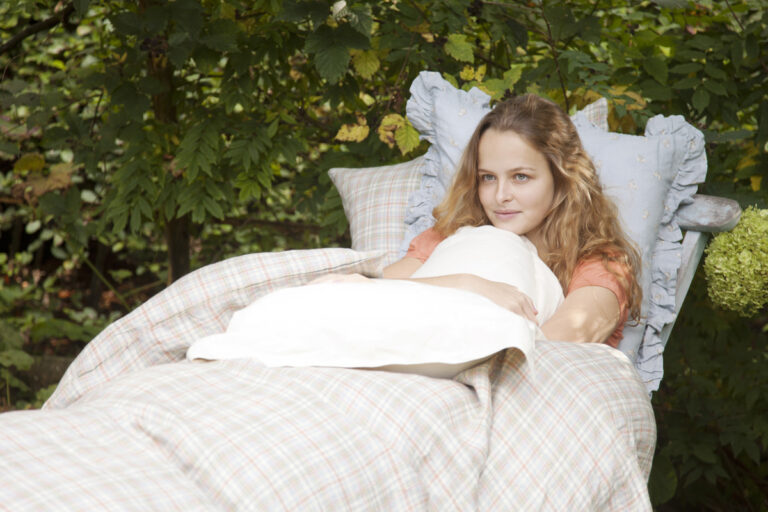
A woman lying in bed with a pillow.

There is one word that comes up time and again when you ask manufacturers and weavers why they have been working with this fabric for generations: honesty. Linen hides nothing. It has no finish to mask poor quality. It cannot be permanently smoothed out if the quality of the fibre does not allow it. You can tell what a linen fabric is just by looking at it — the density of the weave, the length of the thread, the care taken in its manufacture.

That is why linen has been regarded as the gold standard in Europe for centuries. Not as a luxury – although the finest linen fabrics can certainly be luxurious – but as a staple. As the fabric people knew, trusted and passed down from one generation to the next because it simply wouldn’t wear out.

Today, this fabric is back, and it is just as it always was. The weaving mills that produce it — in Austria, Belgium, Germany and Lithuania — work according to the same principles as they did a hundred years ago: long flax fibres, slow weaving, and no compromise on the raw material. What has changed is not so much the fabric itself as the awareness surrounding it. That quality takes time. That the cheapest price is rarely the fairest. That a fabric which lasts thirty years is ultimately cheaper than one that needs replacing after five.

The start of spring is a good time to think about such things. Not because you have to buy them now — but because opening the window creates a kind of awareness that is missing in winter. You’re outside again, even when you’re indoors. You smell, hear and feel things differently. And this awareness extends to the things around you.

What’s on my bed? What’s covering my table? What do I touch every day without realising it?

Linen answers these questions quietly. It is not loud, not flashy, not fashionable in the strict sense. But it is there, spring after spring, reliably better than the season before. That is no exaggeration — it is botany and physics. With every wash, the linen fibres realign themselves, becoming more uniform, softer and more durable. The fabric ages with dignity.

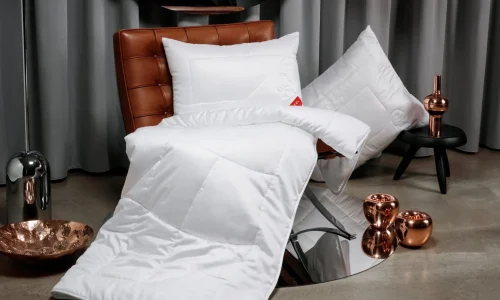
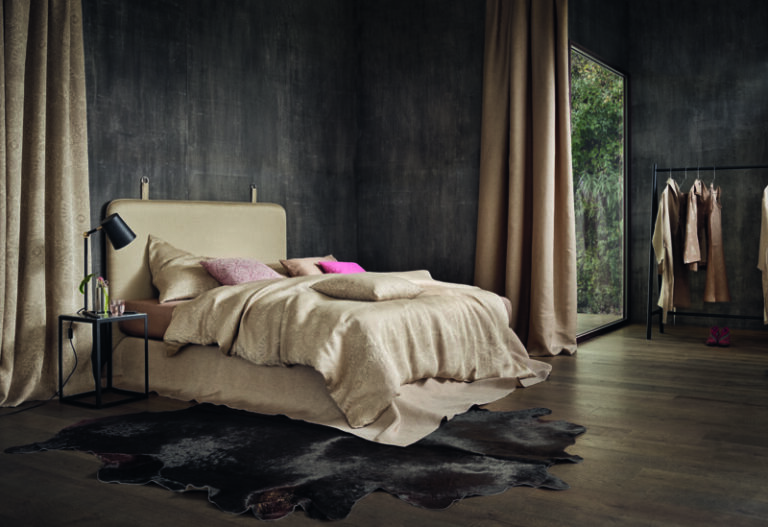
A bed with a pile of pillows on top.

If you’re changing your bed linen at the moment — putting the flannel away and swapping the heavy duvet for a lighter one — now is a good time to check what your bed linen has been through this winter. Whether it’s ready for that first spring day when you open the window.

The pure linen bed linen we curate at The Linen Lounge comes from weavers who have relied on the same principles for generations: flax grown in Europe, and fabrics that reveal rather than conceal. Leitner from Austria weaves jacquard designs that look different in the spring light than in winter — clearer, airier, as if they were made for this season. Libeco from Belgium produces simple, dense linen fabrics that keep the window shut yet still smell as if the wind were blowing in from outside.

This isn’t an advert for a product. It’s a reference to a fabric that’s perfect for spring — because it breathes, because it’s authentic, because it gets better with time.

The window is open. The rest will fall into place.

The Linen Lounge curates bed linen and table linen from European manufacturers — Leitner, Libeco, Hoffmann, Vieböck, Schlitzer and Geniksa, as well as Peter Reed and Seidenweber Manufakturen. All items are made to order; we do not hold stock.

Share

More Posts

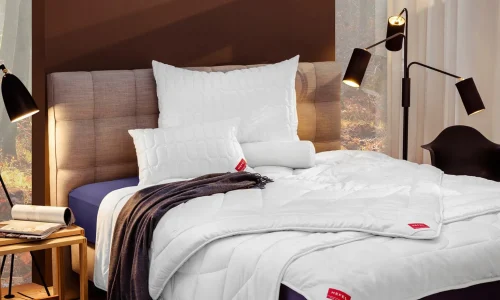
A bed in a bedroom next to a window.
An interview with Leitner Leinen

Friedrich Leitner from Leitner Leinen in an interview with LinenProject Linen Project: Mr Leitner, what characteristics distinguish Leitner linen? Friedrich Leitner: For 160 years, the family-owned company Leitner Leinen has been working with just one material: linen. Over the course of a century and a half, a special relationship has
Read more »
A few boxes standing on a wooden floor.
Where the good stuff comes from: Baltic linen

Where the good stuff comes from: Baltic linen used to be something very special, a term like Meissen porcelain or Pilsner beer. Until the Great War, Baltic linen was synonymous with the highest quality and finest European design. Unfortunately, this was lost with the occupation of the Baltic states. Today,

Read more »
Two white pillows and a folded white comforter are stacked outdoors in front of a metal railing, with a clear blue sky in the background. The bedding has red tags and looks soft and plush.
Hefel Textil exemplifies sustainability

Hefel Textil is living awareness for natural sleep One thing is crucial for Hefel Bettwaren Textil: whether you are a manufacturer or a consumer, the responsible use of natural resources is becoming increasingly important. This is the only way to protect the quality of life for future generations. Hefel Textil

Read more »

RELATED TO THIS POST

Our Recommendations

Hand-picked products from European manufacturers

Welcome back!

Register now

Before it begins

Some things we show first to those who know how to appreciate them.

First access to new collections. Pre-order limited editions. Behind the scenes of our manufactories.

Newsletter Anmeldung EN

Welcome back!

Register now

Before it begins

Some things we show first to those who know how to appreciate them.

First access to new collections. Pre-order limited editions. Behind the scenes of our manufactories.

Newsletter Anmeldung EN