






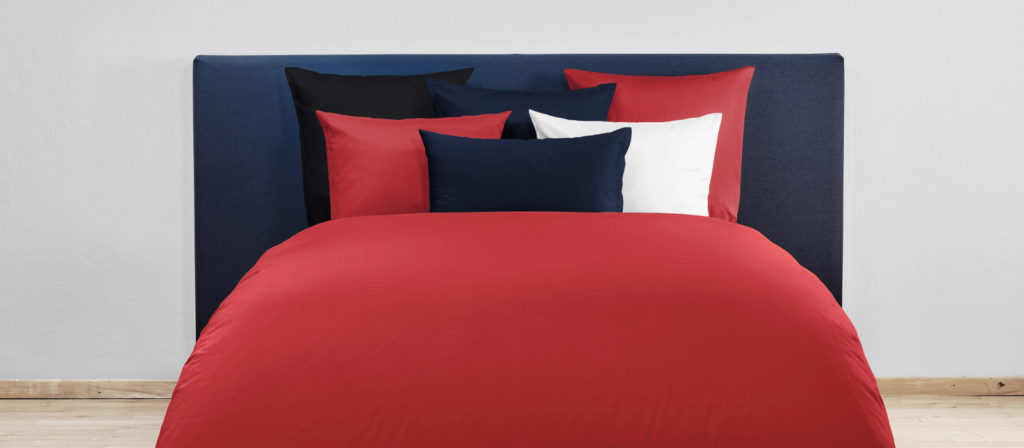

Uni fabrics—they stand alone, unique and singular.
When you hear or read the word “uni” on its own, at least in Germany, you probably think of a university. However, in our language, it is actually derived from another word that stands in stark contrast to the often liberal or revolutionary thinking found at universities: uniform. Derived from the uniform tunic worn by soldiers, the word “uniform” was first used in the French army in the 18th century and thus found its way into the field of fabrics, where it became the generic term ‘uni’ for color uniformity. Perhaps it was the other way around, with the manufacturers of soldiers’ clothing at the time using the term “uniform” and army commanders adopting it. This is not an entirely unlikely theory, as fabric manufacturers were ultimately the first to have to deal with the matter. The French word “uni” means “simple” or ‘even’ and is derived from the Latin “unire,” which stands for “one, a single.”
Plain fabrics – they stand alone, which by no means implies that plain fabrics have to be boring or necessarily lead to uniformity, especially today. After all, there are currently around 800 different textile colors in use, each of which can be used to produce a plain fabric. 
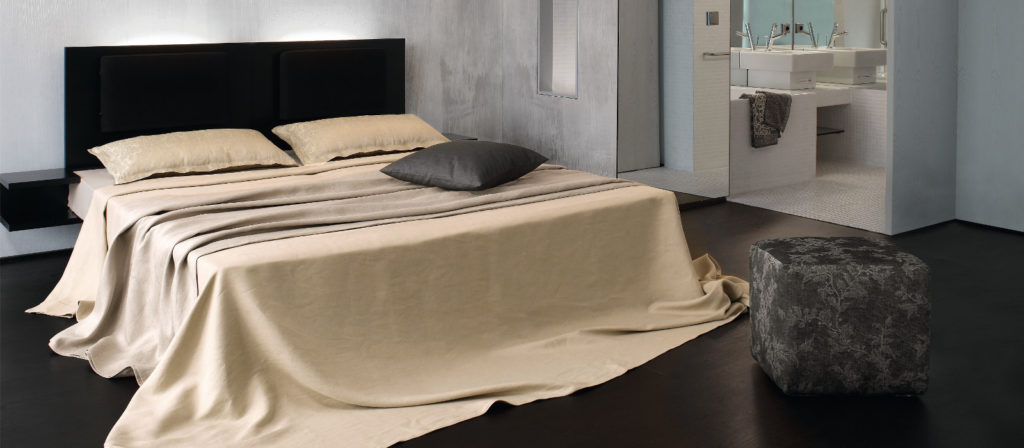
Linen bedding made from plain fabrics – more colorful than ever
Until the mid-19th century, the range of colors available for textiles was very limited, as dyeing fabrics was a complex process and special additives were required for certain colors, which were difficult to obtain and therefore expensive. At that time, plain colors were the norm among the population, predominantly eggshell white, ocher, and beige, the natural colors of wool, linen, and hemp. Onion skins, beetroot, carrots, blueberries, elderberries, and spinach were used to add some color to the fabrics, but they were still predominantly monochrome, as industrial textile printing is still a young art, only about 60 years old, and color-woven textiles came at a price and were reserved for the wealthy upper classes. 
However, the epitome of plain textiles was snow-white linen bed linen, which was bleached in the sun on the riverbank after being washed in the river. Incidentally, it is still quite difficult to dye textiles white, which is why the easier option is often taken of removing all color from the fabric. Although white bed linen is the classic choice when it comes to plain fabrics, plain fabrics in all possible color spectrums have long been timelessly fashionable companions in clothing, but also in household textiles such as bed linen. The dominance of just one color has an almost magical effect. Plain fabrics can be calming, but also exciting.