Description
The benefits of European organic linen
Linen is one of the oldest cultivated plants of mankind and was already highly valued in Viking times. The extraordinary properties of European linen make it the ideal fiber for bed linen: the material regulates the temperature in a natural way – cooling on warm nights and retaining heat in the cold season. This thermo-regulating effect is due to the hollow fiber structure, which traps air and absorbs moisture at the same time. Linen can absorb up to 20 percent of its own weight in moisture without feeling damp – a decisive advantage for restful sleep. The long, smooth fibers are exceptionally gentle on the skin and develop a more pleasant suppleness with every wash. At the same time, linen is remarkably robust and durable – qualities that were also appreciated by the people of the North. Leitner only uses organic linen from controlled European cultivation – sustainable and of uncompromising quality.
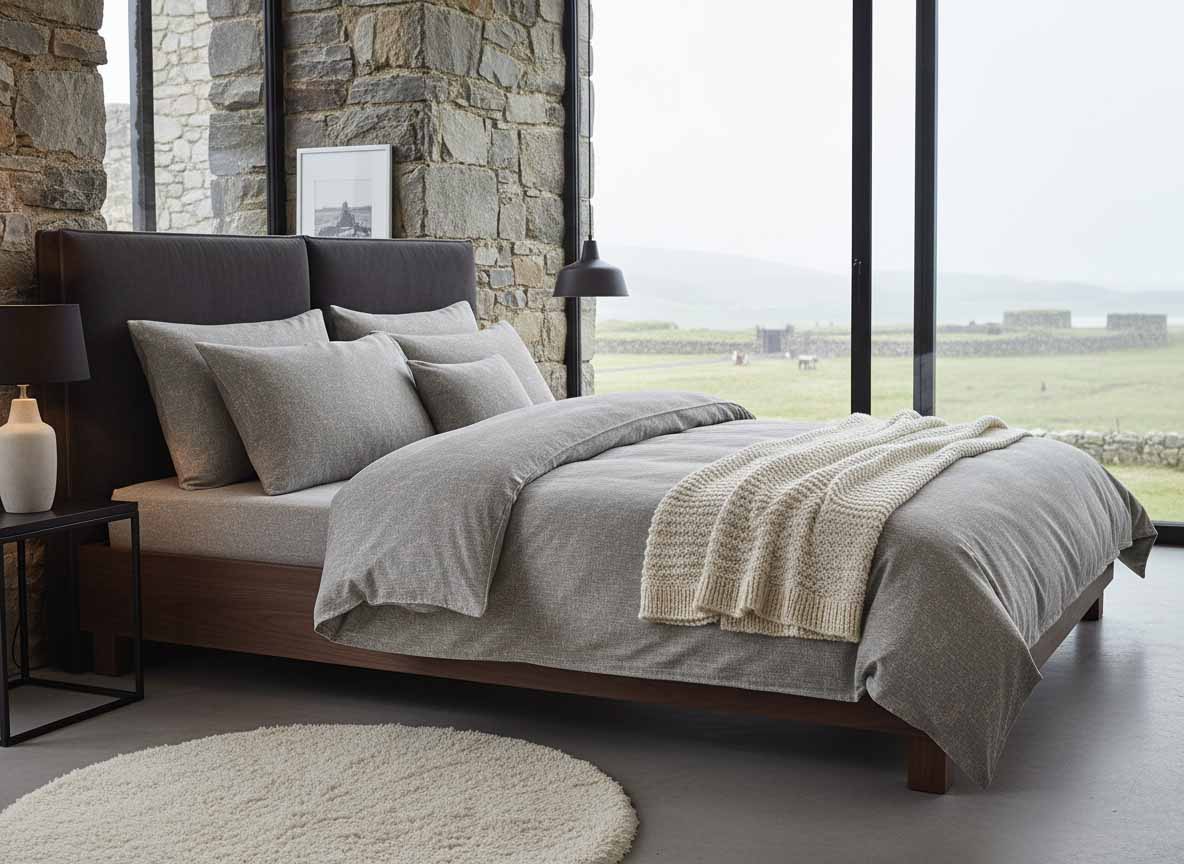
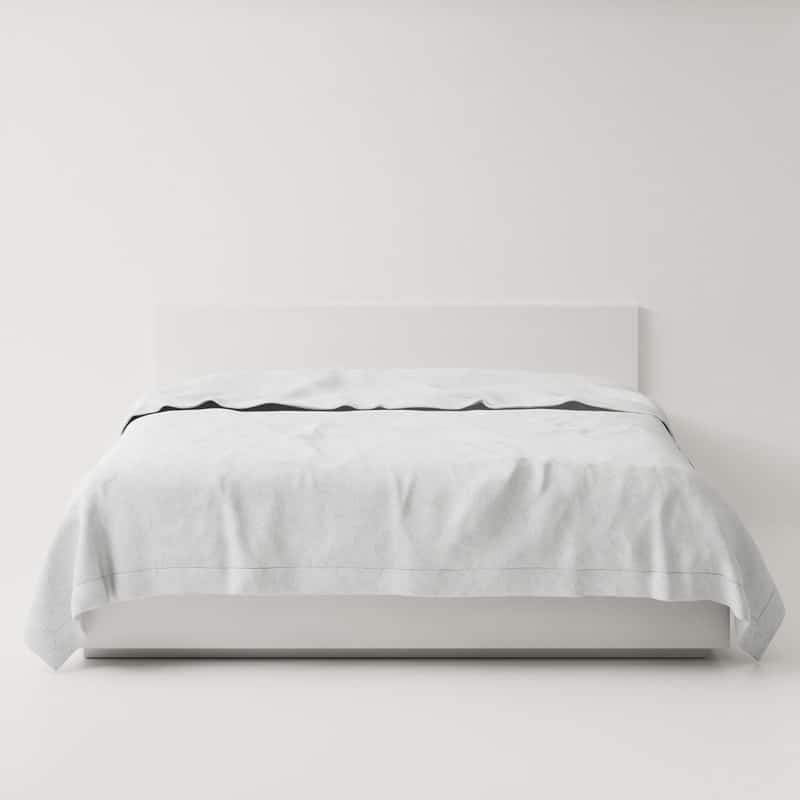
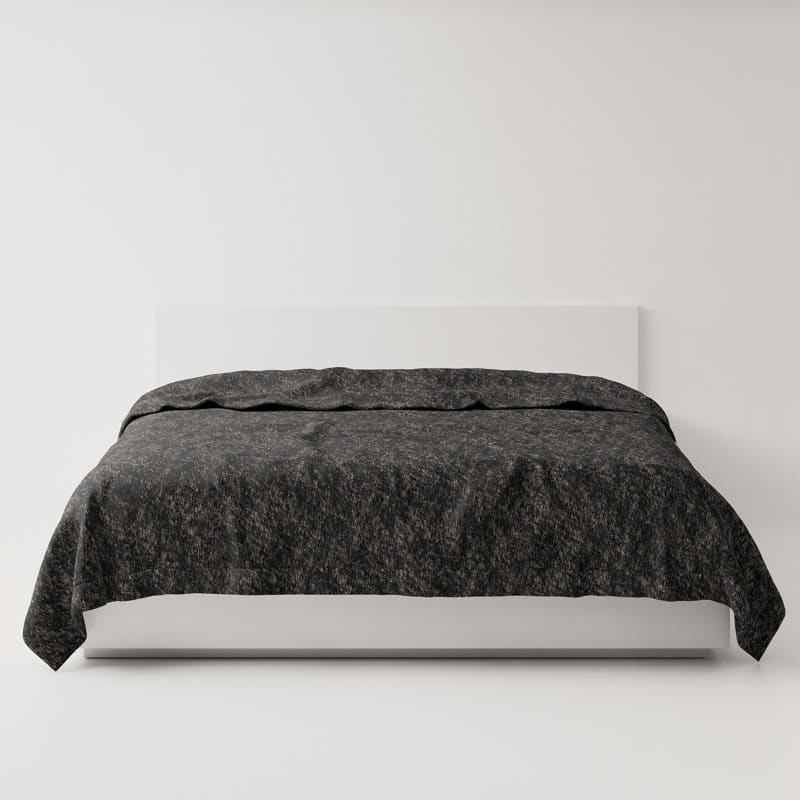
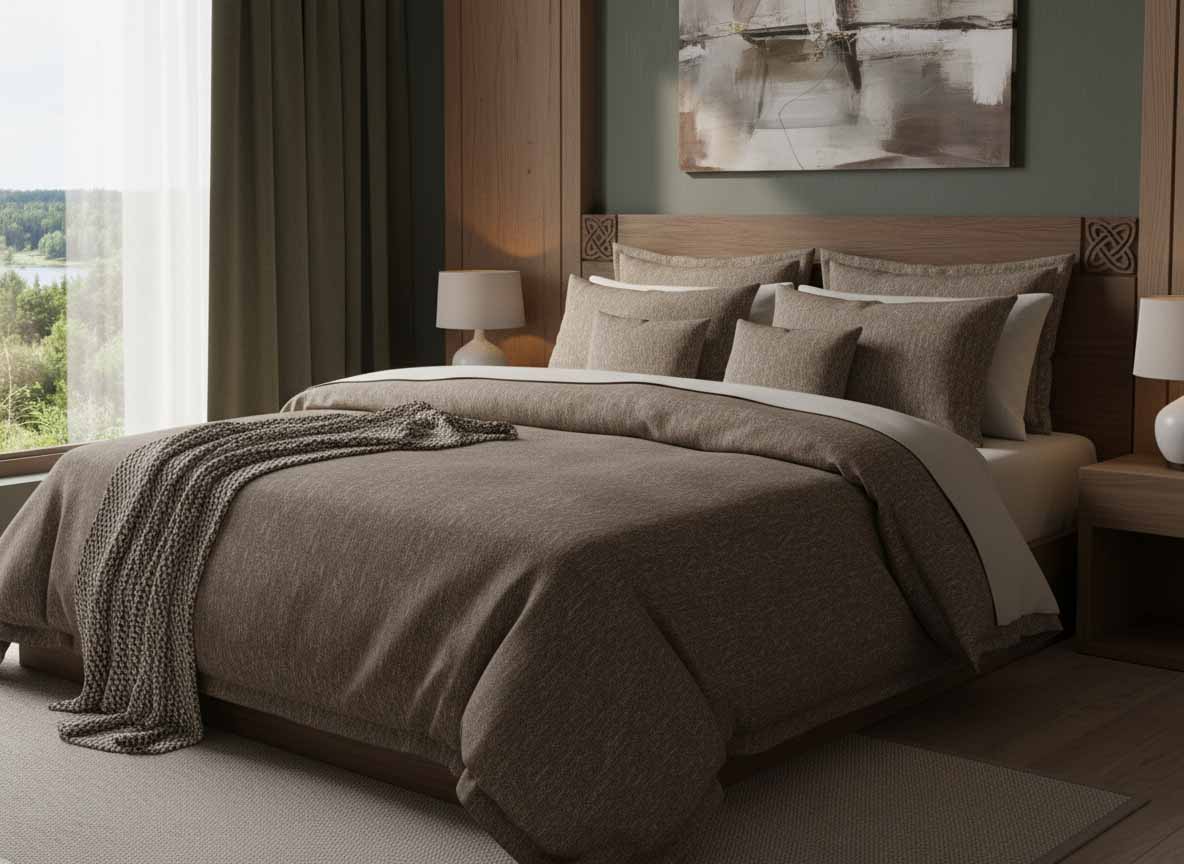
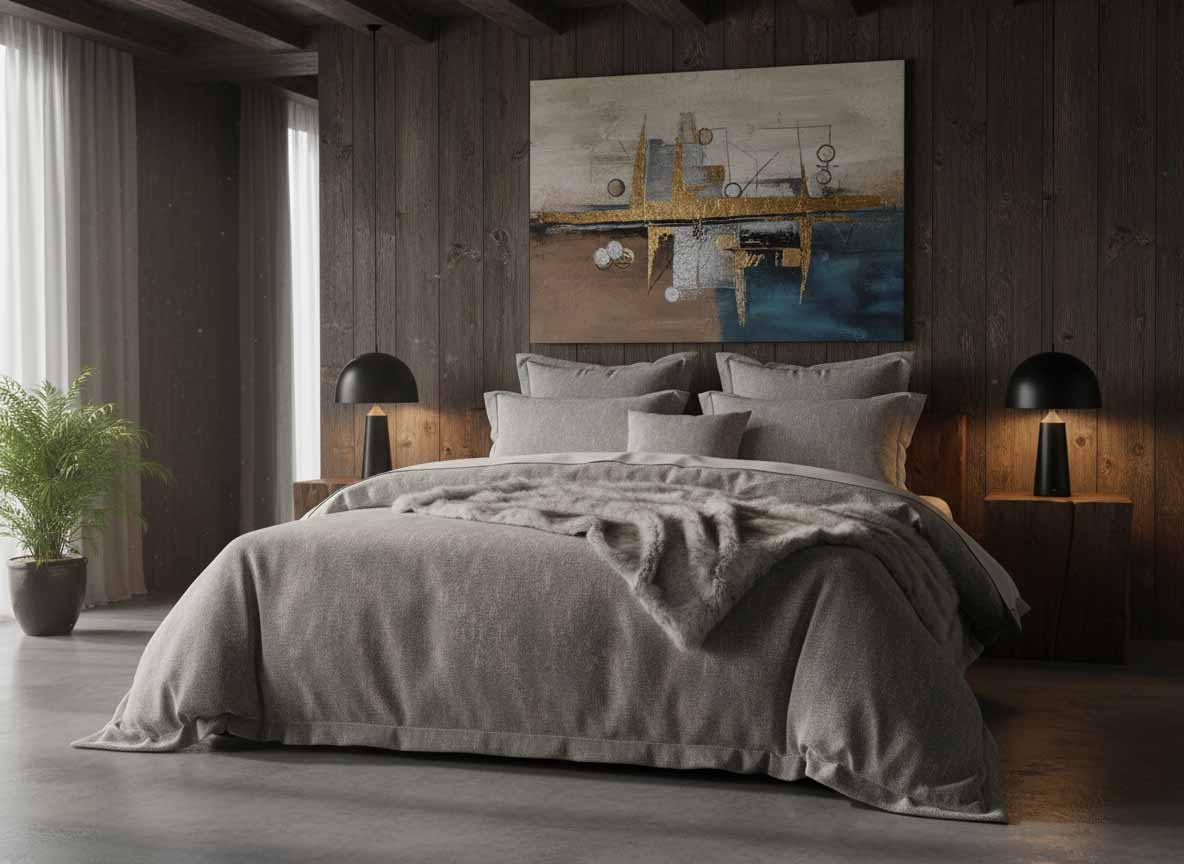
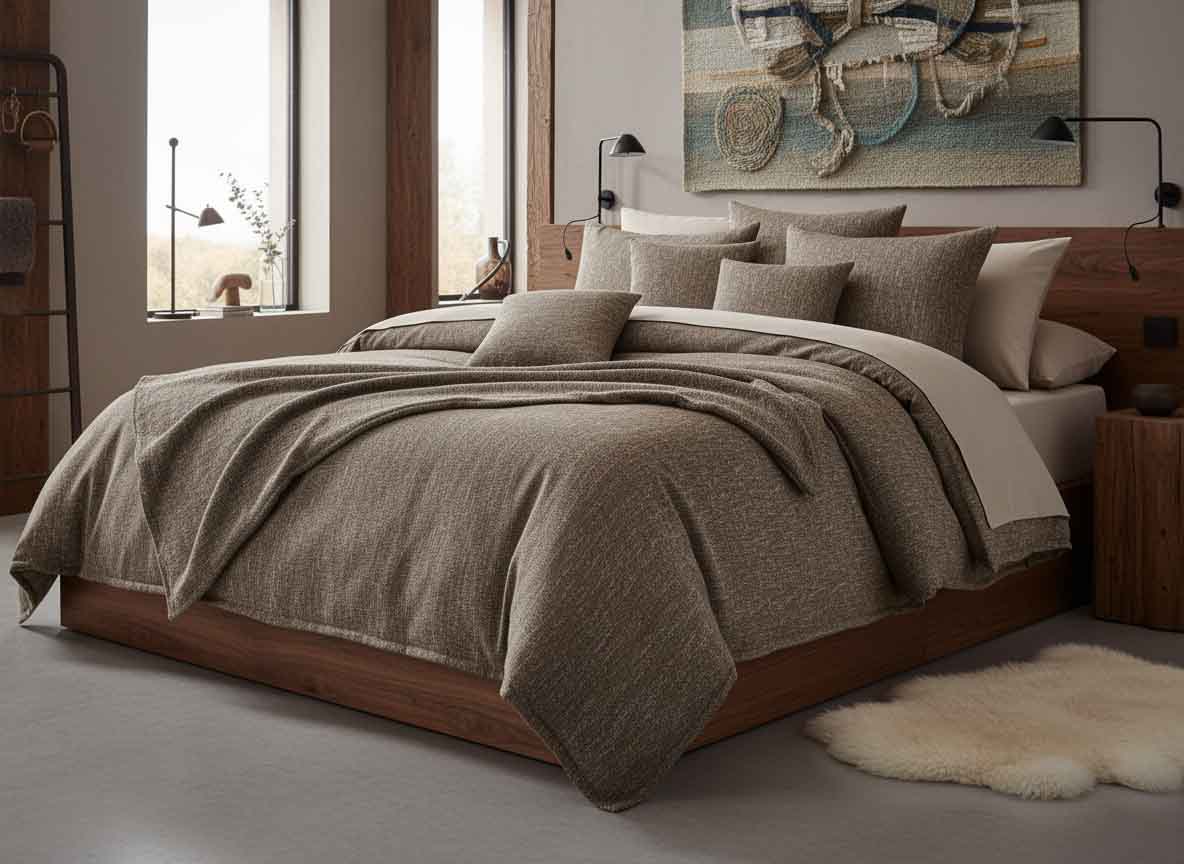
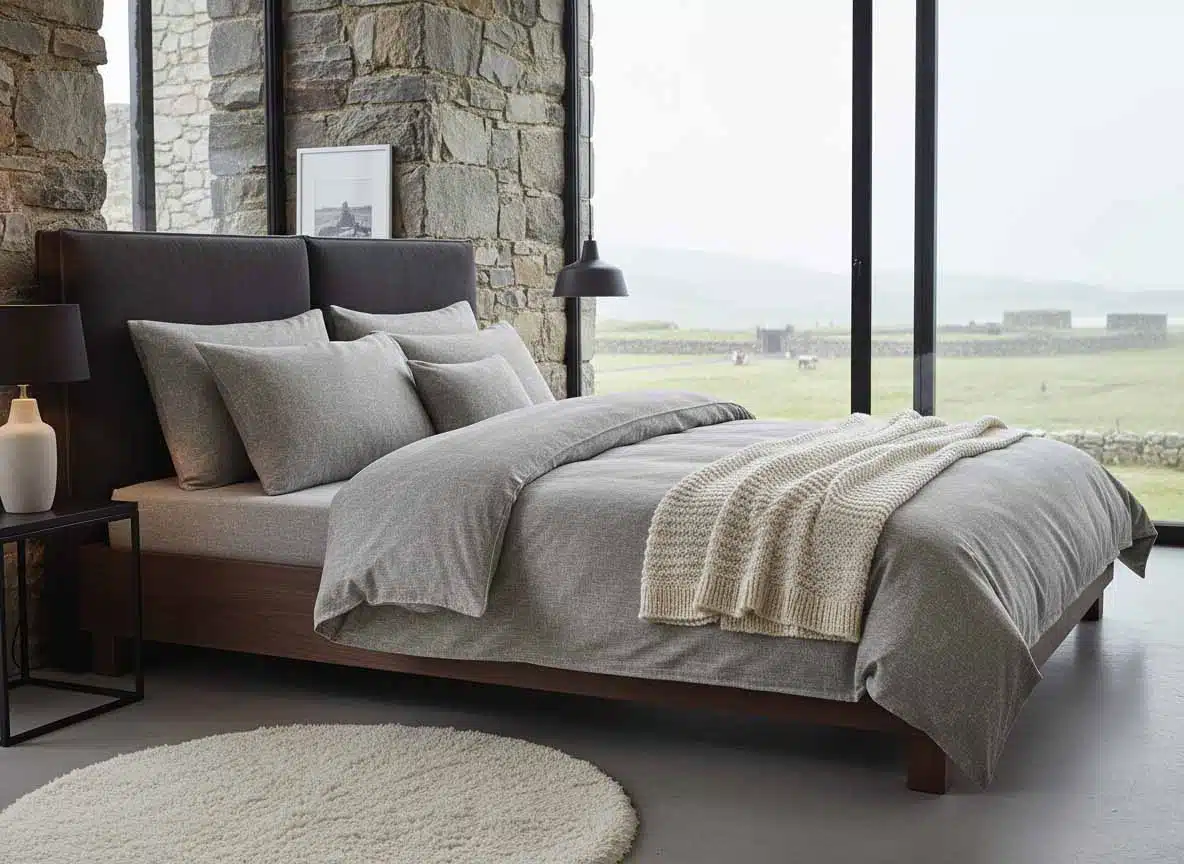
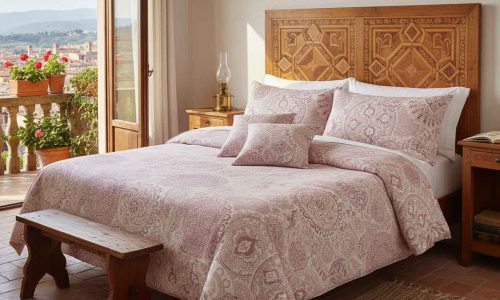
The product: Haithabu pure linen bed linen from Leitner Linen
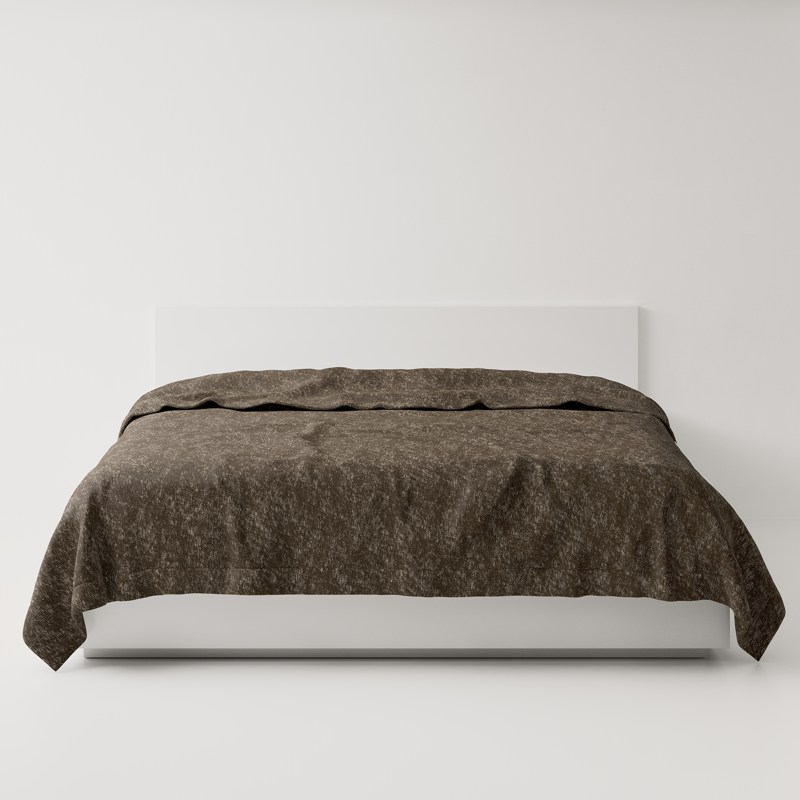
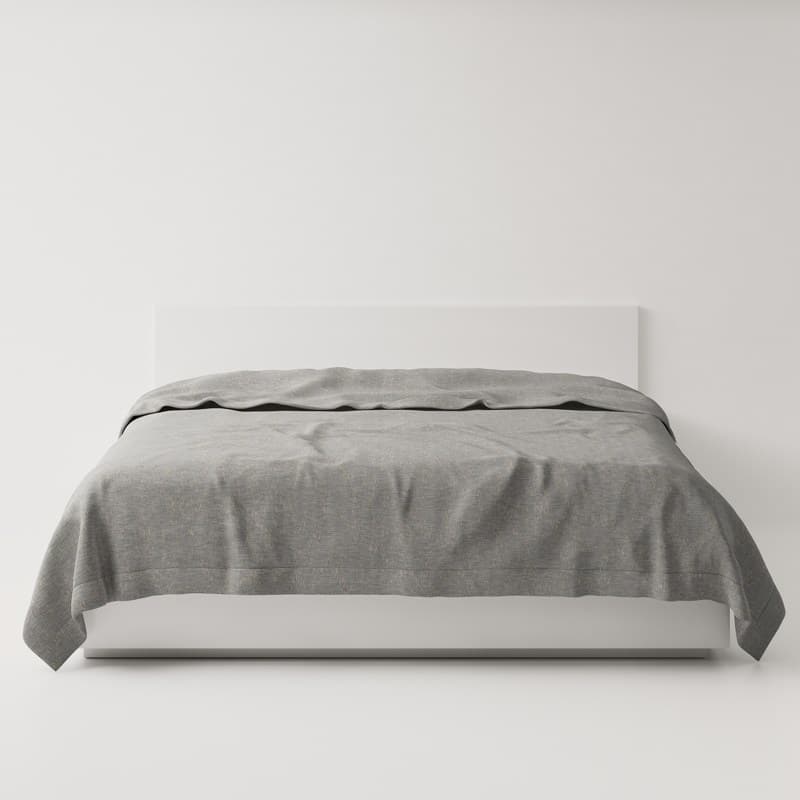
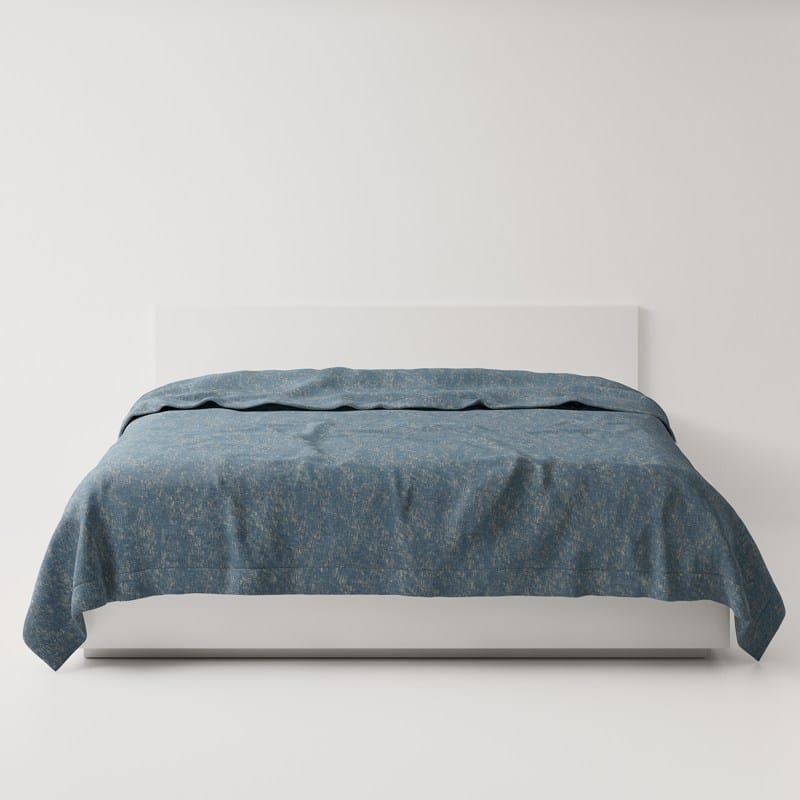
✓ Available as comforter cover and pillowcase in various sizes
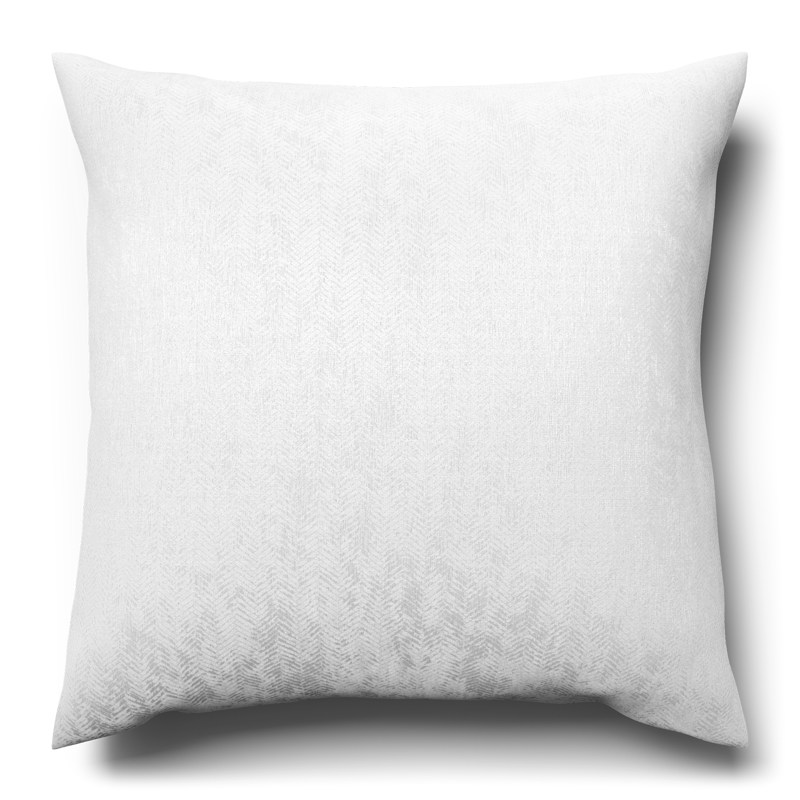
✓ 100% pure linen, washed and mechanically finished for natural softness
✓ Fabric weight: 220 g/m² – proven medium-weight quality with excellent drape
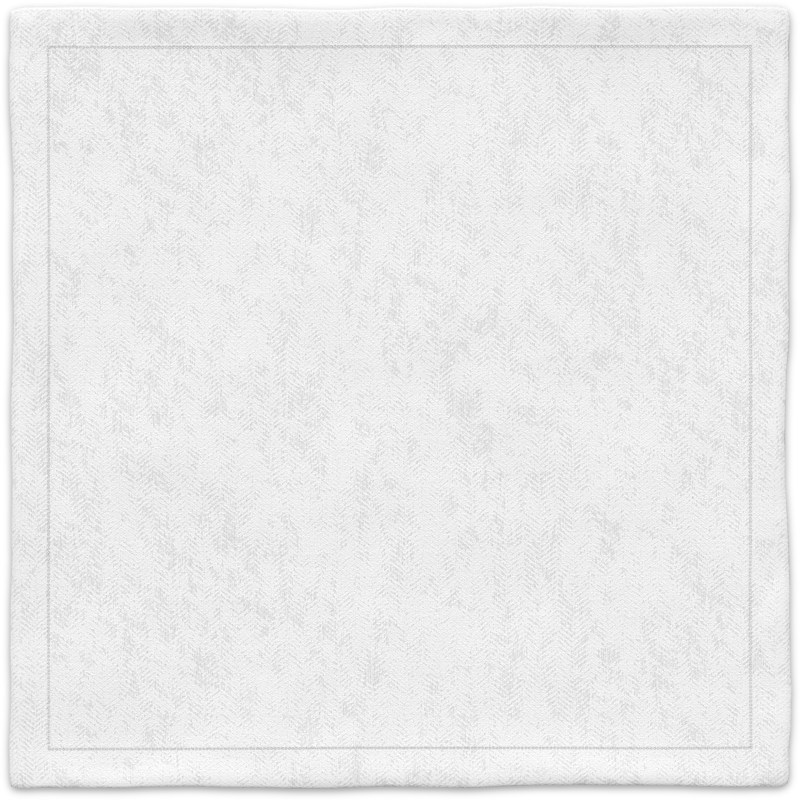
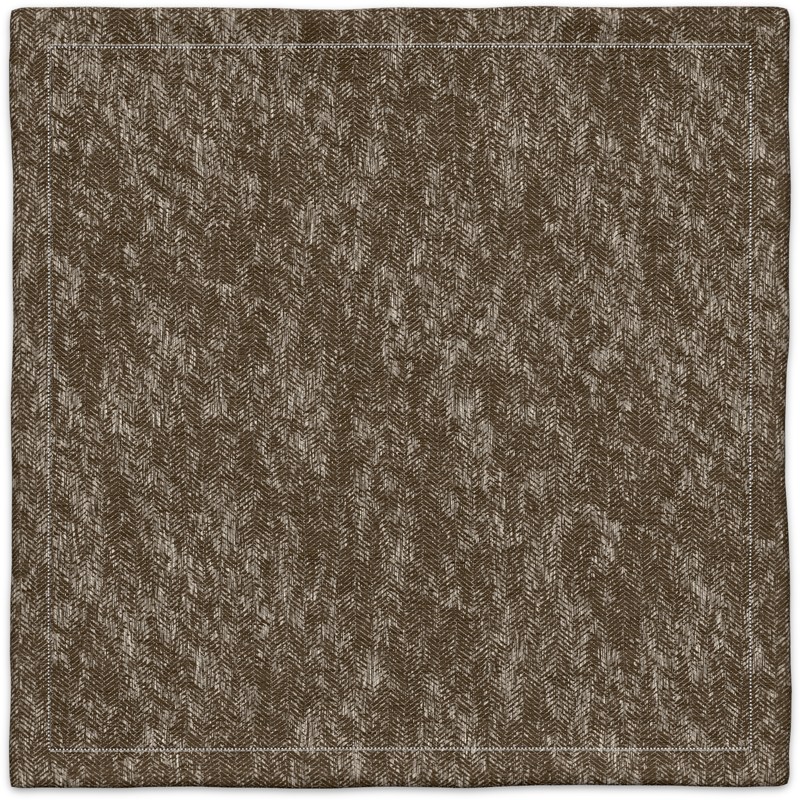
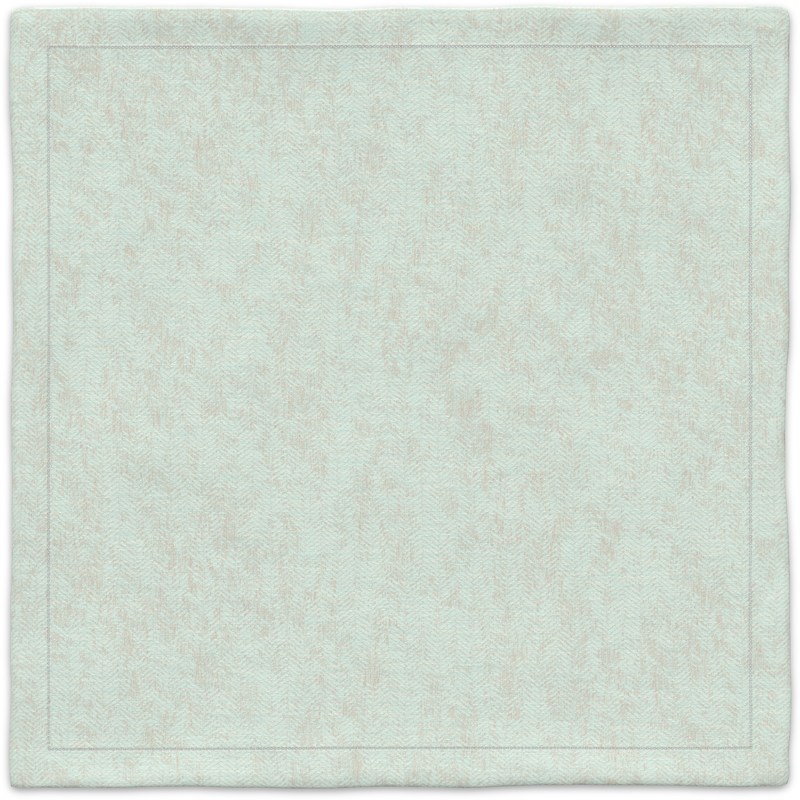
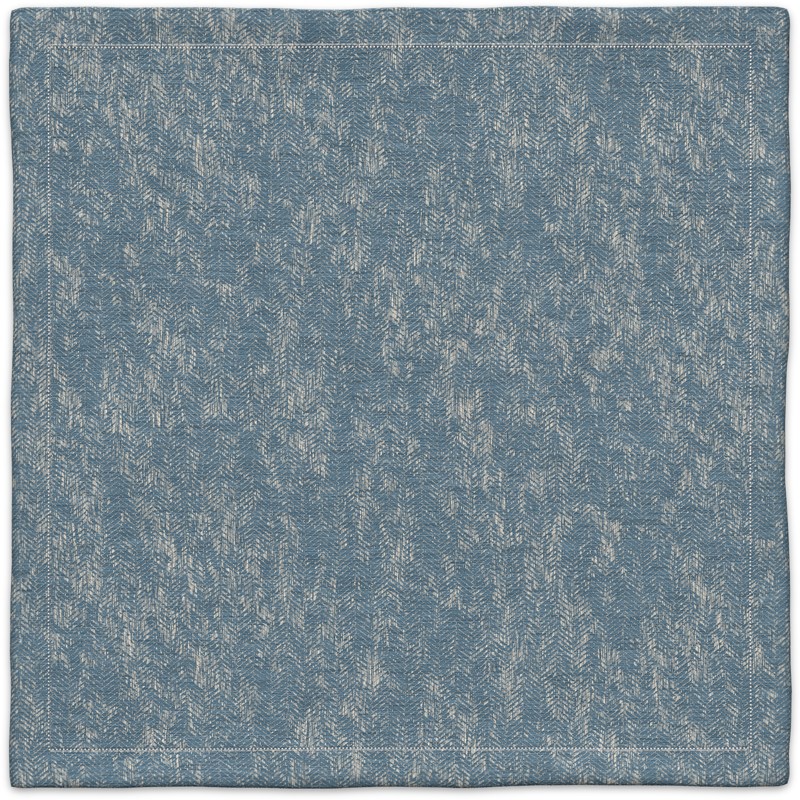
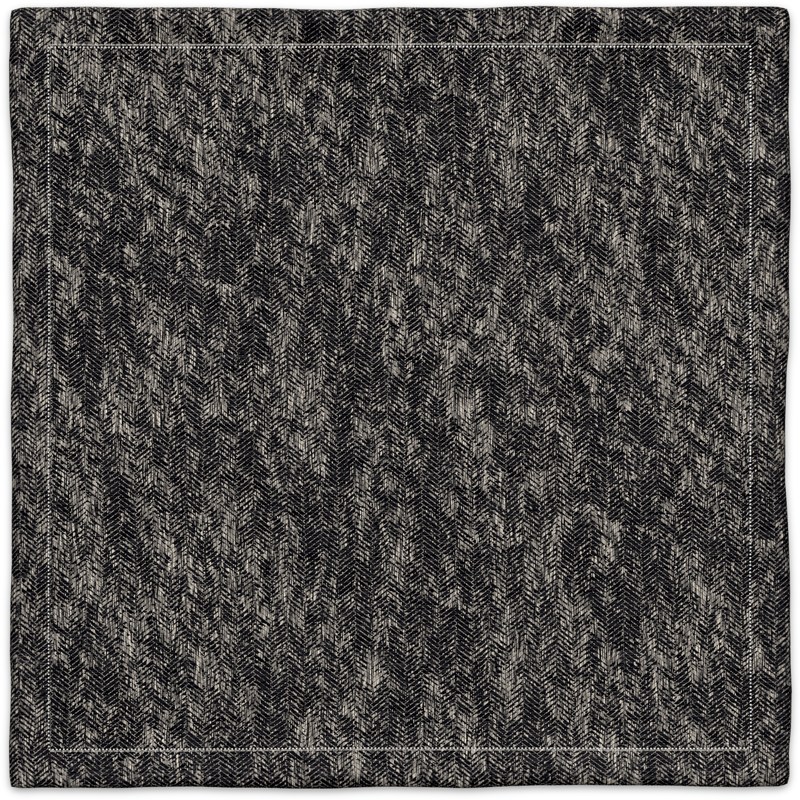
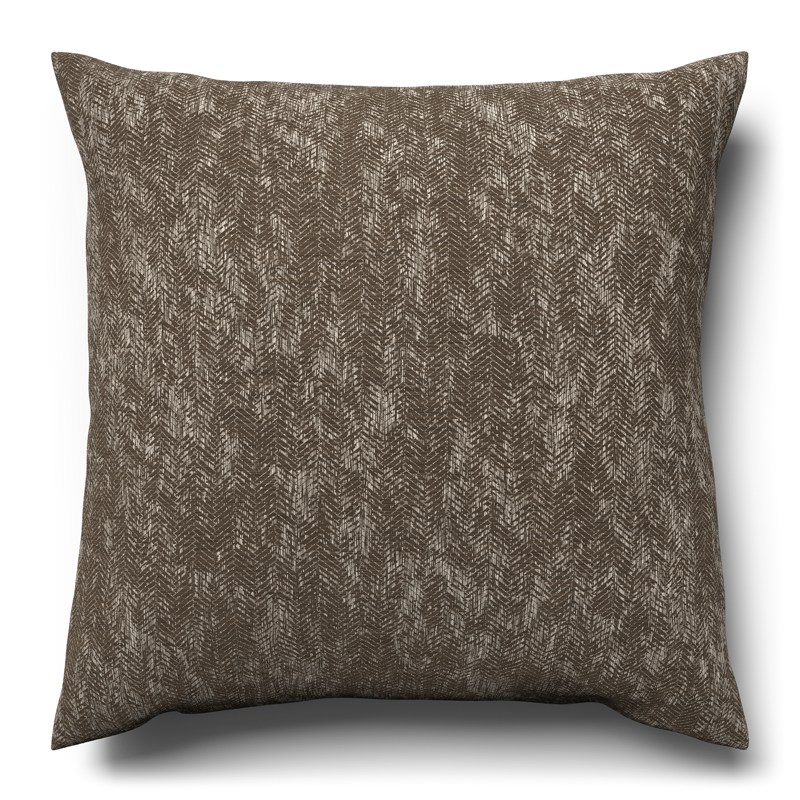
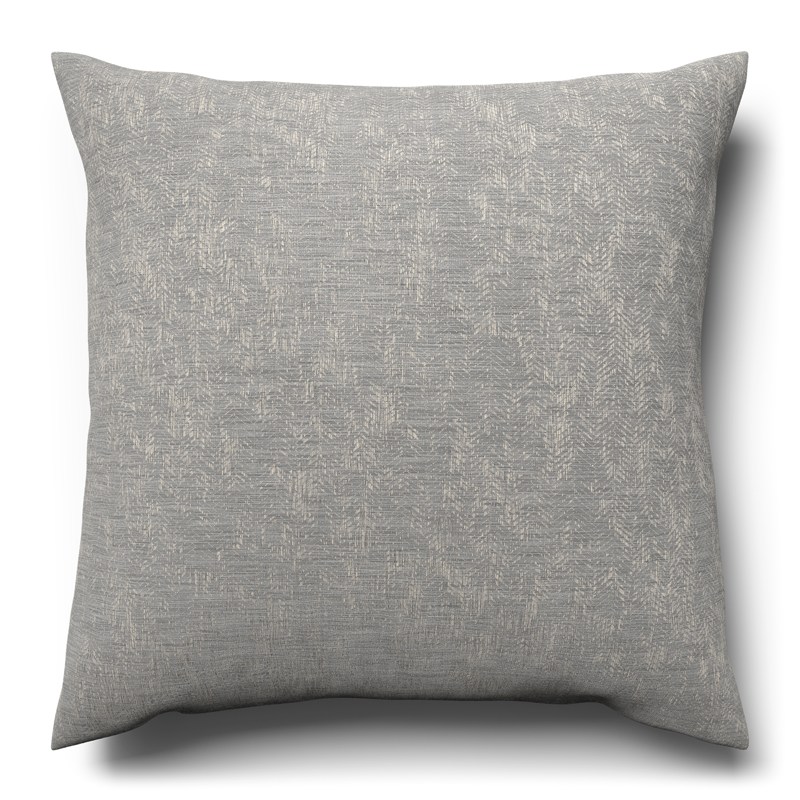
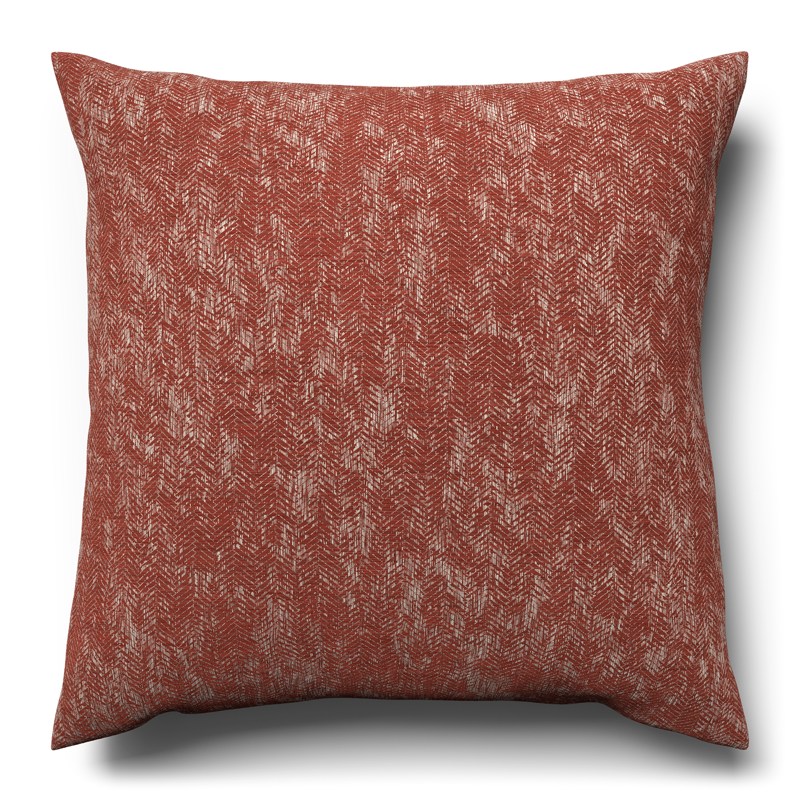
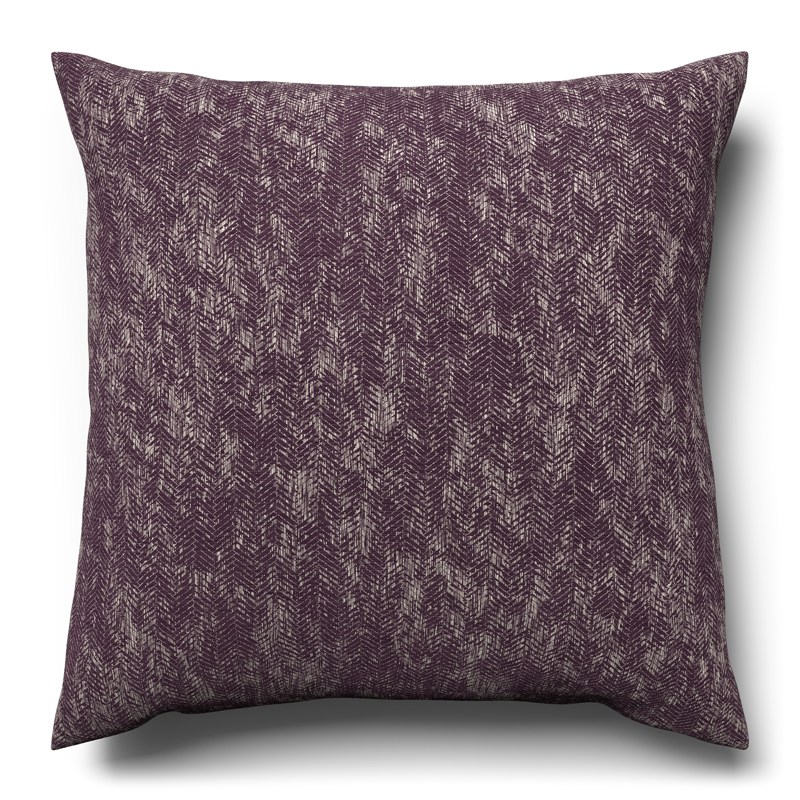
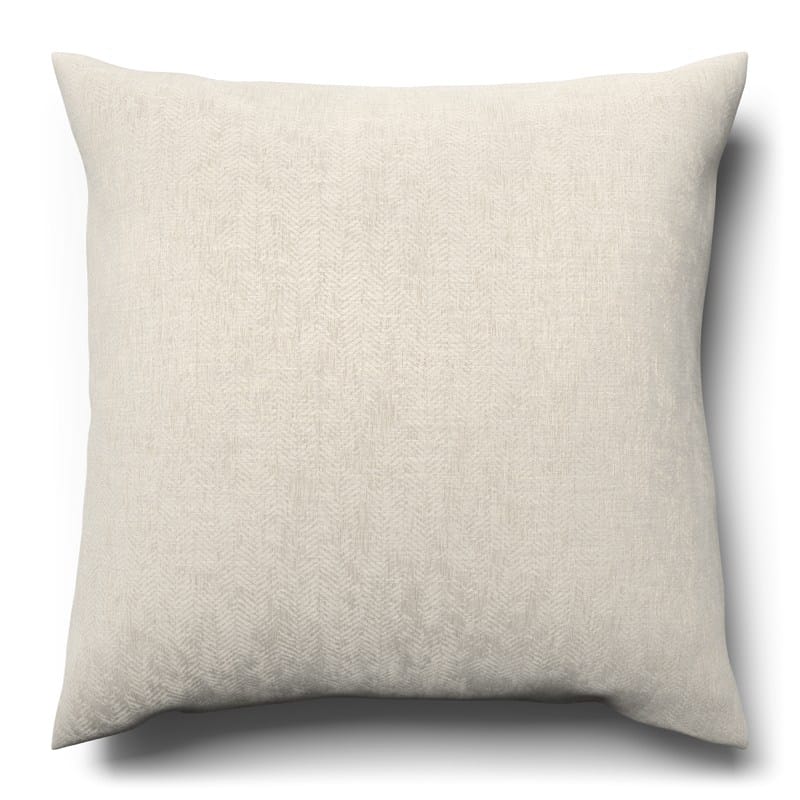
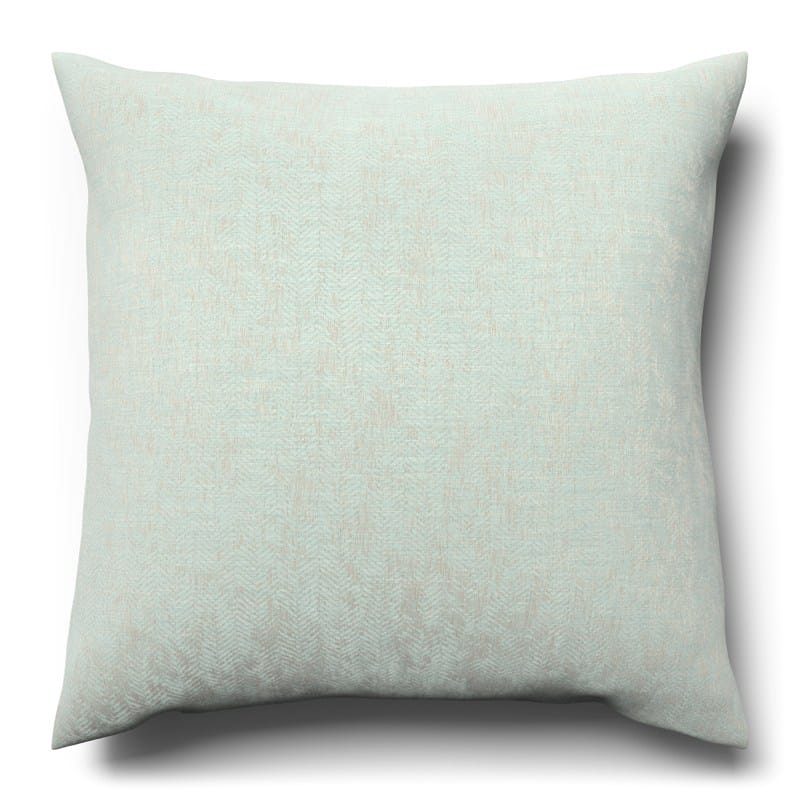
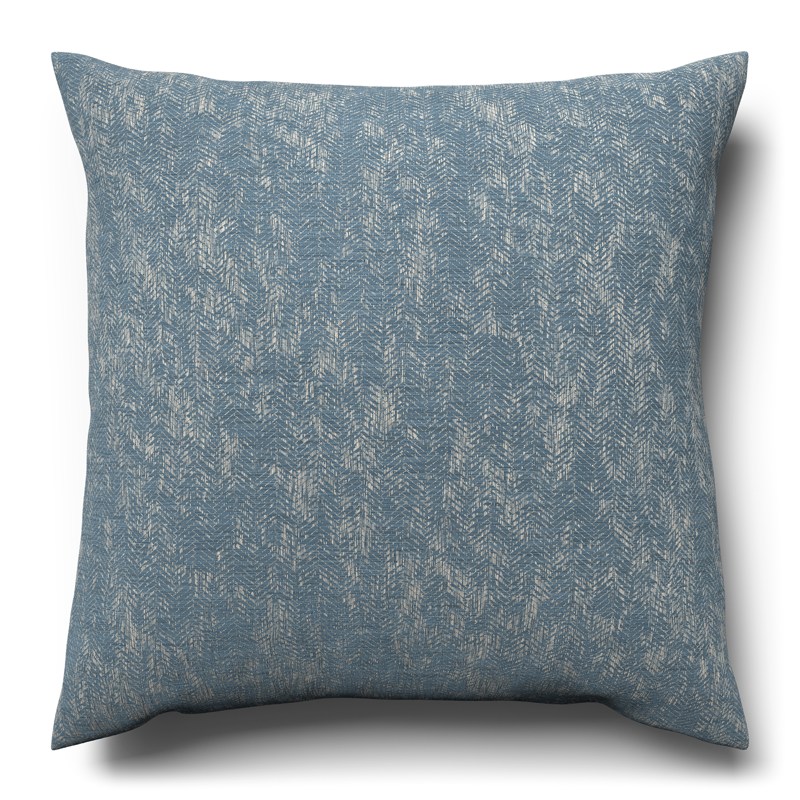
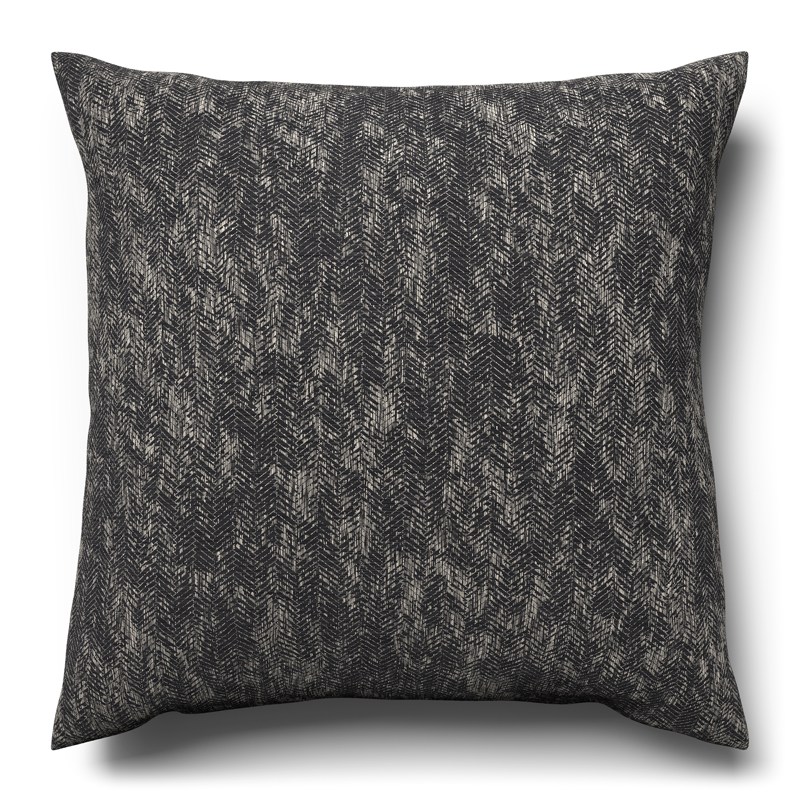
✓ Fabric: Traditional jacquard linen weave with clear structural depth
✓ Design: Nordic pattern with geometric elements and an early medieval feel
✓ Closure: Comforter covers and pillowcases with sturdy buttons, optionally with zipper
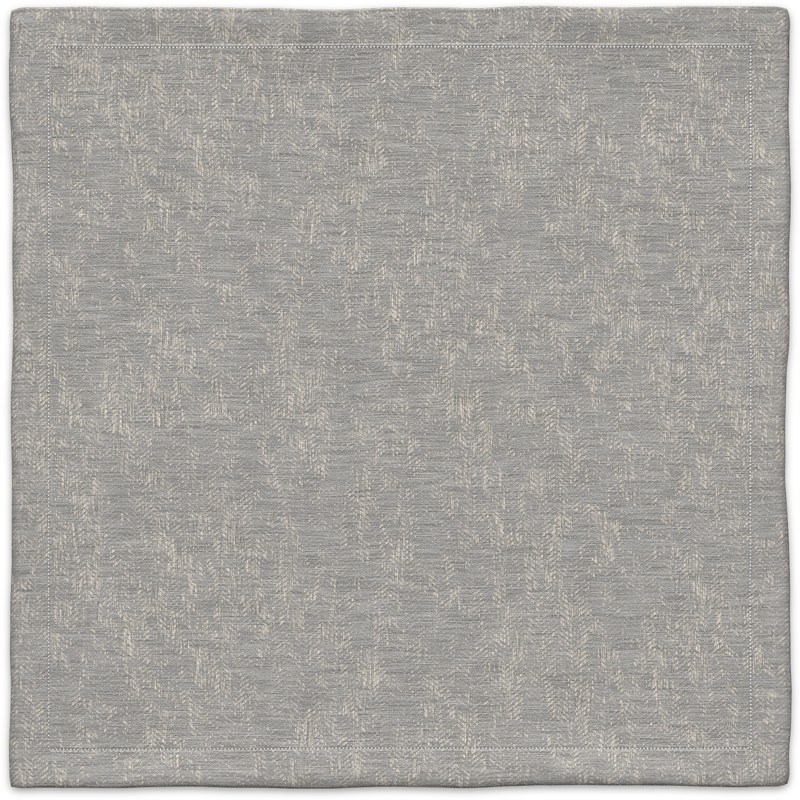
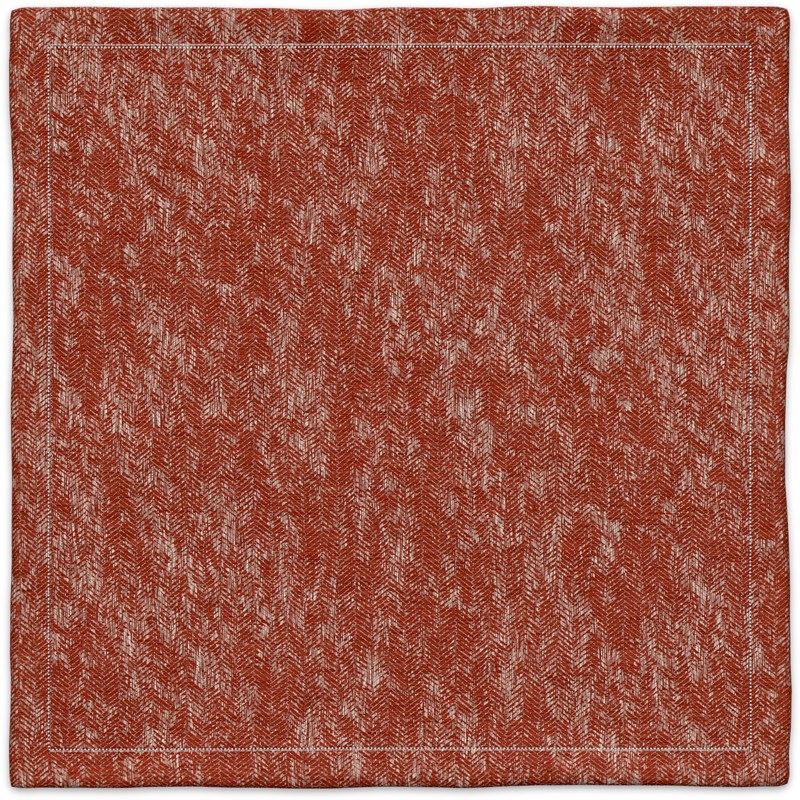
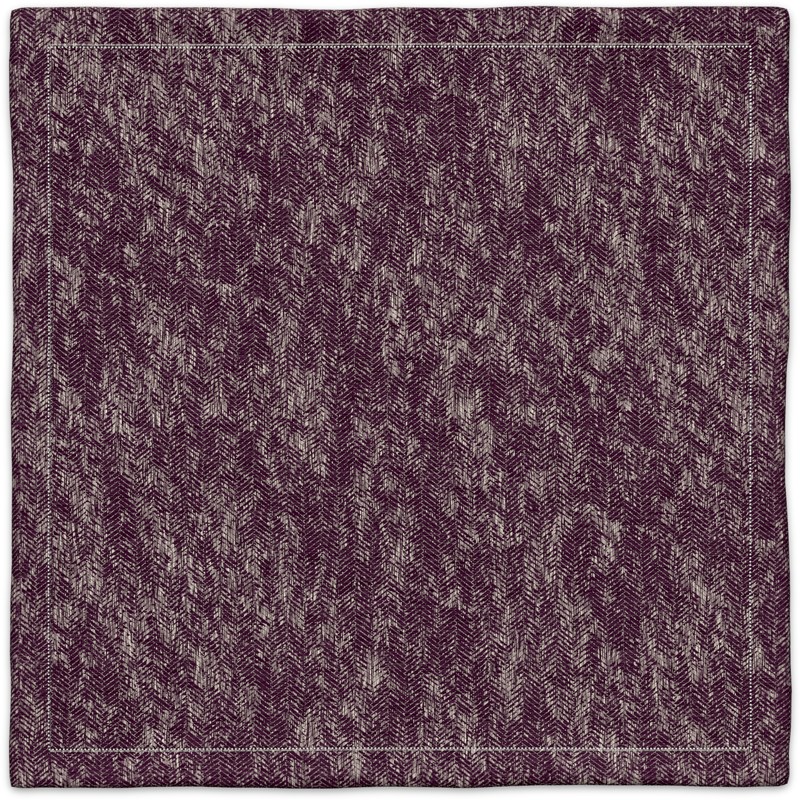
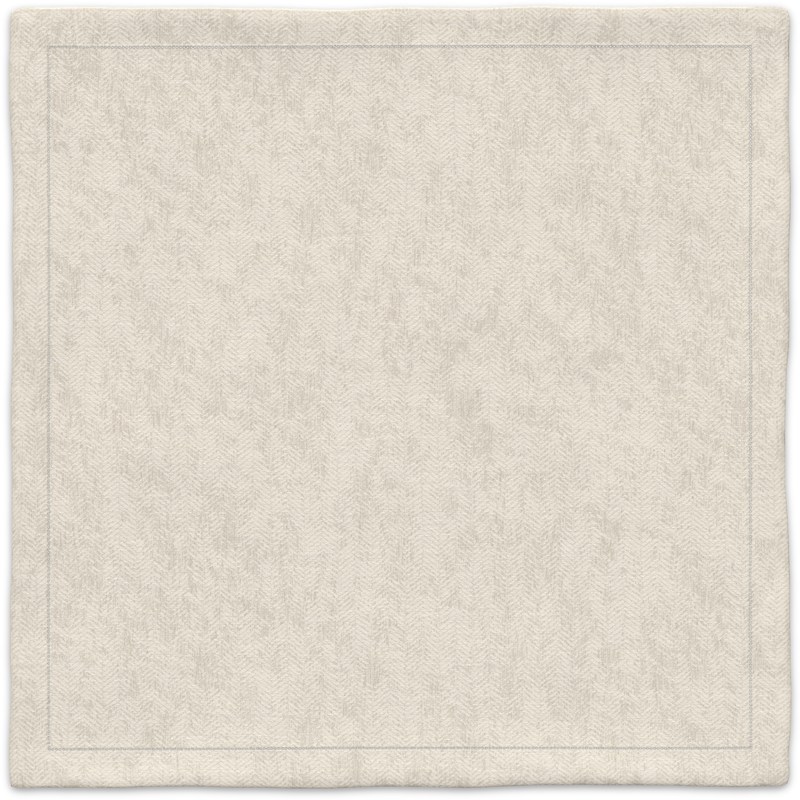
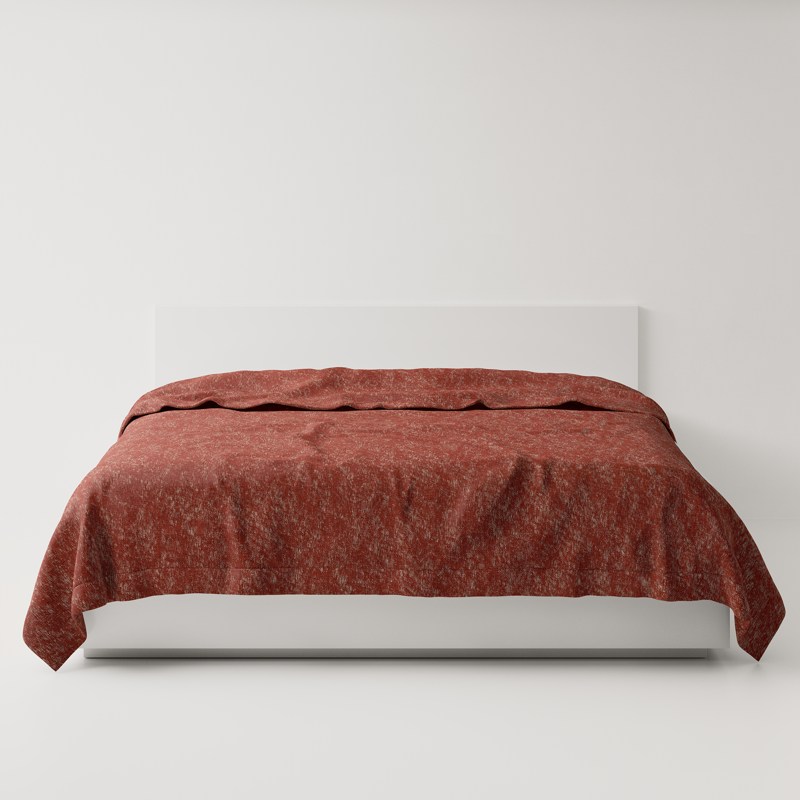
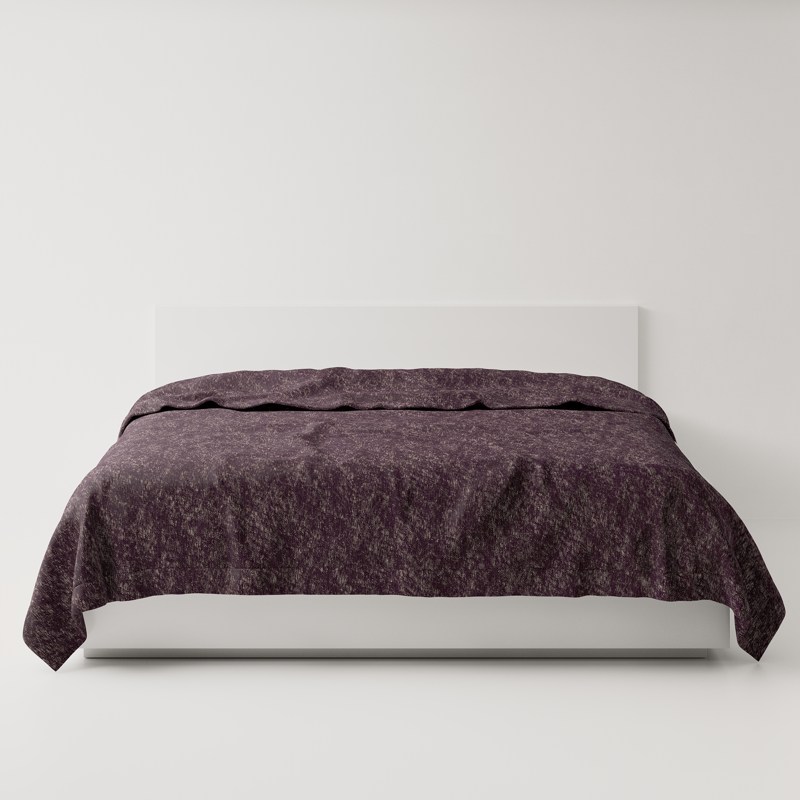
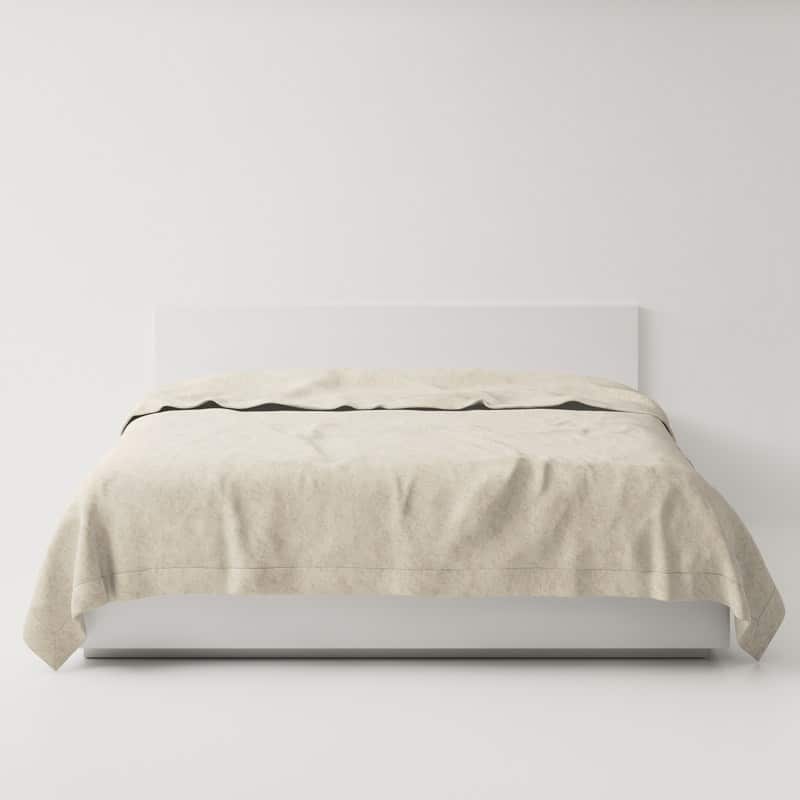
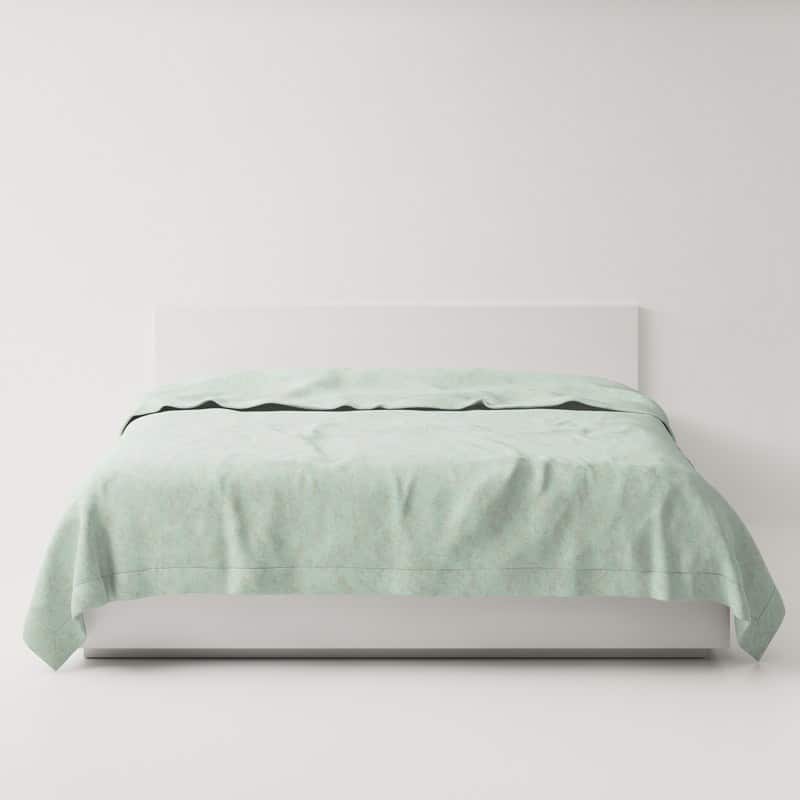
✓ Color palette: 9 characterful shades – white, rust red, lago, blue fog, purple, natural, terra, stone, anthracite
✓ Masters of Linen quality – award for European top quality
✓ CO₂-neutral produced in Austria
✓ Special sizes for individual bed dimensions available on request
Care
Your Linen Bedding Linen bedding is easy to care for and becomes softer and more supple over time. Colored linen can be washed at temperatures up to 60°C, while white bedding can withstand temperatures up to 95°C. For regular care, 40–60°C is ideal. Use detergent without optical brighteners—these can affect the natural color of the linen. The characteristic wrinkles in linen are a sign of its naturalness and are part of its authentic look. For smoother results: Do not overload the washing machine, and limit the spin cycle to 800–1000 RPM. Ironing is possible but not necessary—if desired, iron on the highest setting while the fabric is still slightly damp. Avoid machine drying: Air-dried linen retains its quality for many years and becomes more comfortable with every wash.
Only logged in customers who have purchased this product may leave a review.







Reviews
There are no reviews yet.