Description
“Jeju Gardens”
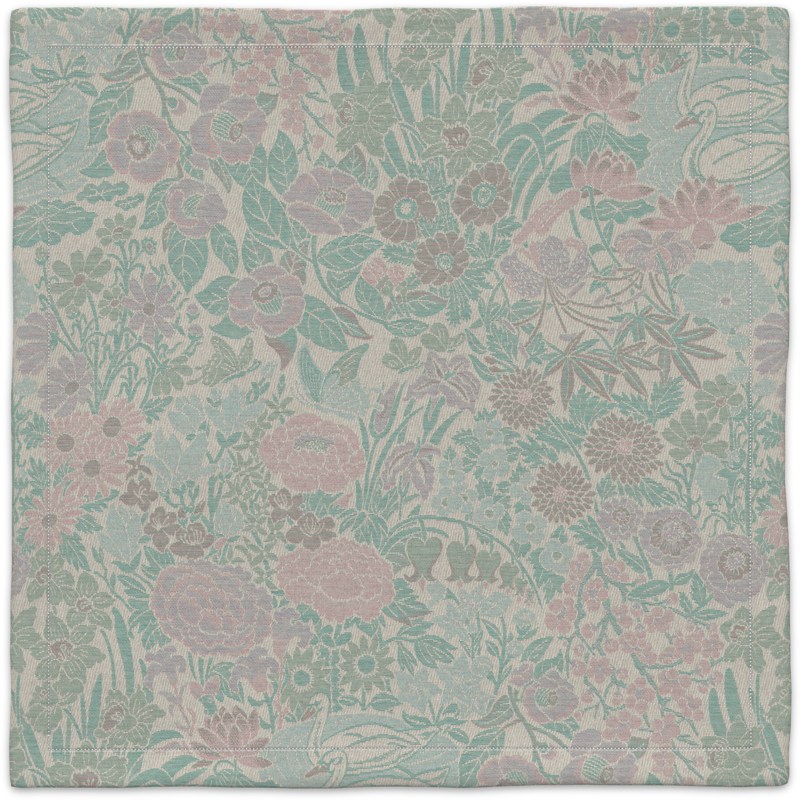
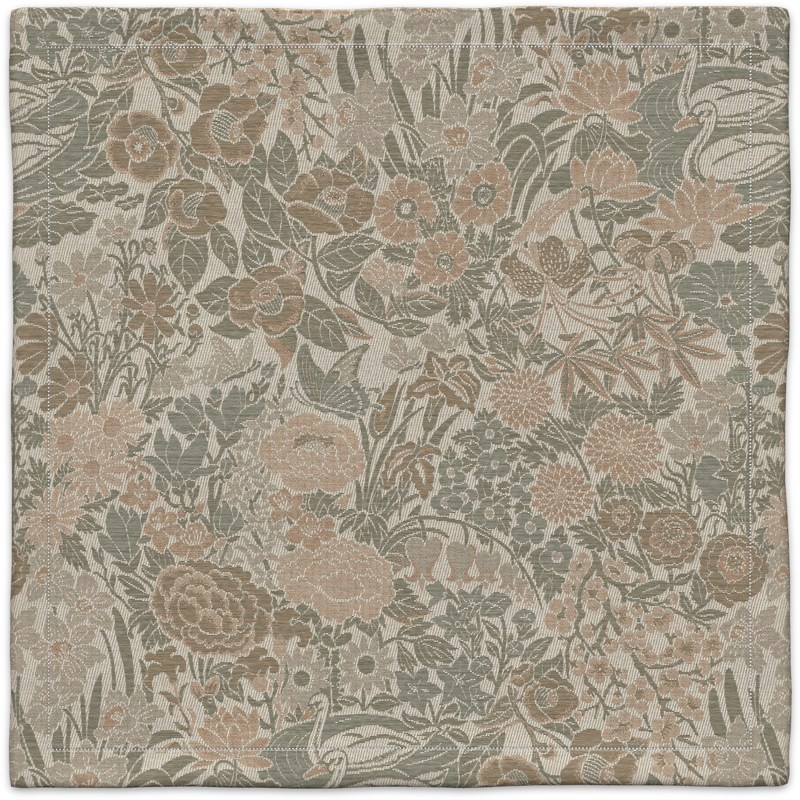
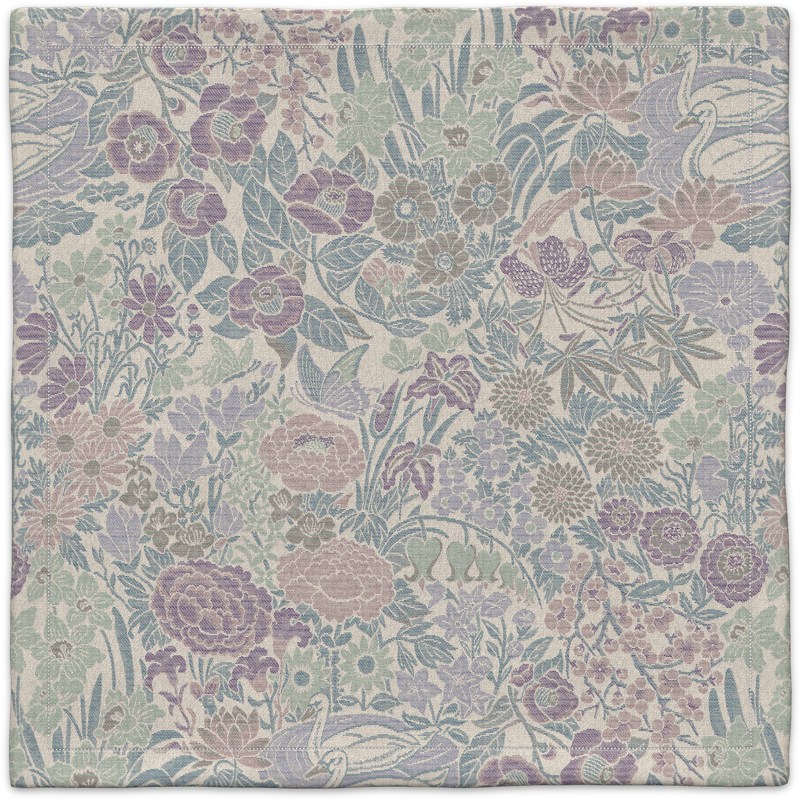
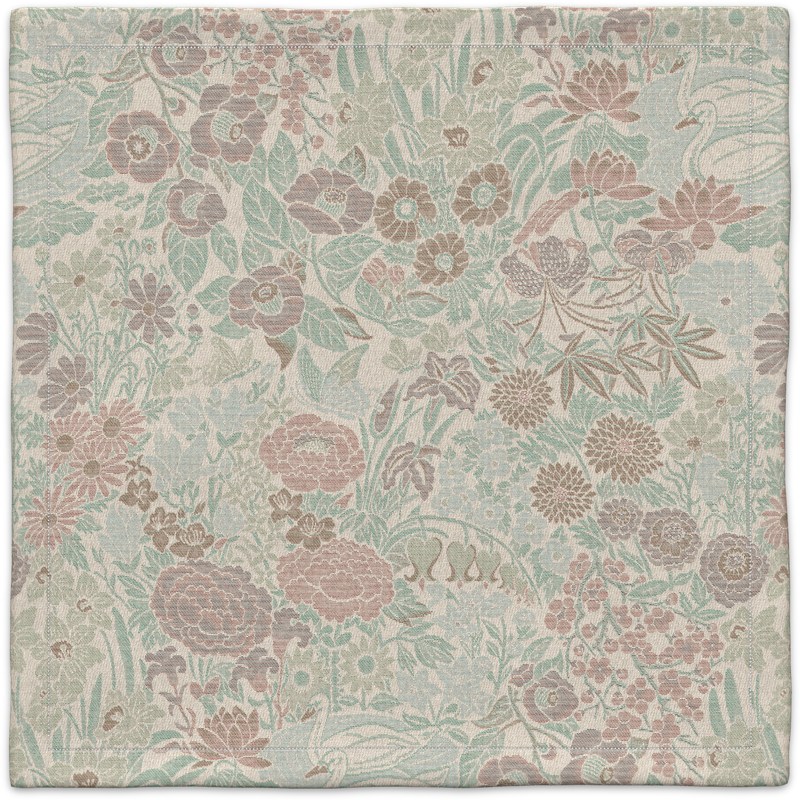
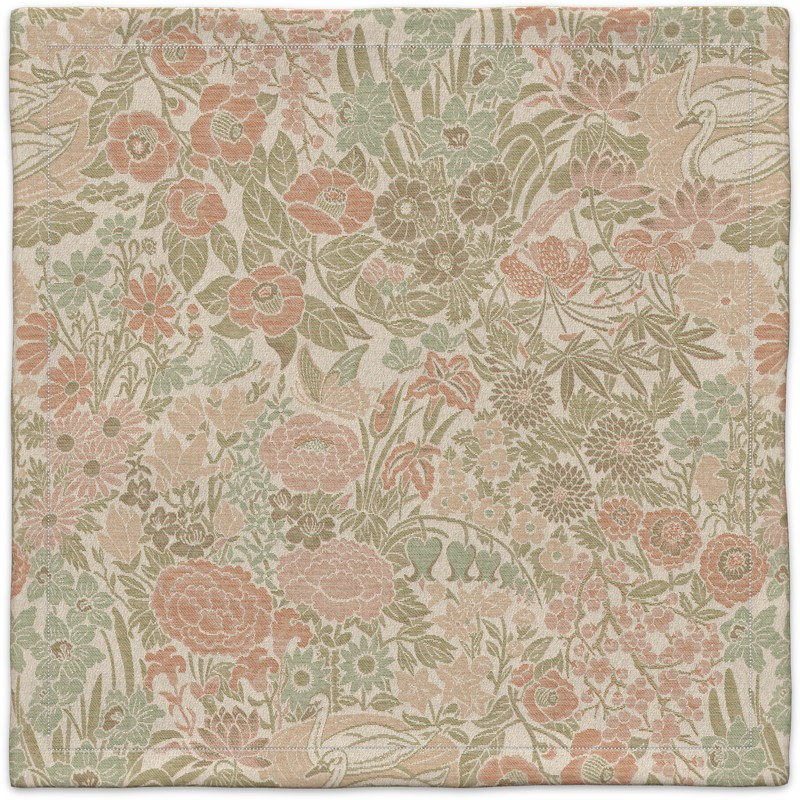
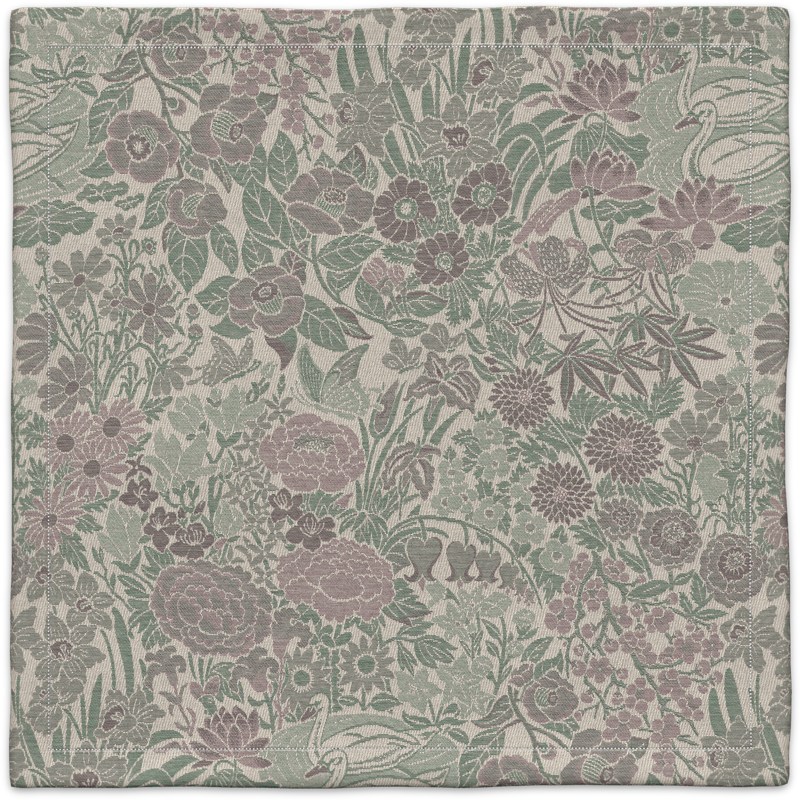
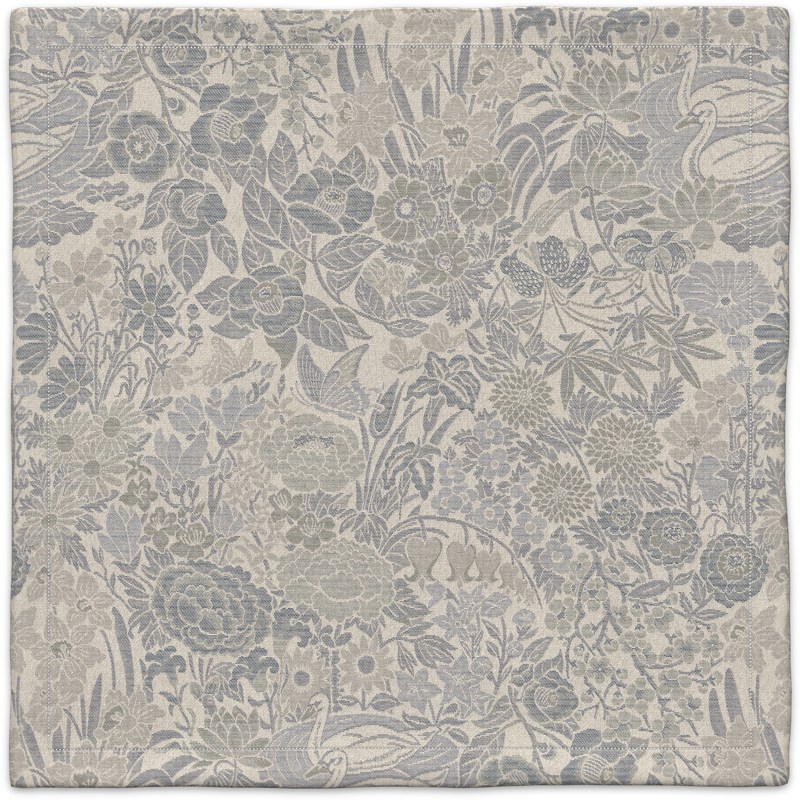
Jeju Gardens – the gardens of Jeju, the eternal cycle, the floral allegory of the four seasons. With this design, Leitner Leinen translates a design principle of Korean Minhwa painting into textile form. Minhwa, literally “folk painting”, refers to the art movement of the Joseon Dynasty (1392-1910), in which nameless artists expressed their longing for happiness in colorful paintings. What art historians describe as “images of happiness” – bright colors, cheerful mood, symbolic motifs from nature and mythology – manifests itself in Minhwa as an optimistic world view: a world without suffering, filled with wishes for prosperity, health and marital bliss. The genre of Hwajodo, the painting of flowers and birds, was dedicated to the depiction of natural beauty as an expression of inner harmony. The Jeju Gardens jacquard weave incorporates the floral motifs that symbolize the cycle of the seasons in Korean culture: The magnolia as a messenger of spring, whose blossoms were once reserved only for emperors and still stand for perfection and beauty today. The camellia as a winter flower that embodies purity and harmony – delicate as porcelain in appearance, robust in nature. The chrysanthemum as the “queen of autumn flowers”, whose name means “golden flower” and which stands for longevity and durability. The lotus as the “flower of the Lord”, which grows pure and spotless from the mud and embodies enlightenment in Buddhist symbolism. The lily as a symbol of happiness, whose name is associated in the Korean language with “happy union for a hundred years”. What Minhwa painters brought to paper and canvas – the hope for a fulfilled life in floral allegory – is not illustratively reproduced here, but translated into linen as a structural principle. Anyone who brings Jeju Gardens to the table is not bringing decorative botany to the table, but a cultural design principle: the four seasons as form, the eternal cycle as aesthetics.
European organic linen
Linen for the table is a material with a long tradition in the temperate climate zones of Europe. The linen fiber, obtained from Western European flax cultivation, is characterized by its smooth, closed surface, which initially repels liquids. This protection makes it possible to react to spills before a stain forms. At the same time, linen is highly absorbent as soon as the fiber is soaked – a property that makes napkins functional. The natural smoothness creates the cool, firm feel that gives tablecloths their characteristic drape. Linen is naturally antistatic and bacteriostatic – properties that make it particularly suitable for contact with food. The fiber does not weaken with use, but becomes more supple. Linen develops patina instead of wear. Tablecloths made from European organic linen become softer over time without losing their structural strength. The GOTS certificate guarantees that no chemical bleaching agents or synthetic pesticides are used from cultivation to finishing.
The Weaving Mill
Since 1853 the Leitner Manufaktur in Ulrichsberg, Austria, has been weaving linen according to principles that can only be maintained through continuity in craftsmanship. Jeju Gardens is created using a precise jacquard linen weave – a process in which the pattern is not printed on, but worked directly into the fabric structure. Each magnolia, chrysanthemum, camellia, lotus and lily is an integral part of the fabric itself. The Jacquard technique, developed by Joseph-Marie Jacquard in the early 19th century, enables complex patterns to be created by controlling each warp thread individually. The result is a relief-like fabric in which patterned and unpatterned areas are not only visually, but also haptically separated from one another. The floral richness of the Jeju Gardens design – the overlapping of different flower motifs, the organic shapes of the stems and leaves, the density of the composition – demands the kind of weaving precision that can only be achieved through mechanical precision and craftsmanship. Leitner Manufaktur works with mechanical looms whose precision lies in the fact that they do not smooth out the natural irregularity of the linen fibers, but rather absorb it. This results in fabrics with a liveliness that cannot be achieved by mechanical uniformity – a textile counterpart to Minhwa painting, in which emotional authenticity rather than technical perfection was the design principle.
The product: Jeju Gardens pure linen table linen from Leitner Linen
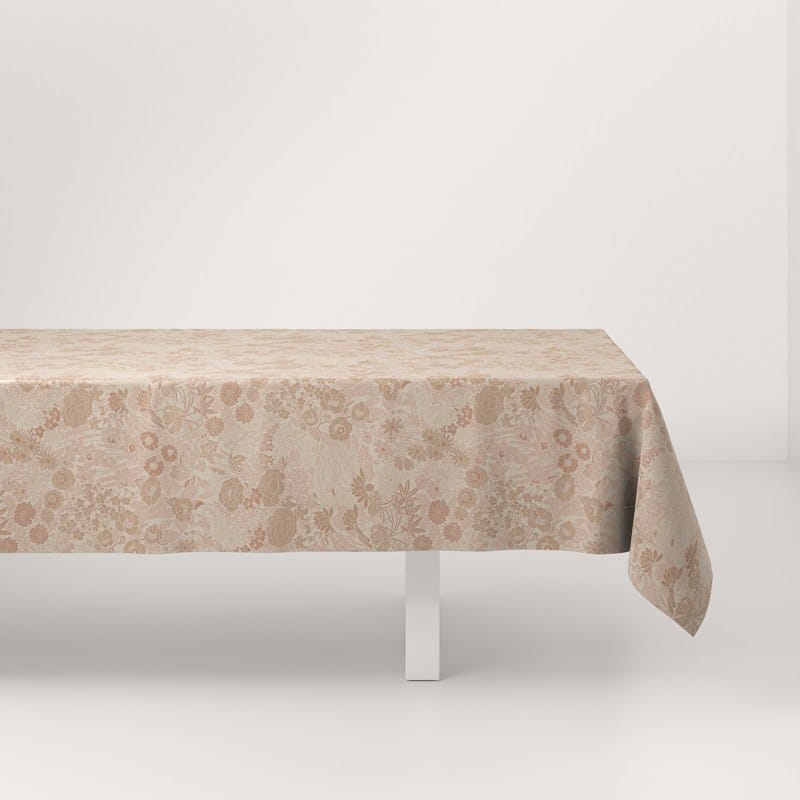
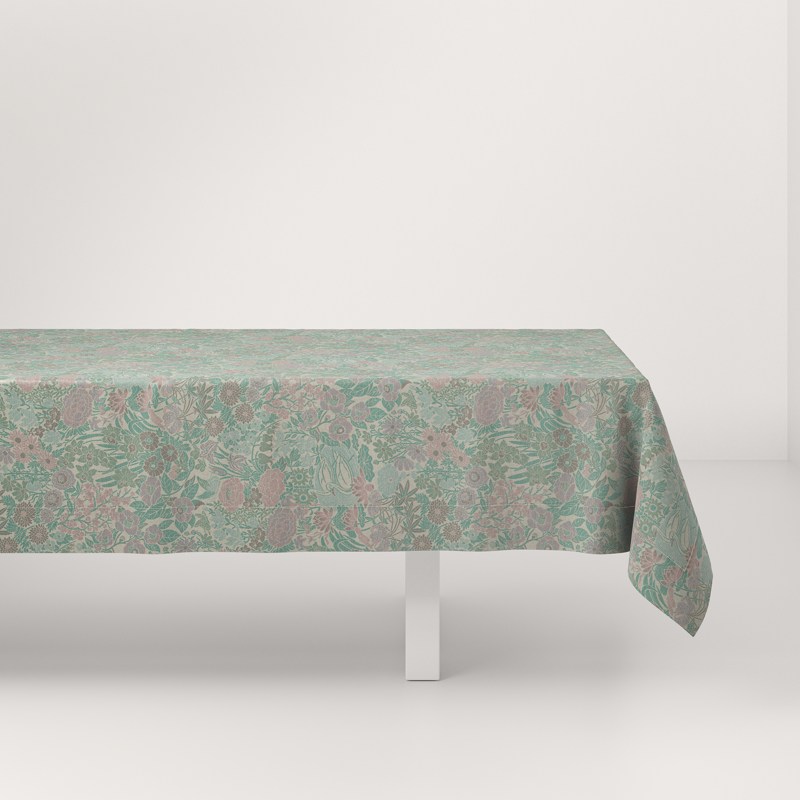
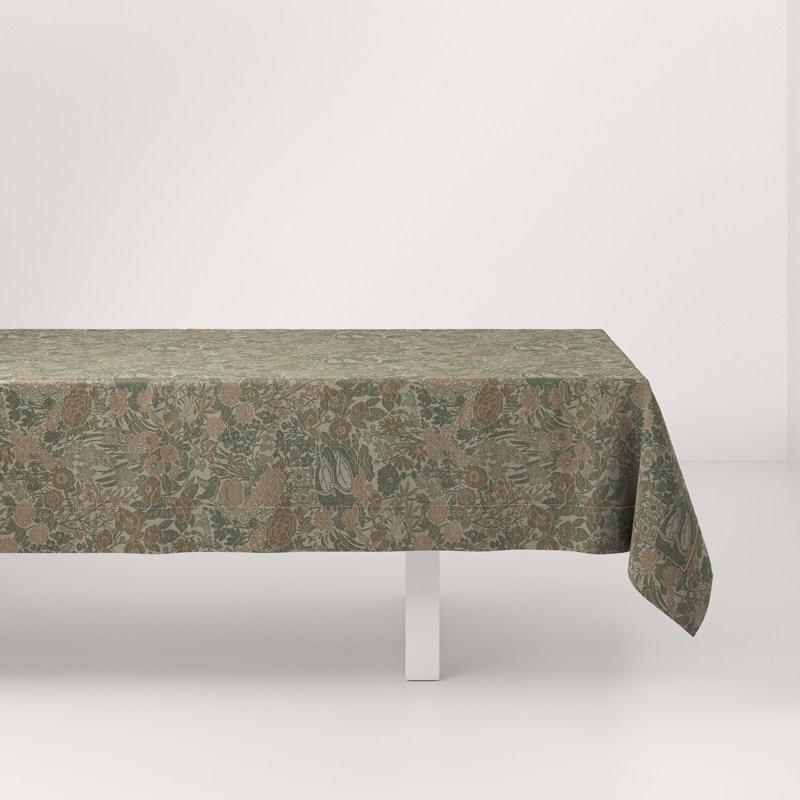
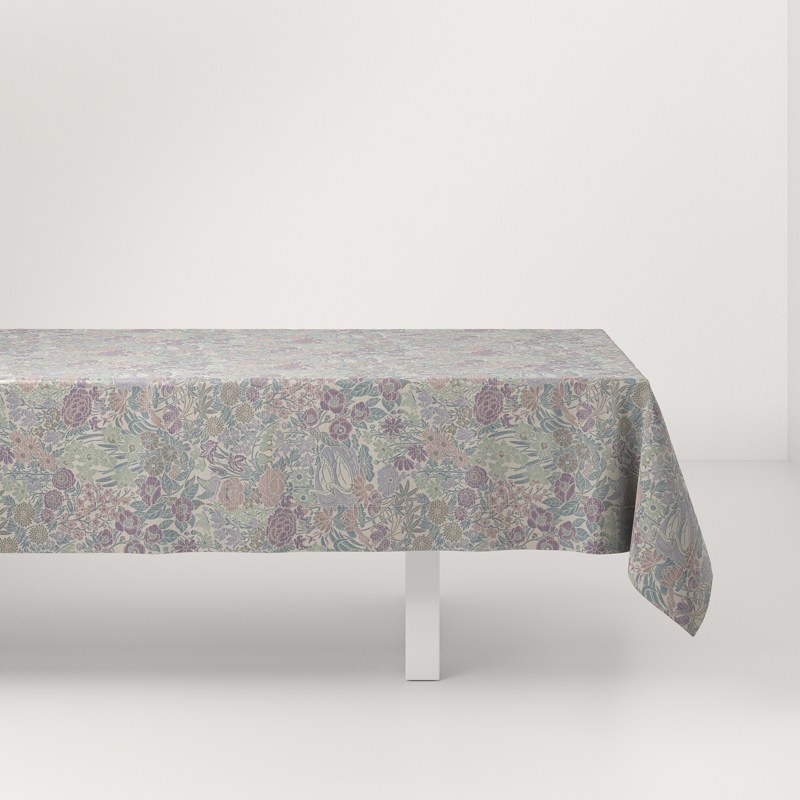
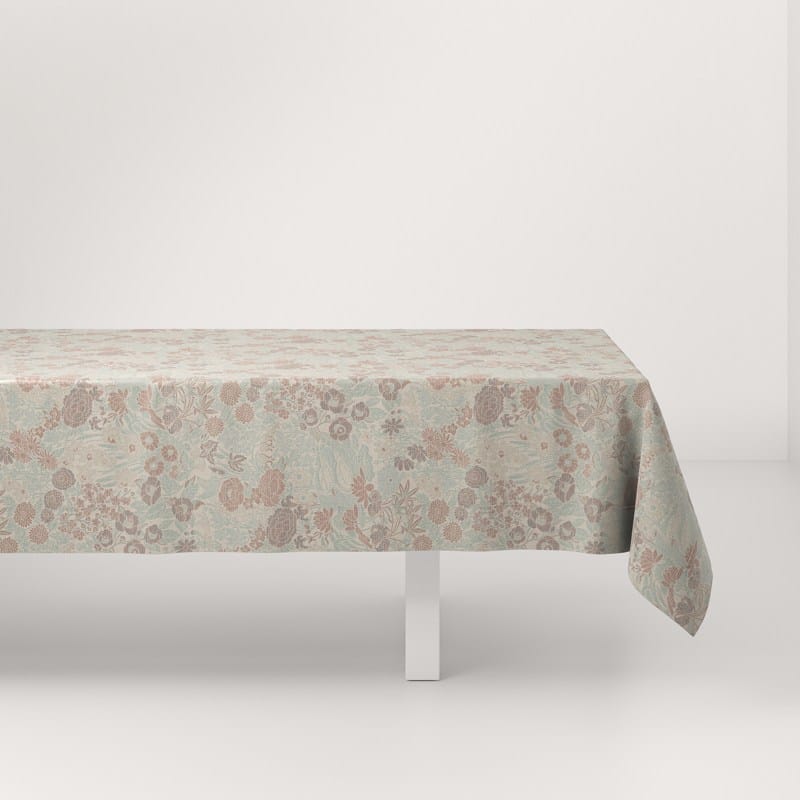
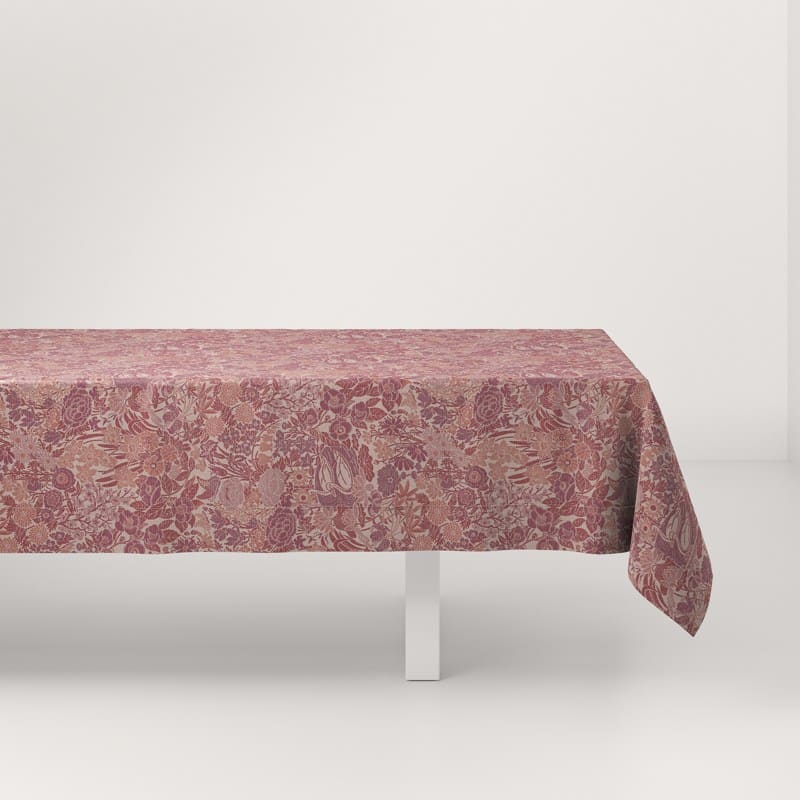
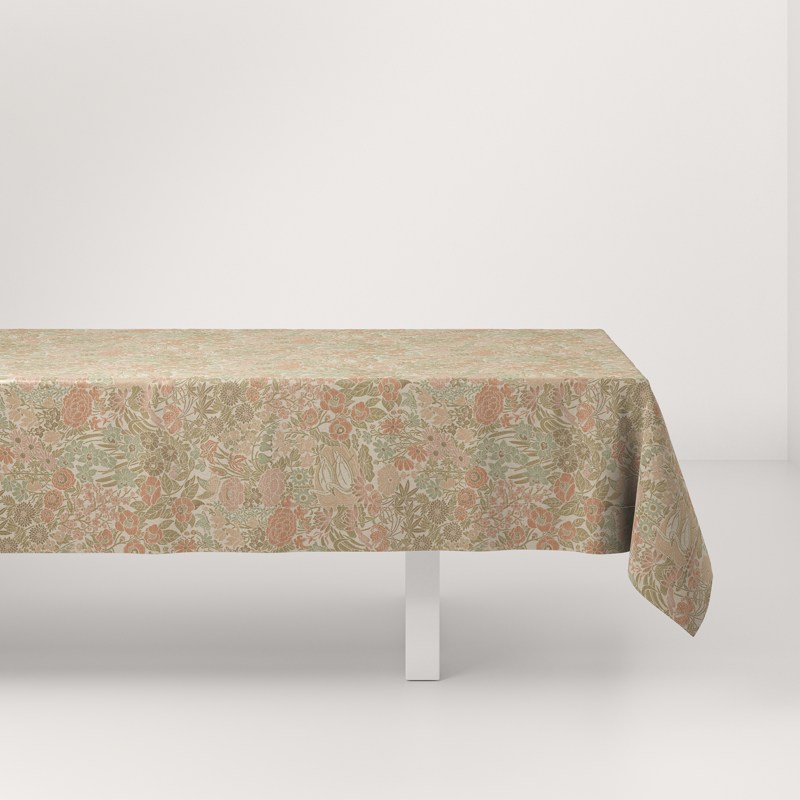
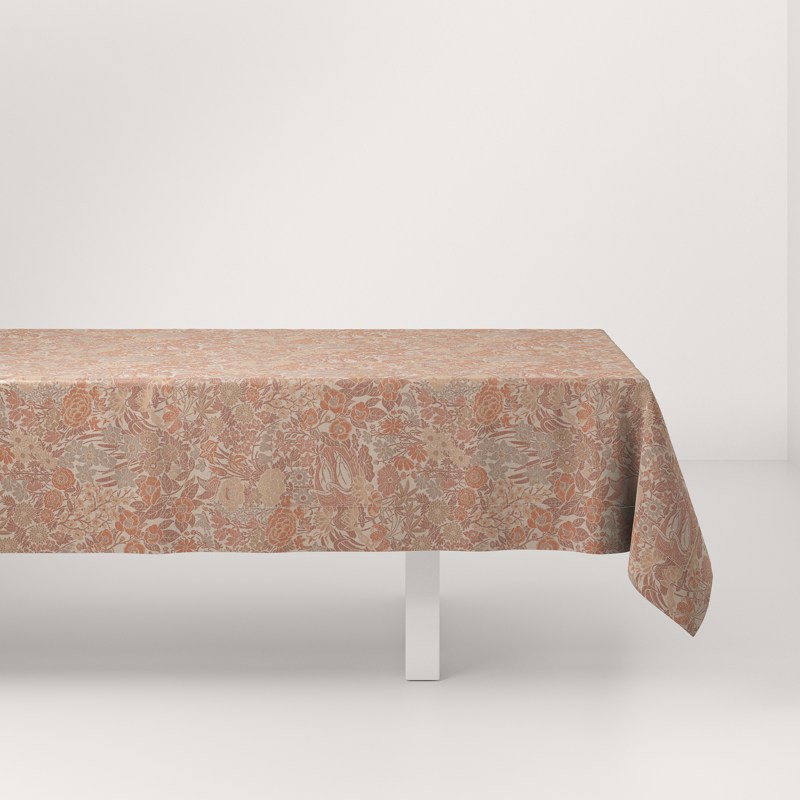
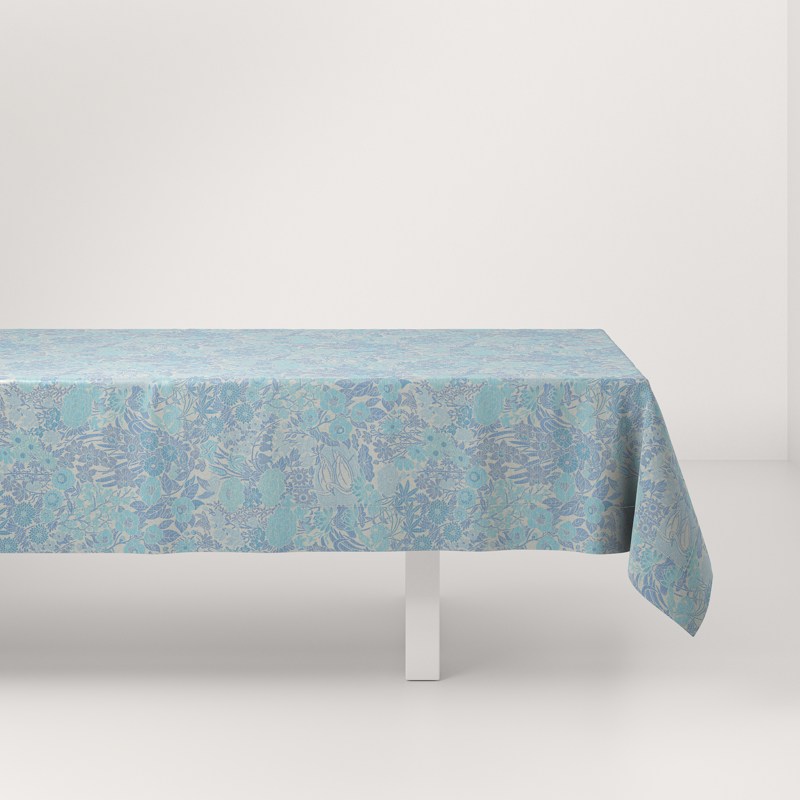
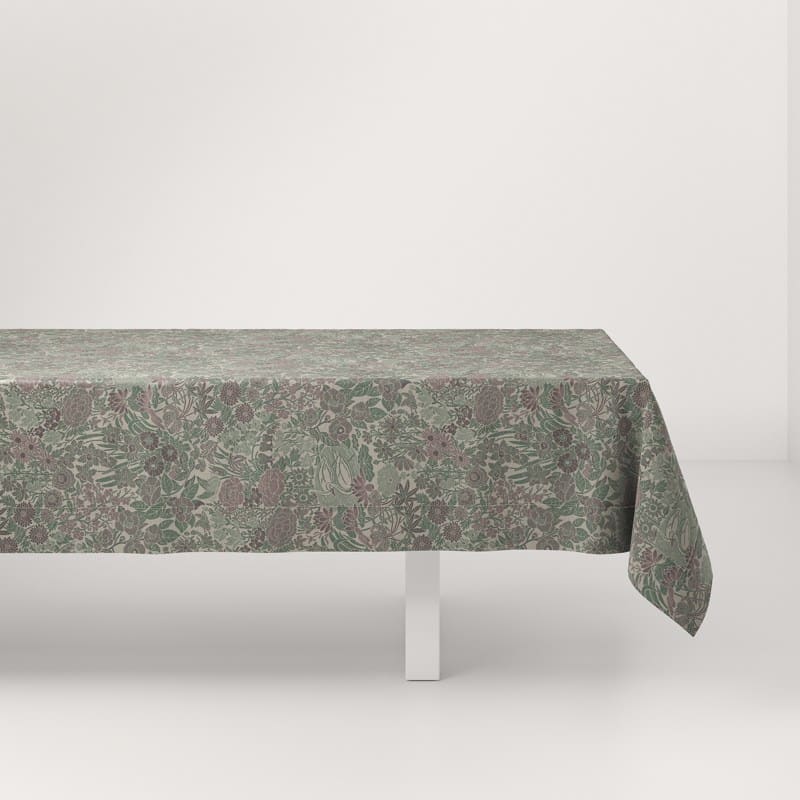
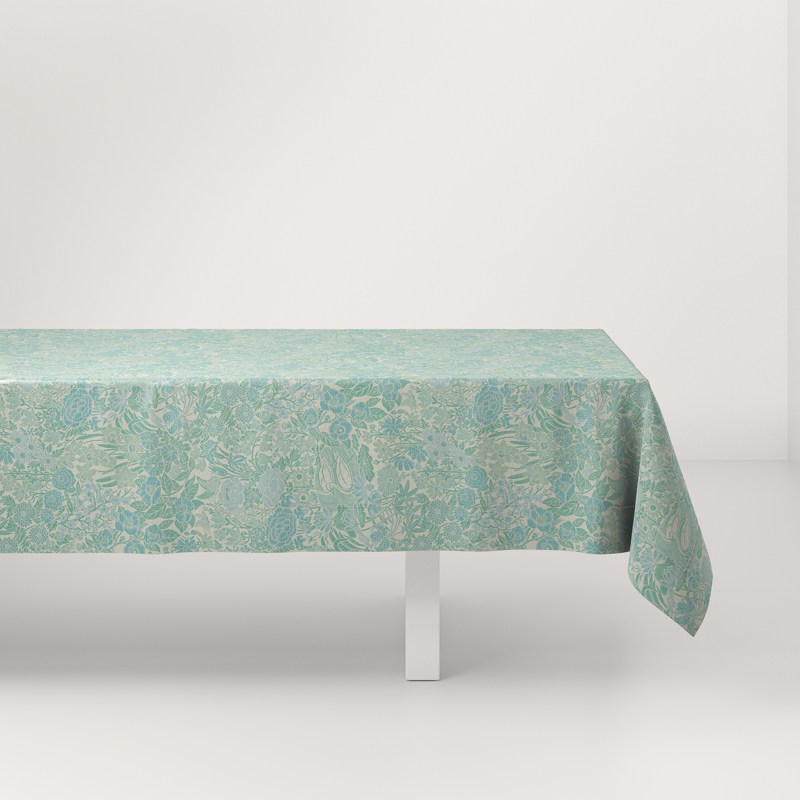
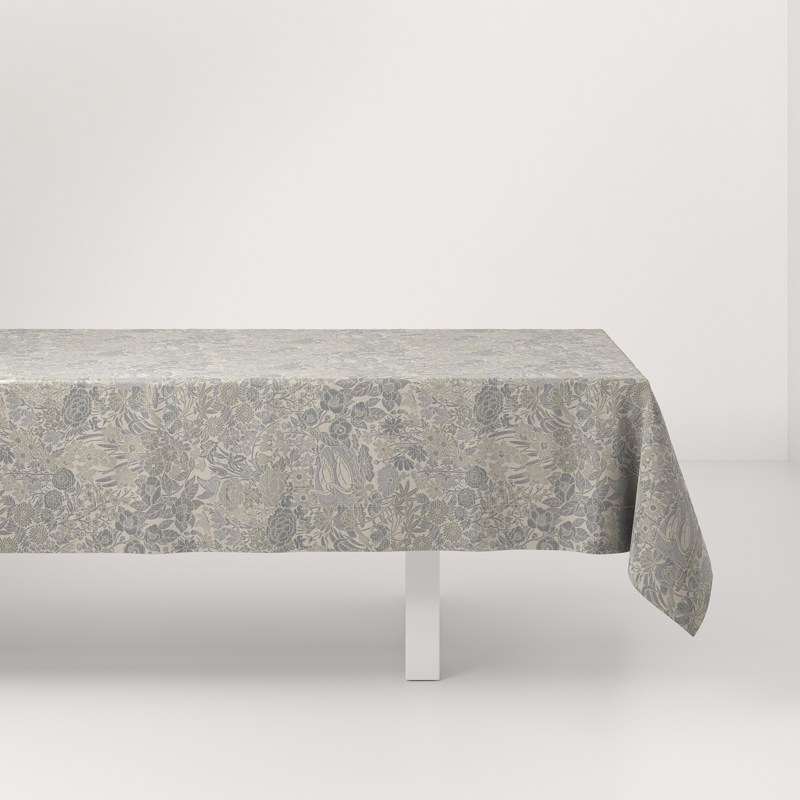
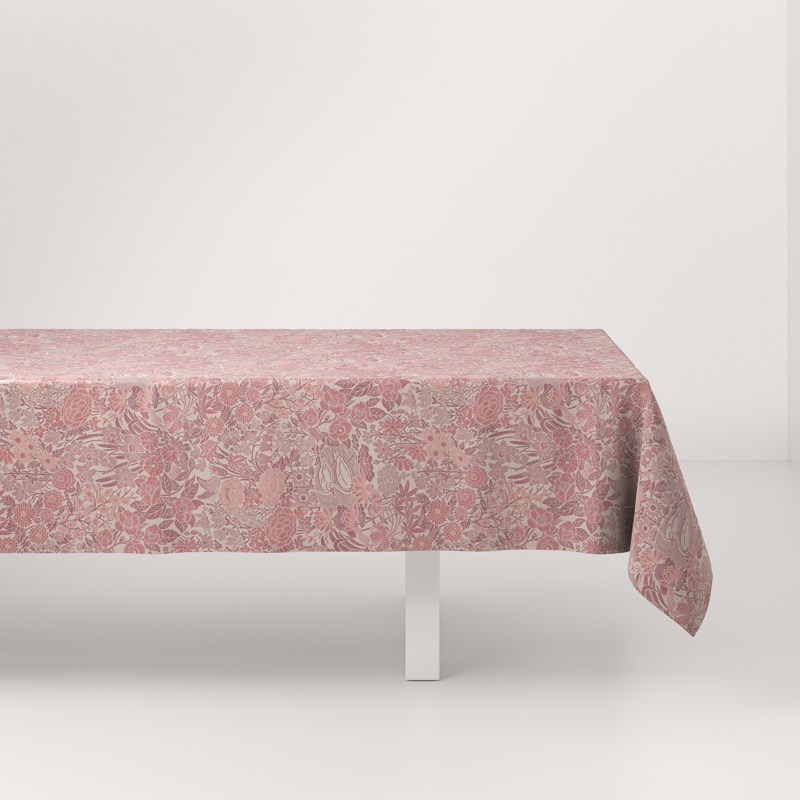
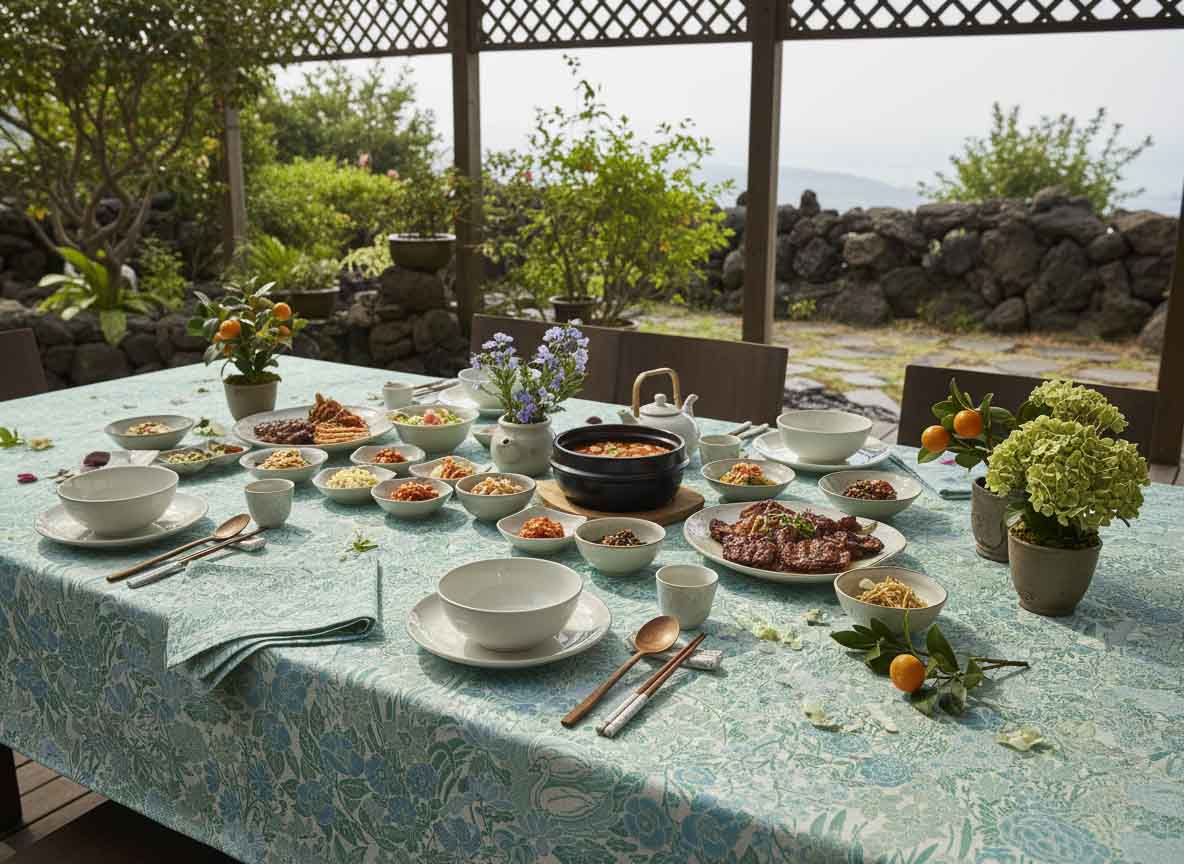
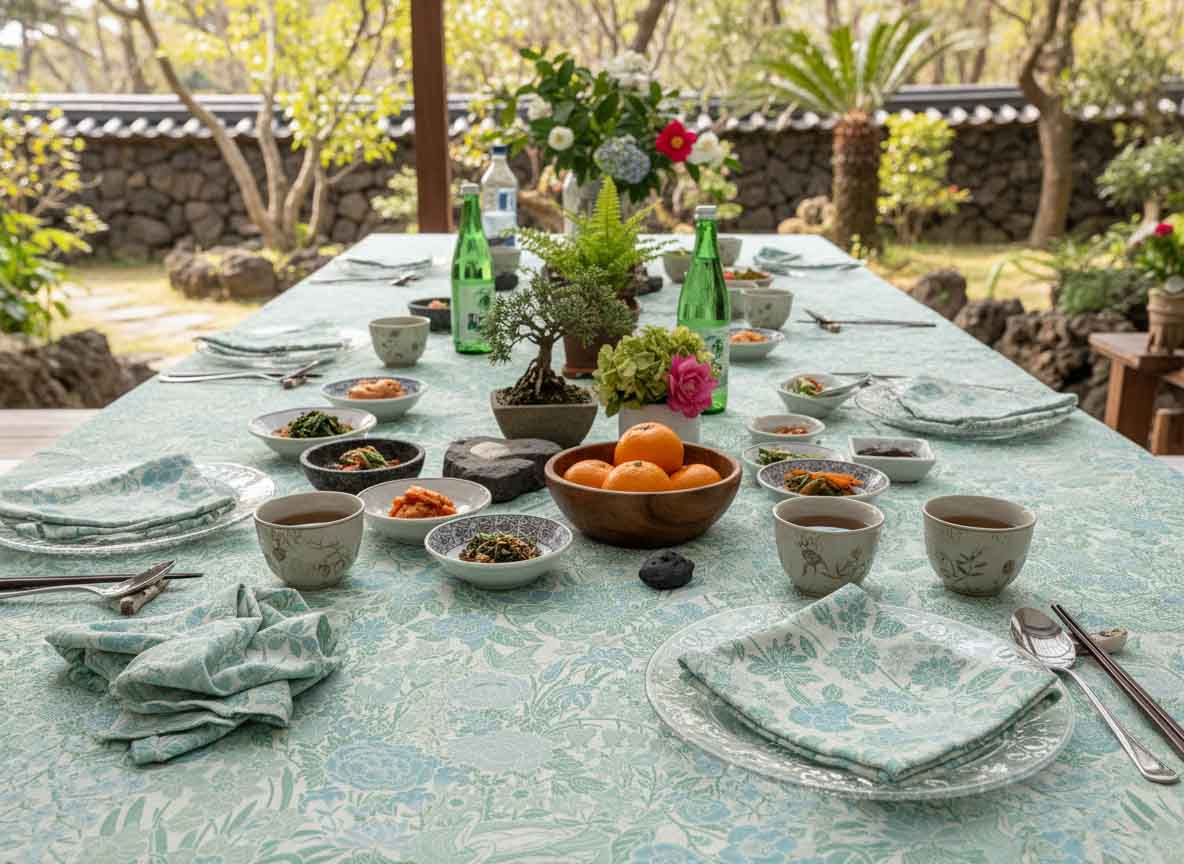
Jeju Gardens is available as a tablecloth and napkin in various sizes. The fabric is made of 100 percent European pure linen in a precise jacquard linen weave. The color palette comprises eleven shades and ranges from delicate pastel to intense hibiscus and cool glacier blue. Capri brings Mediterranean blue, while Opal conveys a shimmering turquoise. Amaranth comes in bright pink, Autumn Leaves in earthy brown tones, Harvest Gold as a warm yellow. Basalt delivers dark gray, Dark Sage a deep sage green, and Mystic Garden, the most complex color scheme, combines the nuances of a mysterious garden. Each colorway has been designed to showcase the floral diversity of the design – the overlay of magnolia, chrysanthemum, camellia, lotus and lily. The colors support the legibility of the individual flower motifs and allow the relief of the jacquard weave to stand out clearly. Jeju Gardens is a tablecloth for occasions where the table should not be characterized by geometric abstraction but by floral abundance – the four seasons as a timeless principle, the eternal cycle as a textile manifestation.
✓ 100% European pure linen
✓ Precise jacquard linen weave with Korean floral pattern
✓ Available as a tablecloth and napkin in various sizes
✓ 13 colors: Pastel, Hibiscus, Glacier Blue, Capri, Opal, Amaranth, Autumn Leaves, Harvest Gold, Basalt, Dark Sage, Mystic Garden, Oriental Bronze, Vanilla Pearl
✓ GOTS-certified
✓ Woven in the Leitner Manufaktur, Ulrichsberg (Austria)
Care Instructions
Linen table linen can withstand temperatures up to 60 degrees, white qualities up to 95 degrees. Washing temperatures between 40 and 60 degrees are gentle on the fibers. Do not use detergents with optical brighteners – they bleach out the color pigments. Do not overfill the machine: linen needs freedom of movement. Spin at 800 to a maximum of 1,000 revolutions and remove the laundry slightly damp. Iron on the highest setting as long as there is still residual moisture. Linen loves heat and moisture – this is the only way to completely smooth out the fibers. Avoid the tumble dryer. Treat stains from red wine or coffee immediately with cold water – the smooth linen fibers release stains more easily when they react quickly.
Only logged in customers who have purchased this product may leave a review.











Reviews
There are no reviews yet.