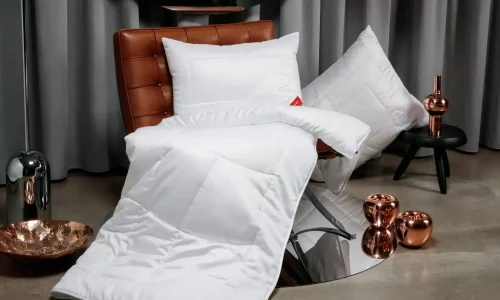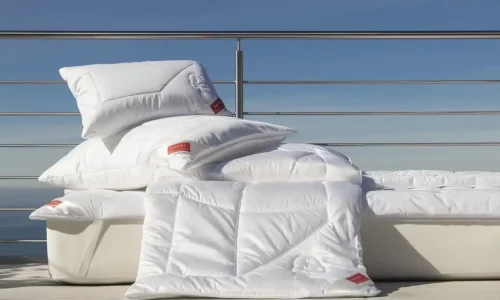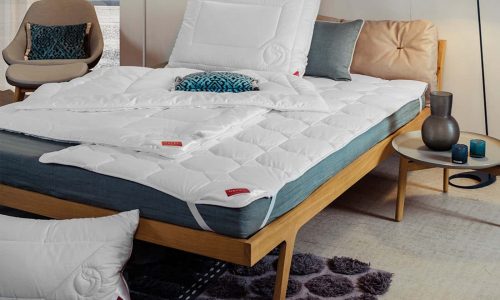








The specialist magazine ÖKO-TEST tested the quality of bed linen. In this context, ÖKO-TEST conducted an interview with Professor Dr. Jürgen Zulley. He is Professor of Biological Psychology and headed the Sleep Medicine Center at the District Hospital in Regensburg. This revealed surprising links between high-quality bed linen and sleep quality.

According to Professor Dr. Zulley, the quality of bed linen has a very significant impact on human sleep.
Study on the quality of linen bed linen and sleep quality
This was demonstrated by a study using duvets that were tested in a sleep laboratory on a group of participants. The study participants spent three nights in the sleep lab with three duvets in different covers. Two duvets had standard average commercial quality; the third duvet was able to wick away moisture particularly well. All participants slept more deeply and for longer, and experienced fewer interruptions, when they tested the “improved” bed linen. There is therefore proven to be a link between sleep quality and the quality of bed linen.
The phenomenon can be explained by the biological processes of the human body. On average, people sweat about half a litre of water during sleep to regulate their body temperature. If the bed linen can absorb and retain the sweat, we sleep through better and do not wake up soaked in the morning. With a better sleep climate, we have a more restful sleep overall.
How the quality of bed linen affects our sleep
Both the duvet and the duvet cover influence this phenomenon. For duvets, high-quality down fillings are the first choice, especially when the duvet is designed with climate zones. Other highly absorbent fillings are made from premium natural materials such as camel hair and cashmere. Duvet covers are best suited when they are made from open-pore cotton or special fibres such as Tencel and are therefore breathable. If the material is inferior, made from synthetic fibres, or woven too tightly, it is less permeable to moisture and leads to moisture build-up and sweating.
Another first-class choice is linen duvet covers. Linen bed linen absorbs up to three times as much water as ordinary cotton and is therefore a natural air conditioner that provides natural balance both in summer at high temperatures and in winter in the cold.